Showing posts with label Alaska cruise. Show all posts

Monday, June 11, 2007

Foreign Crews

I mentioned recently that there was a U.S. law concerning transportation between U.S. ports--hence, our Alaska cruise included at least one non-U.S. port. Robert A. Book, one of my readers, tells me:
The reader who told you that "Alaska cruises always include at least one non-U.S. port is that ships traveling between U.S. ports need to have an entirely American crew" is (mostly) correct. I happen to have just finished teaching a course in which this legislation and its economic (and potentially, national-security) effects figure prominently.

(S)He is referring to the Passenger Services Act of 1886, which states, "No foreign vessels shall transport passengers between ports or places in the United States, either directly or by way of a foreign port, under a penalty of $300 for each passenger so transported and landed."

A "foreign vessel" is now defined by the Jones Act (more formally, the Merchant Marine Act of 1920), which also extends the restrictions to transportation of cargo as well. The Jones Act defines a US ship was one which is American-built, American-owned, and American-crewed. American-crewed means at least 75% of the crew are American citizens.

This has substantial economic effects, since foreign shipbuilders have costs that are a fraction of those of U.S. shipbuilders. This is not an effect of lower wages in foreign countries; it's true even if you measure costs in man-hours rather than dollars. Container and tanker ships built in Korea and Japan, for example, and cruise ships built in the Netherlands and Germany are so much cheaper than U.S.-build ships that without these trade restrictions, there would be essentially no market for U.S.-built ships -- or U.S. shipbuilders would have to become as efficient as the others to stay in business.

On the other side of the coin, since U.S.-build ships are so expensive, those who (would) use ships try very hard to find substitutes. Like, having a cruise stop in a foreign port -- which allows them to buy a cheaper ship and hire a cheaper crew. Or in the case of cargo, using trains or trucks, when ships would be cheaper (for some coastal routes anyway) if they could use the low-cost foreign ships rather than the high-cost American ships.

Also, there are a lot of products that don't exist, but might if it weren't for these restrictions. For example, you could imagine a tour company offering Europeans a package deal in which they fly into Boston, take a cruise down the Atlantic coast stopping at all the major cities, and then fly home from Miami. As far as I know, there isn't a market for that, because the cruise part would be too expensive. You'd have to buy an American-built cruise ship, and that would make this cruise way more expensive than comparable cruises elsewhere in the world. So, nobody does it.

If your interested, I could go on (and on!). Wikipedia also has entries for the legislation:

http://en.wikipedia.org/wiki/Merchant_Marine_Act_of_1920
http://en.wikipedia.org/wiki/Passenger_Services_Act

This is, in summary, protectionism at (among) its worst.

It occurs me that the cruise he mentions--Boston to Miami--could get around the problem by making one stop in the Bahamas on the way to Miami.
Alaska Cruise: The Comic Problem

We saw three shows on board. The second night there was a comic named something or other Johnson who was somewhat funny, but whose language was a little crude. Compared to the average night club comic, not vulgar at all--but apparently one family with preteen kids walked out a few minutes into this guy's act. The comic tried to make a joke out of it, but made the mistake of asking them why they were leaving, and the father told him, politely, that it was basically his language was too offensive for his kids.

The second act we saw, on another night, was one of those magic/comedy combinations that worked really well--and he was a reminder that you don't need to be vulgar to be funny--just a bit more creative and clever. (There was one relatively subtle joke sexual reference that probably went over the heads of the youngest kids.)

The third act we saw was probably the most disappointing. I've forgotten his name already, a Cuban-American, but I was probably least impressed. His humor was scatological and crude, and and even in that vein, not particularly funny. I noticed another family with small children leaving part way through his act.

I am very sympathetic to the families that walked out. There are a lot of parents that are trying to keep their kids--at least in the preteen years--out of the sewer of popular culture with its profanity, vulgarity, scatology, and obscenity. This is America, so there's no way to achieve this, but you can at least make it clear to your kids that this is not okay.

On the other hand, comics are overwhelmingly crude today--the ultimate revenge of Lenny Bruce's ghost. I don't know what these parents were thinking, bringing small children to hear comics. My guess is that either:
1. There are a lot of people out there who are not aware of the material that most comics use. I noticed that a number of the people on the cruise were part of an organized tour from Cruise Lady, which is a Mormon-affiliated operation. There's an innocence (or naivete--take your pick) that a lot of Mormons have, growing up in places that are fairly well removed from the depravity of modern America. I do think Princess Cruises would have done everyone a service by having some warning, "Note: material may not be appropriate for younger audiences."

2. These parents assumed that a generally family friendly operation like Princess Cruises would pick comics with family friendly material. If so, they were in for a disappointing surprise. I do scratch my head a bit about this. Are there no comics left in America that can make adults laugh without being crude? Or does Princess Cruises not realize that this might be a refreshing change?

Sunday, June 10, 2007

Alaska Trip: Victoria

A reader tells me that the reason that these Alaska cruises always include at least one non-U.S. port is that ships traveling between U.S. ports need to have an entirely American crew. I have a vague recollection that transport between U.S. ports needs to be entirely on U.S. flagged vessels. This explains the stop in Victoria, British Columbia, I suppose.

We decided to walk into town from the dock because it was only a mile, and the weather was very nice. The neighborhoods we passed through reminded me very much of Santa Monica, where my wife and I met and married--a place with lots of warm memories, although it has become paradoxically too rundown and too expensive for us to live in now. (Liberals take over a city, and pretty soon, there are three classes of people: impoverished servants, homeless people, and wealthy liberals.)

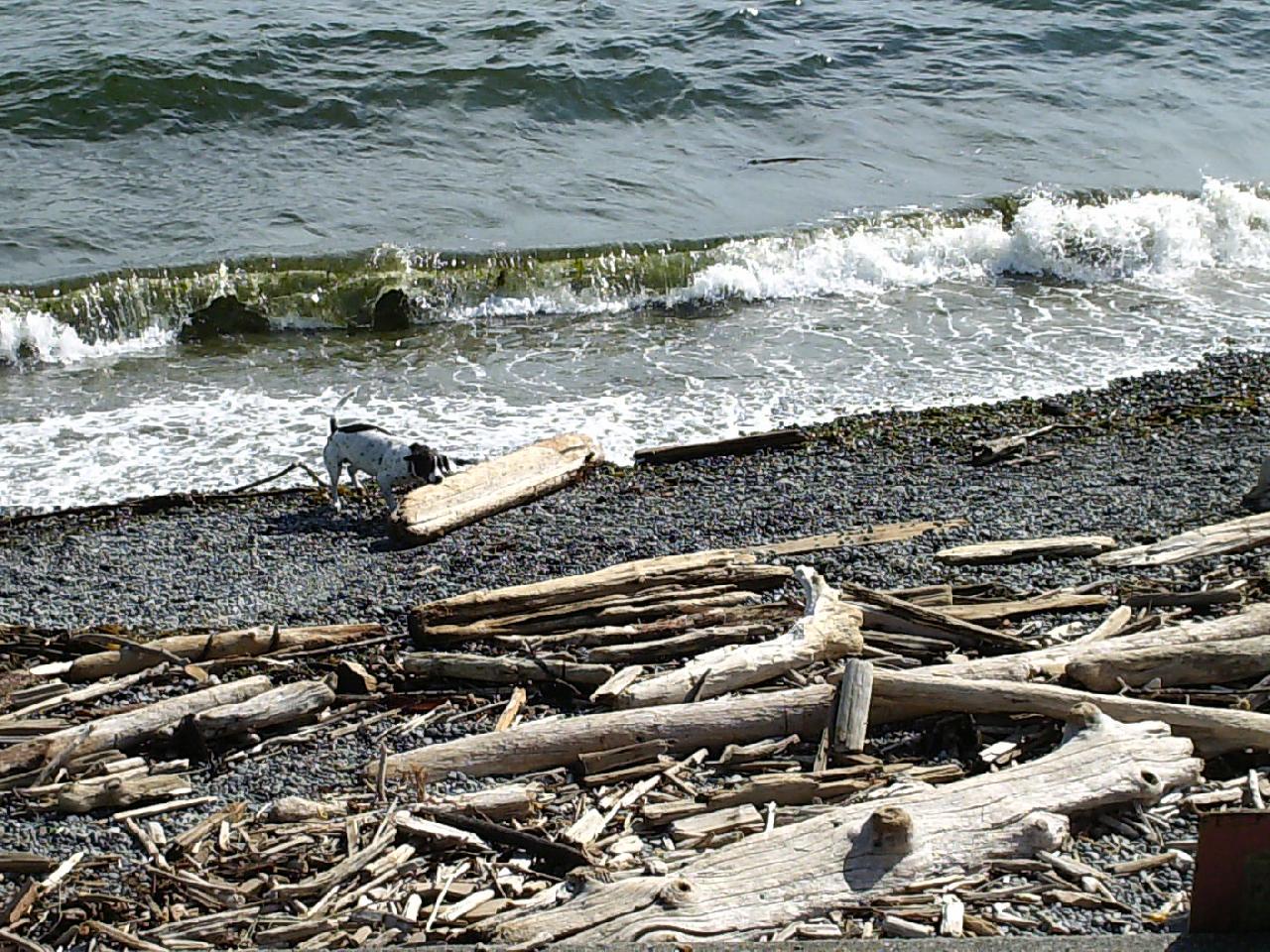
On the beach, we saw this dog, and all I could think of was the song, "High Hopes."


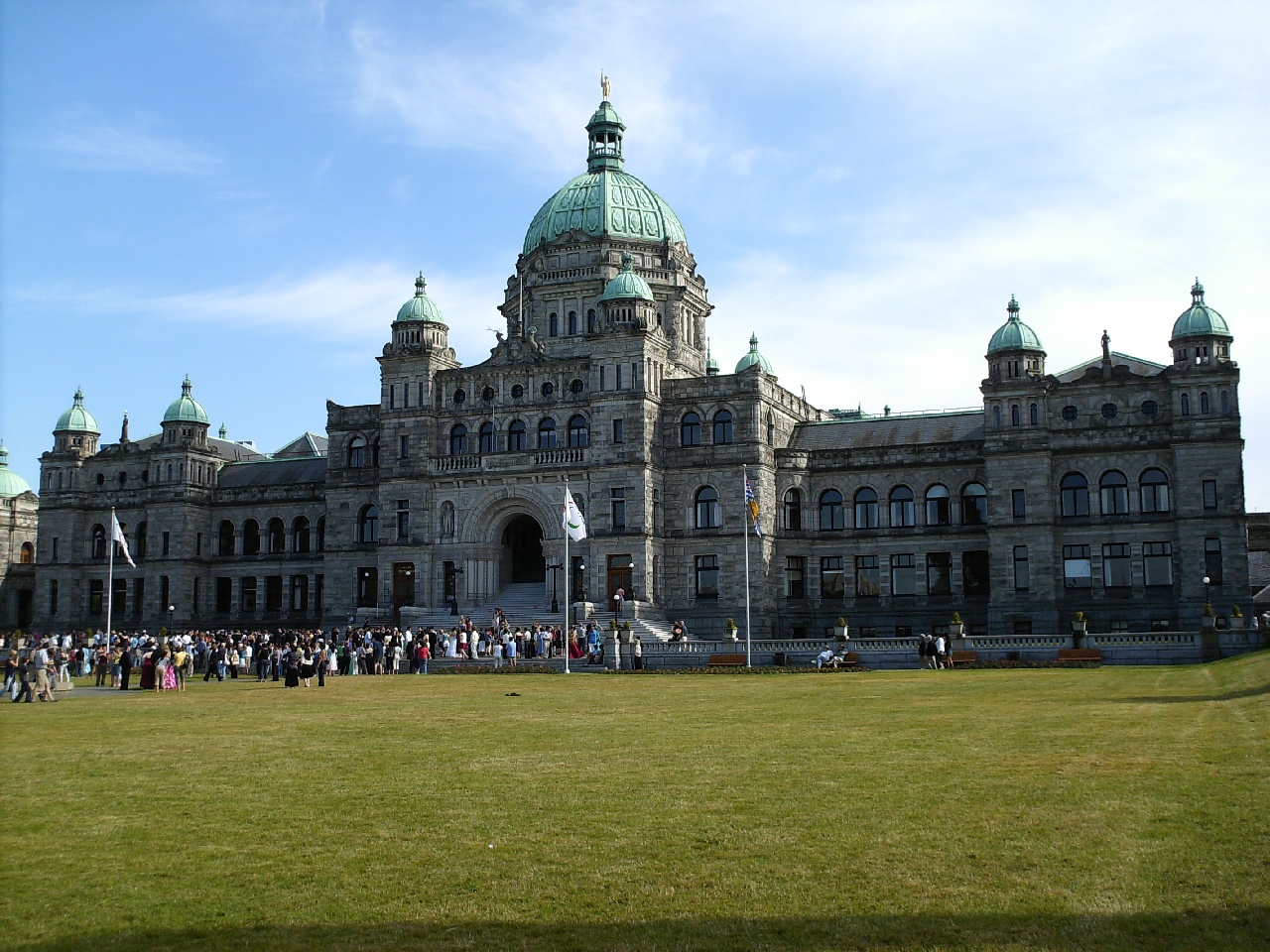
We passed the British Columbia Parliament building.


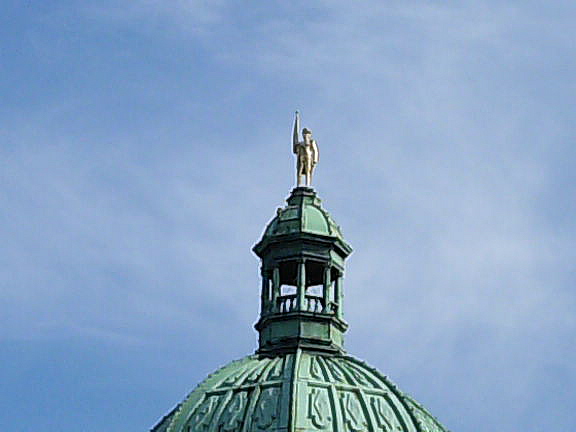
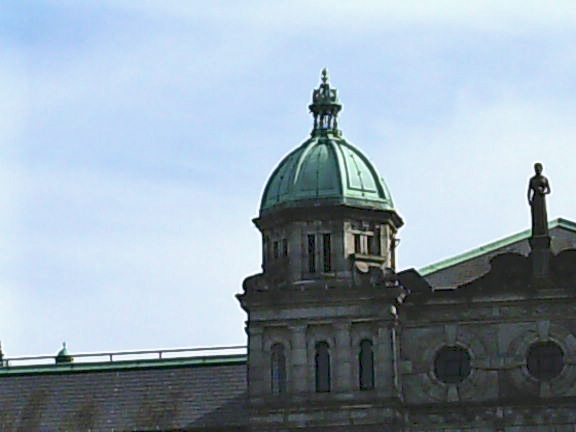
I didn't want to lug the Pentax, and here is a reminder that a digital zoom has its limitations!


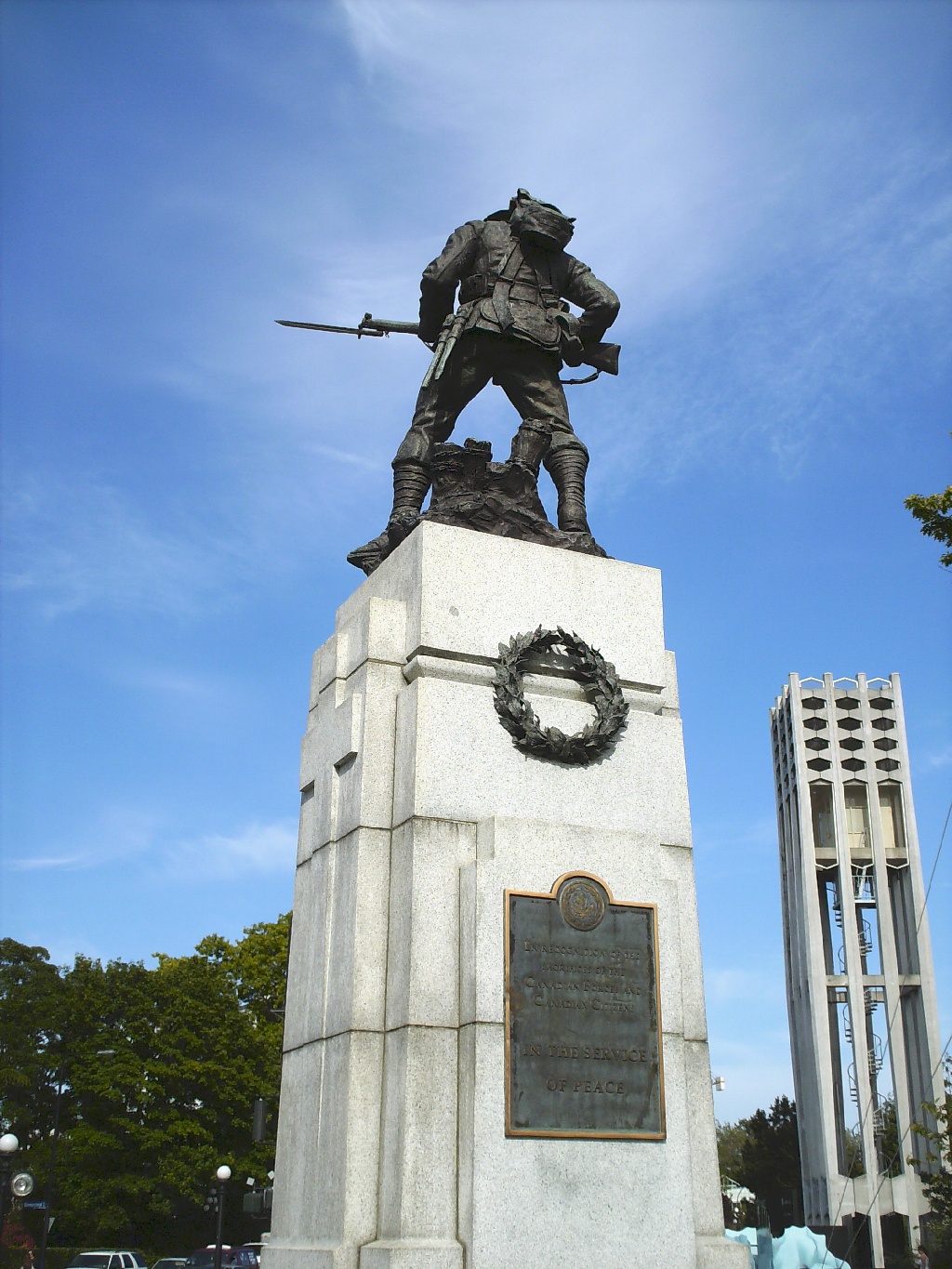
In front of the Parliament building is this memorial to Canada's war dead.


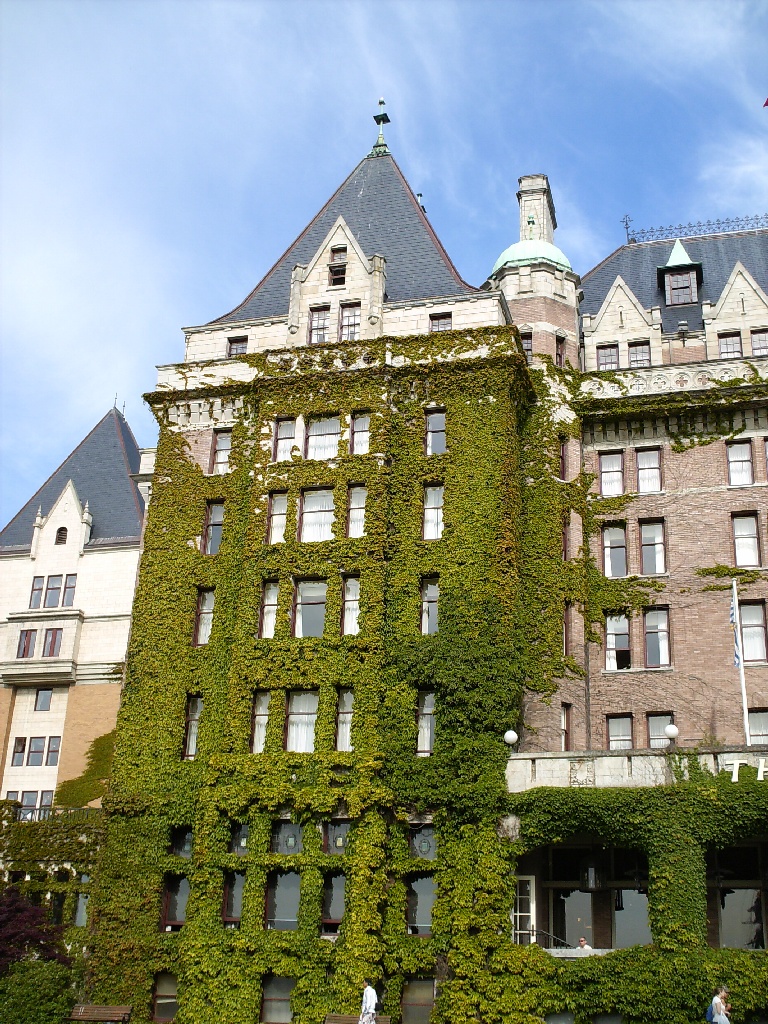
We went by the Empress Hotel--where my wife had hoped to take high tea, but we arrived in port a bit late. (The 1999 trip to Britain seems to have gone to her head. We no longer drink Lipton's tea at home.)


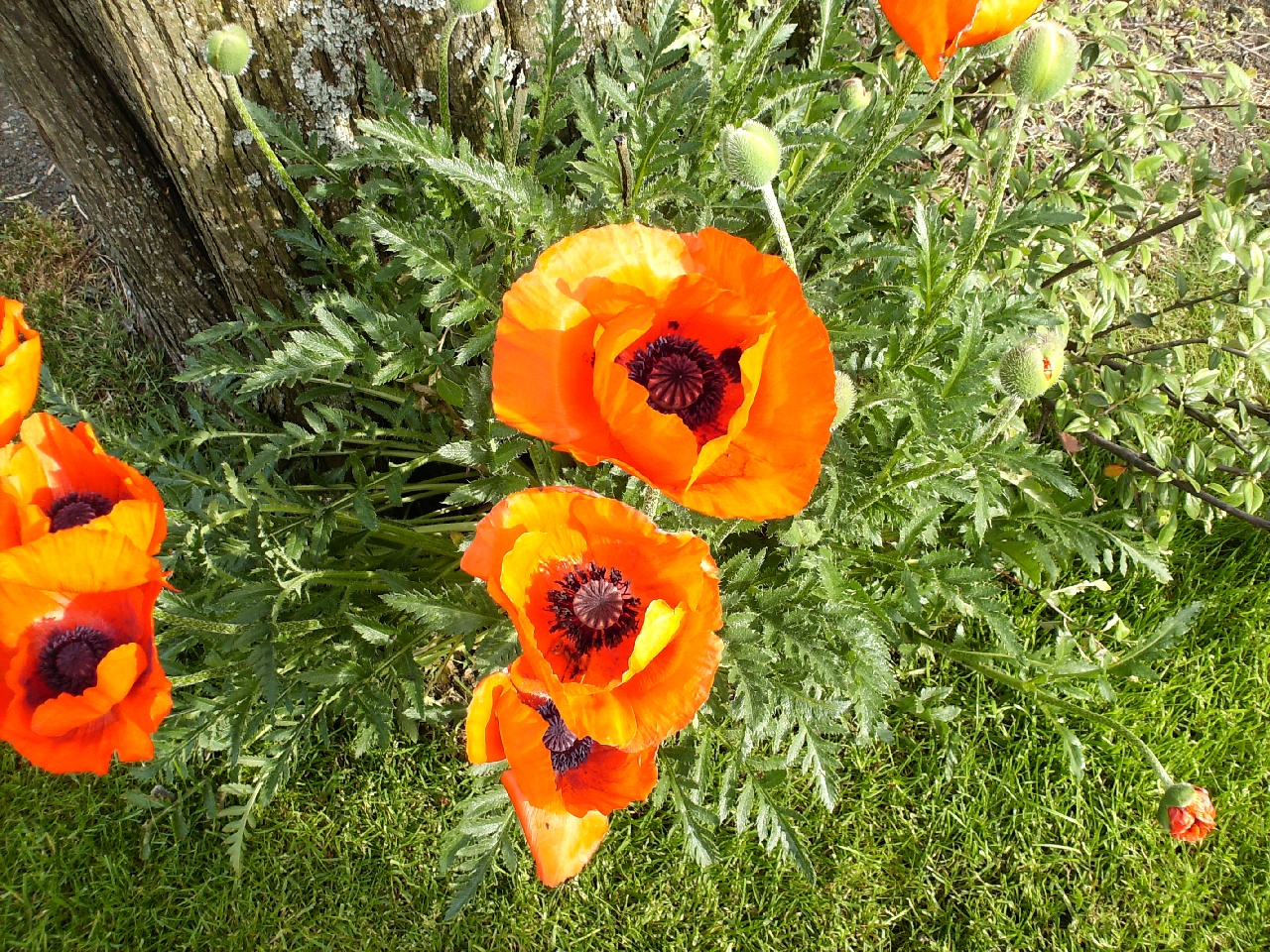
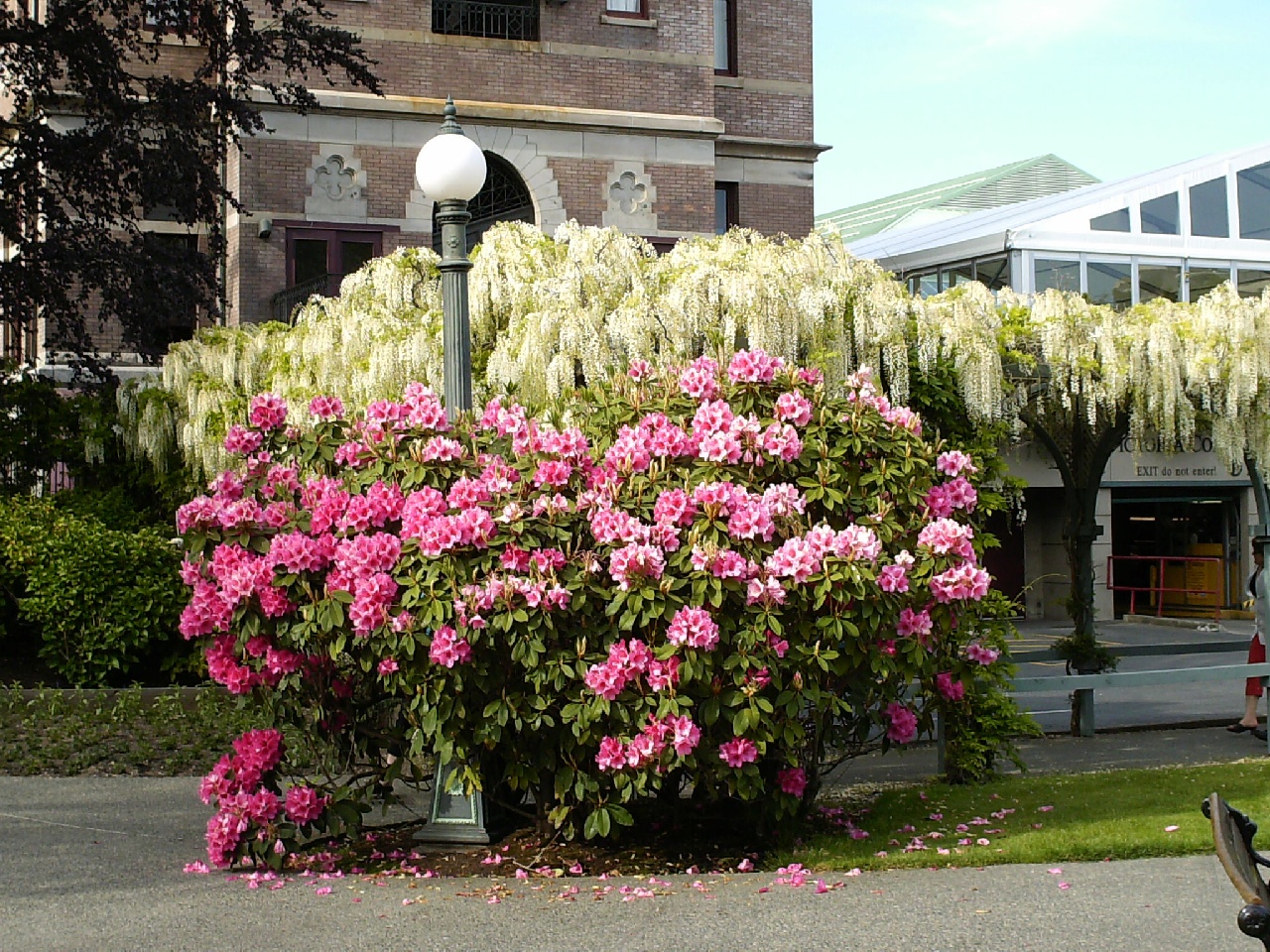
The flowers are just gorgeous everywhere along the coast--although the amount of rain we are getting here in Idaho these last few days, and it will become like Victoria.


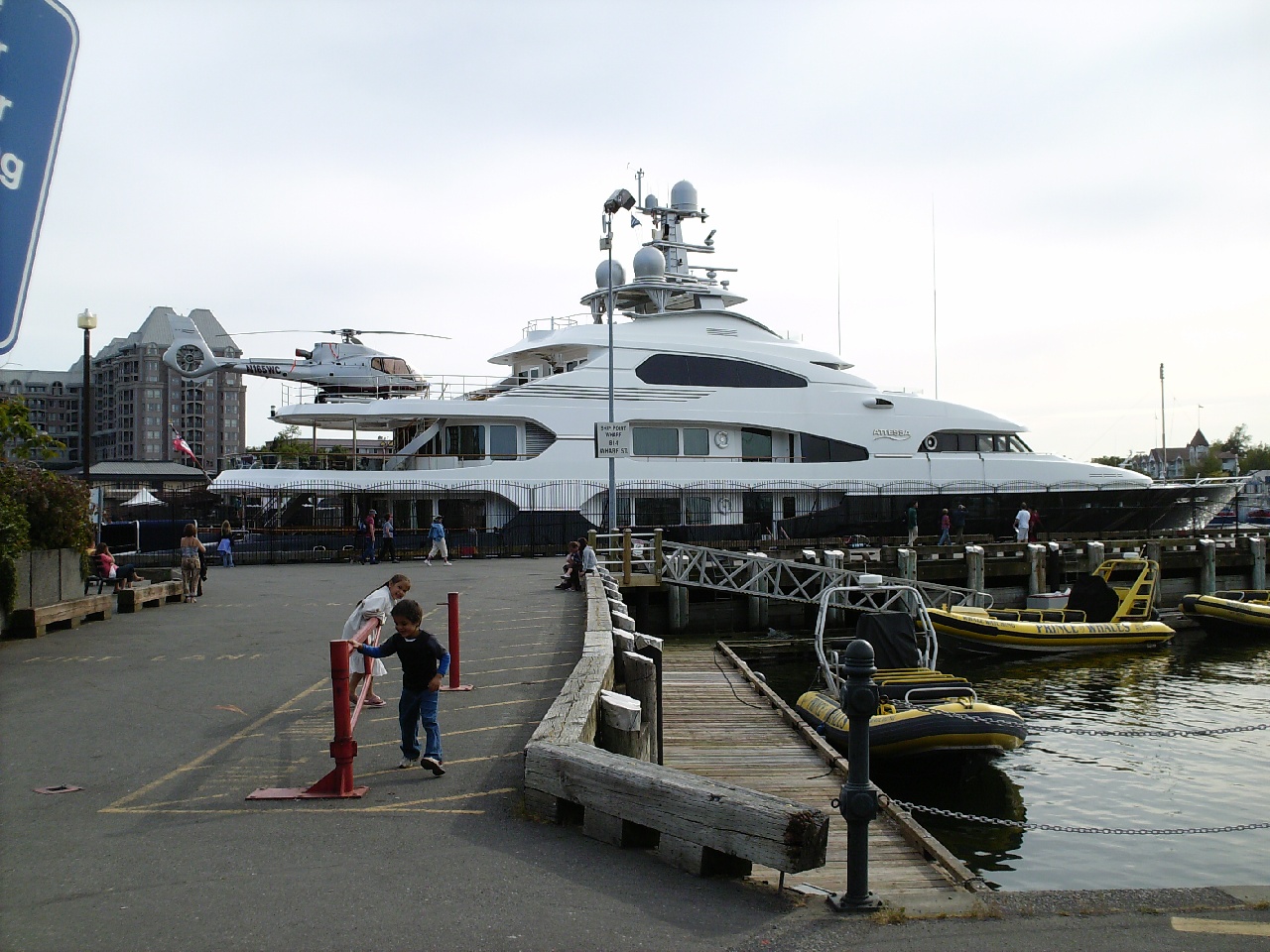
Ah, Canada, the liberal's dream of social equality! We saw this private yacht (with helicopter) in the harbor, flying the Canadian flag.


[Ooops! Turns out to be an American. A friend looked up the tail number on the helicopter, and found out it belongs to Dennis Washington.]

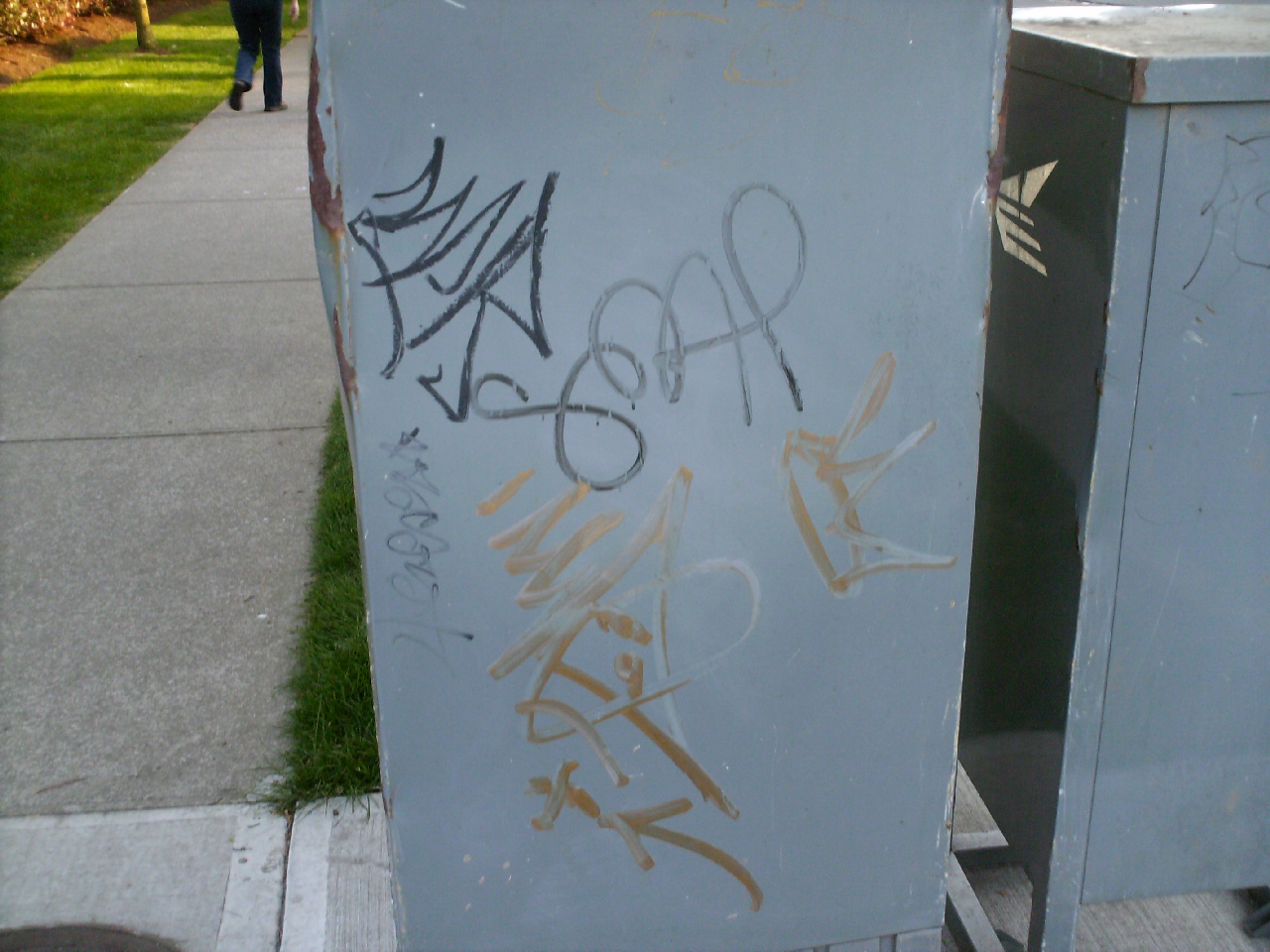
And unfortunately, anywhere that you have MTV, you have this stuff.


Along the railroad tracks from Heathrow to London there was so much of this graffiti, I thought I was in Venice, California.

Friends know that I don't normally eat anything that comes out of the ocean. When I was just old enough to peer over the table top, my family got a fish off the end of San Pedro Pier, and brought it home to clean and cook. Ever since, I have been so traumatized by it that if it looks or smells like fish, I get nauseated. It's an irrational reaction--I can eat fishsticks, or McDonald's Filet-o-Fish sandwiches, or fish and chips--no problem! Since Victoria is a very English city, we wandered the streets until we found a fish and chips place, and ate dinner there. And it was delicious.

One little surprise. The menu had something called poutine that was completely new to me. As Wikipedia explains:
Poutine (pronounced, roughly, poo-tin; pronunciation in IPA as heard in Quebec French [puʦɪn] — listen to it in .wav format) is a dish consisting of French fries topped with fresh cheese curds and covered with hot gravy (usually brown gravy) and sometimes other additional ingredients. The curds' freshness is important as it makes them soft in the warm fries, without completely melting. It is a quintessential French-Canadian comfort food.
I can't claim that it is going to send me on expeditions into Canada to get some more, but it was tasty, and probably bad for my health.

Thursday, June 7, 2007

Alaska Cruise: Skagway

Skagway was as far north as our cruise went--59 degrees 27 minutes north latitude, according to my GPS which fortunately matches the government's belief about where it is. (That's one of the nice things about facts based on universal, repeatable concepts. Imagine trying to find your way to Skagway if everyone's concept of reality was considered equally valid--and they didn't match.) What this meant was when we left that evening, even at 11:30 PM, there was still a considerable glow in the sky from the Sun--which was just below the horizon.

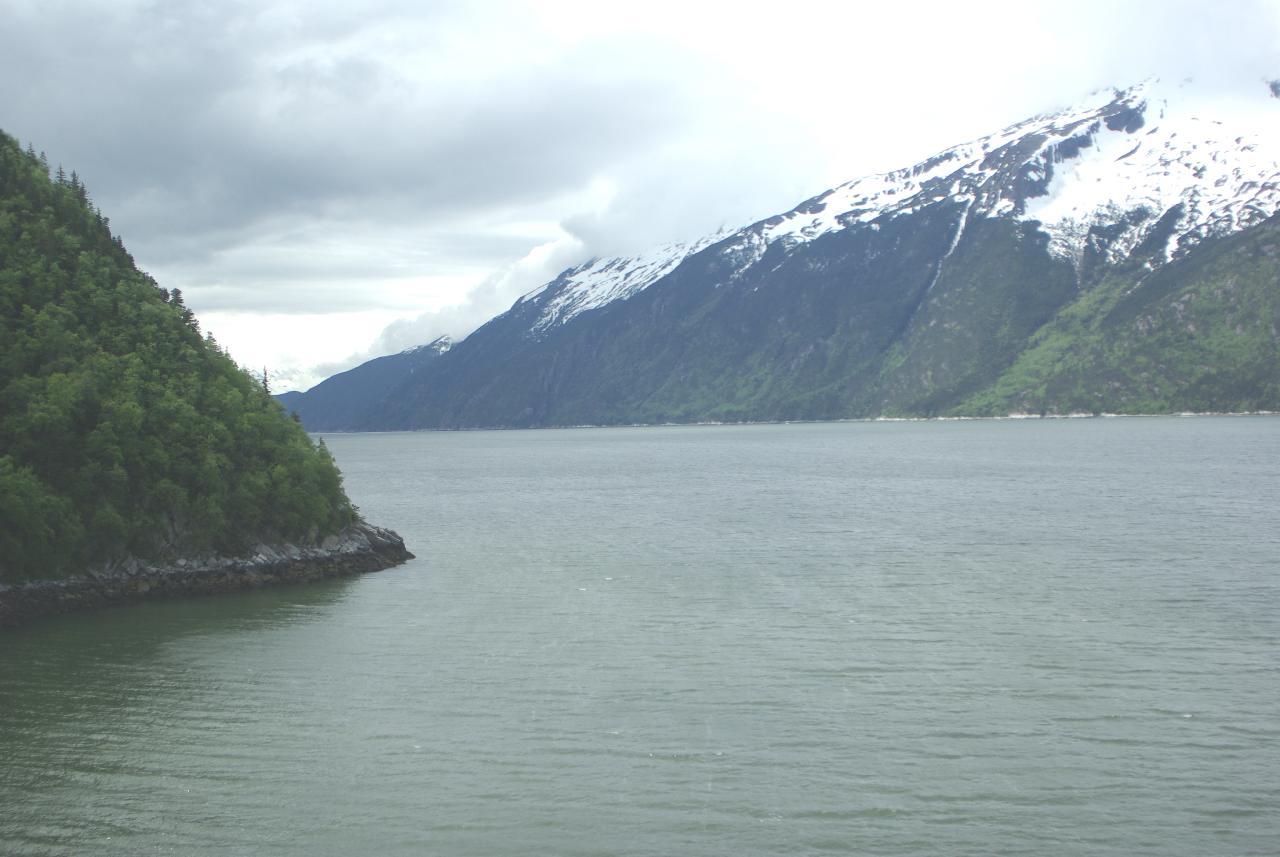
Here's the inlet from the ocean.


Click to enlarge


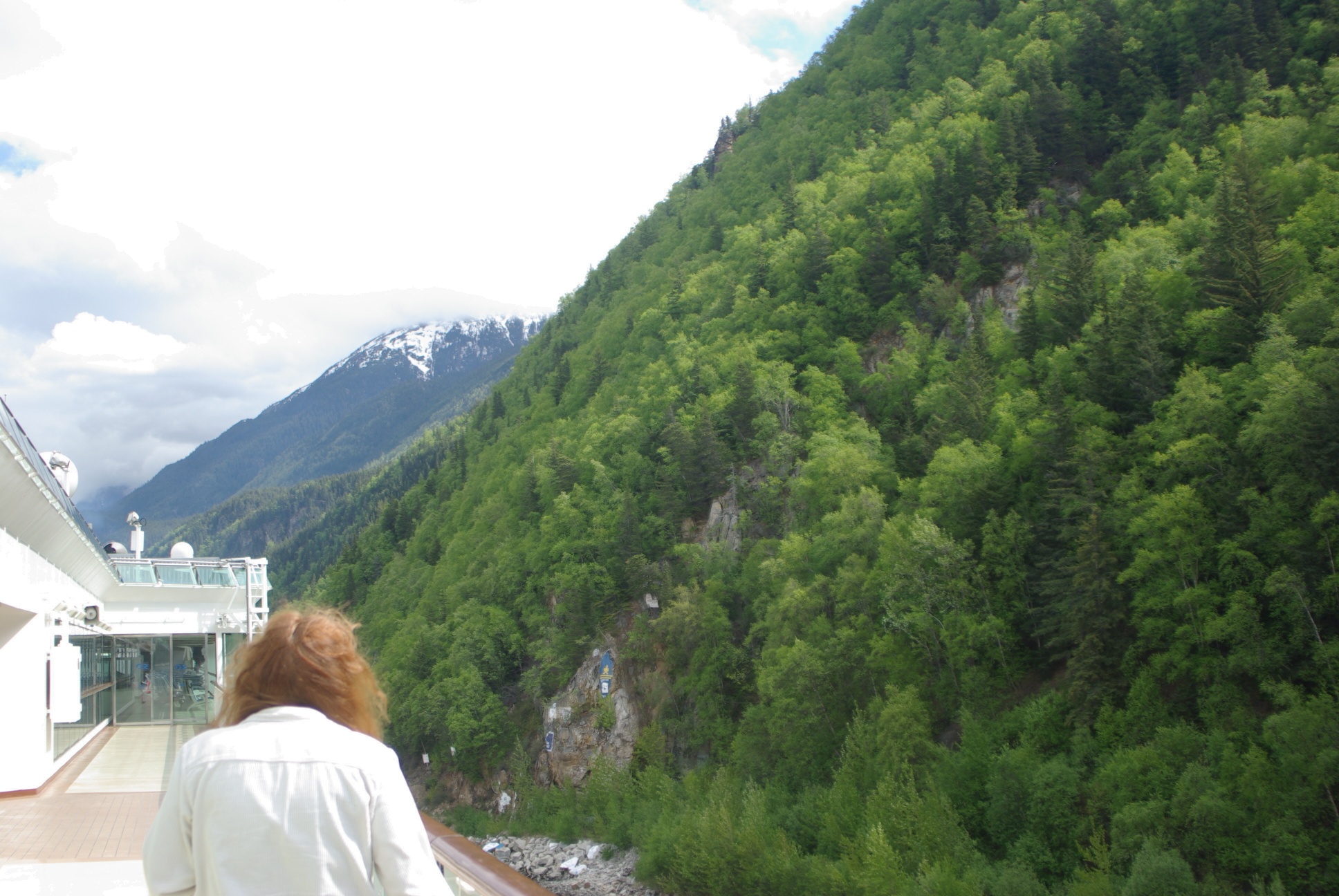
And here is the back of some gorgeous redhead (my wife), admiring the quite steep cliffs of the fjord (for that is what it is). This gives you an idea of how steep the mountains are at Skagway.


Click to enlarge


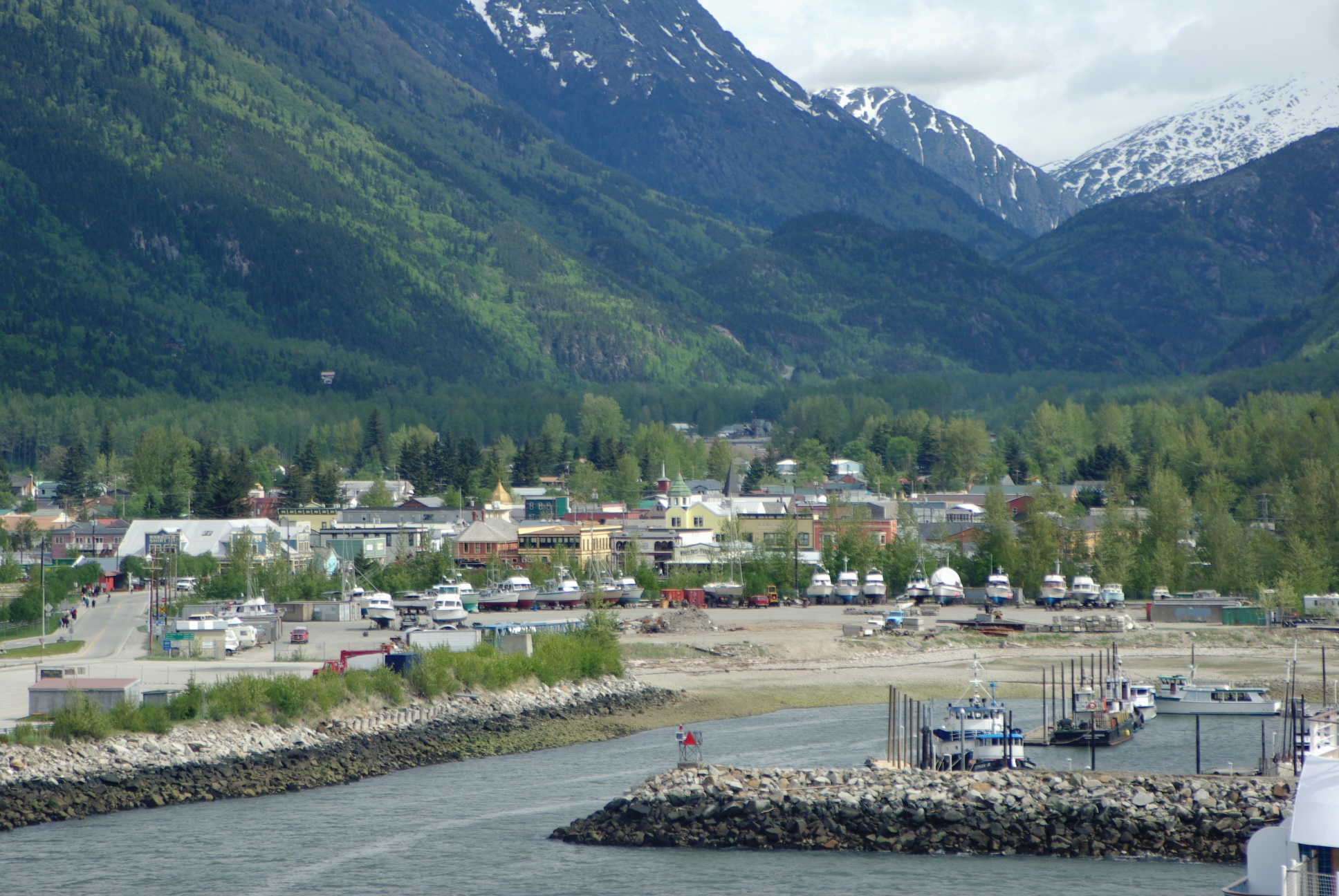
Here is most of Skagway--which shrinks down to about 160 people in winter.


Click to enlarge


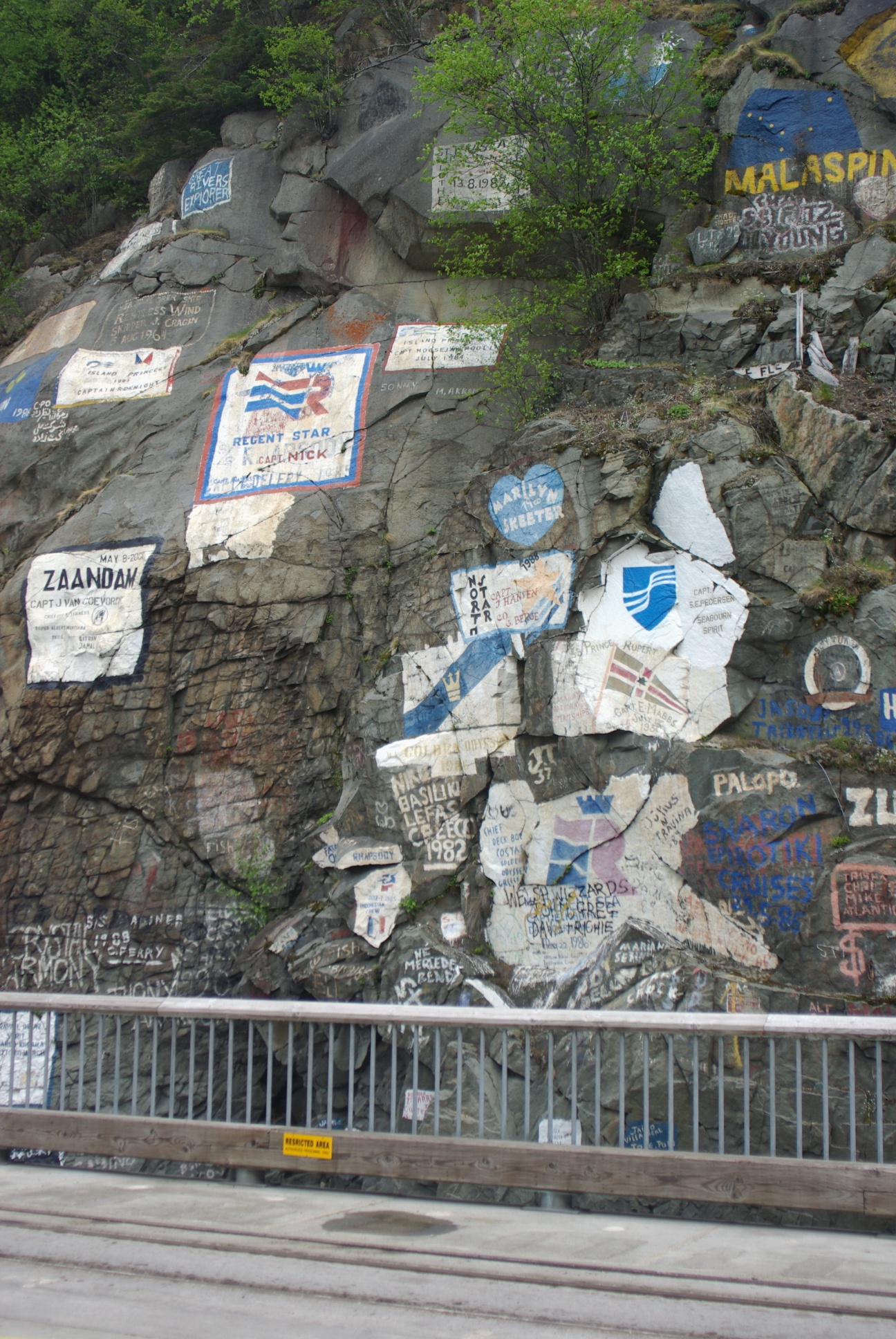
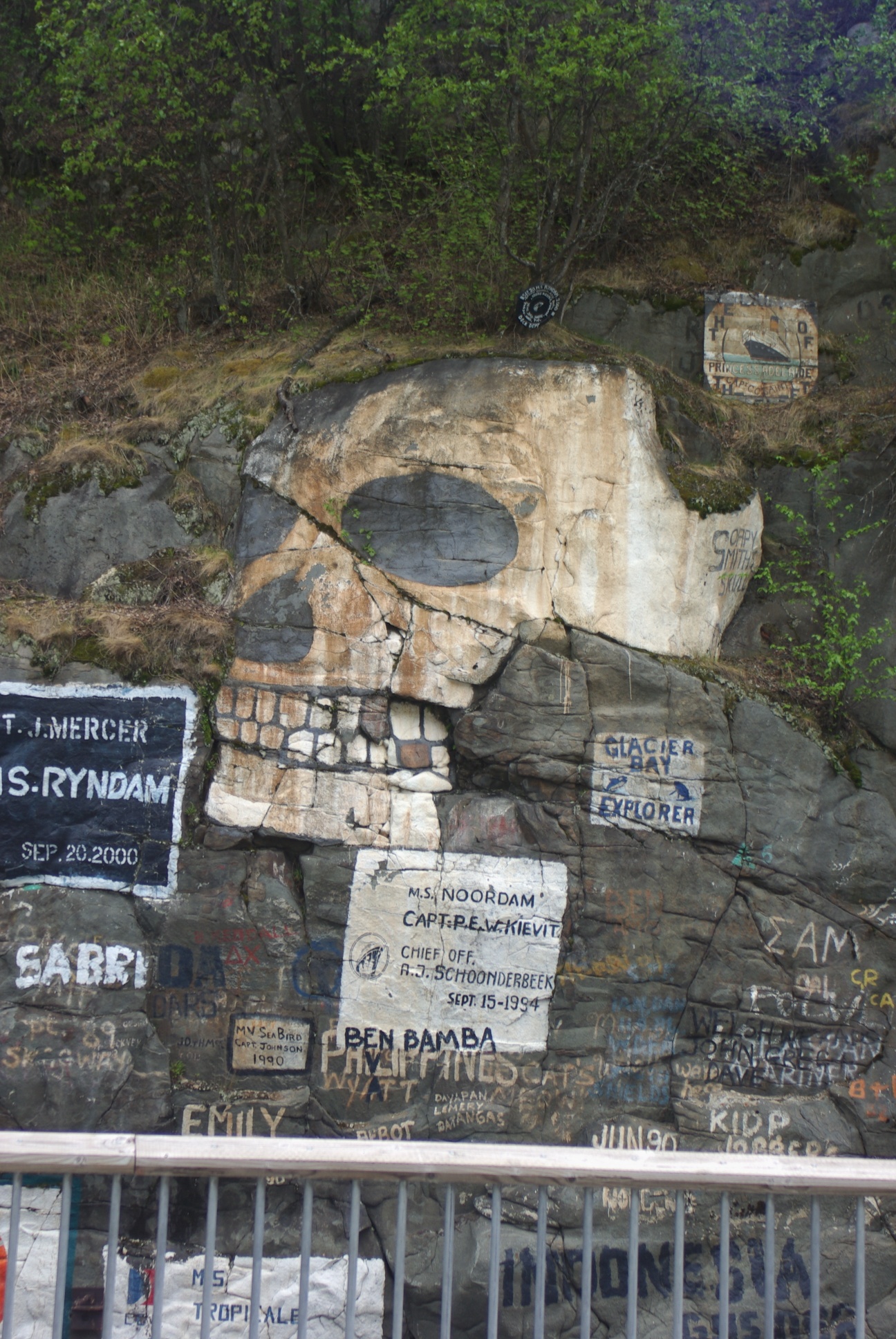
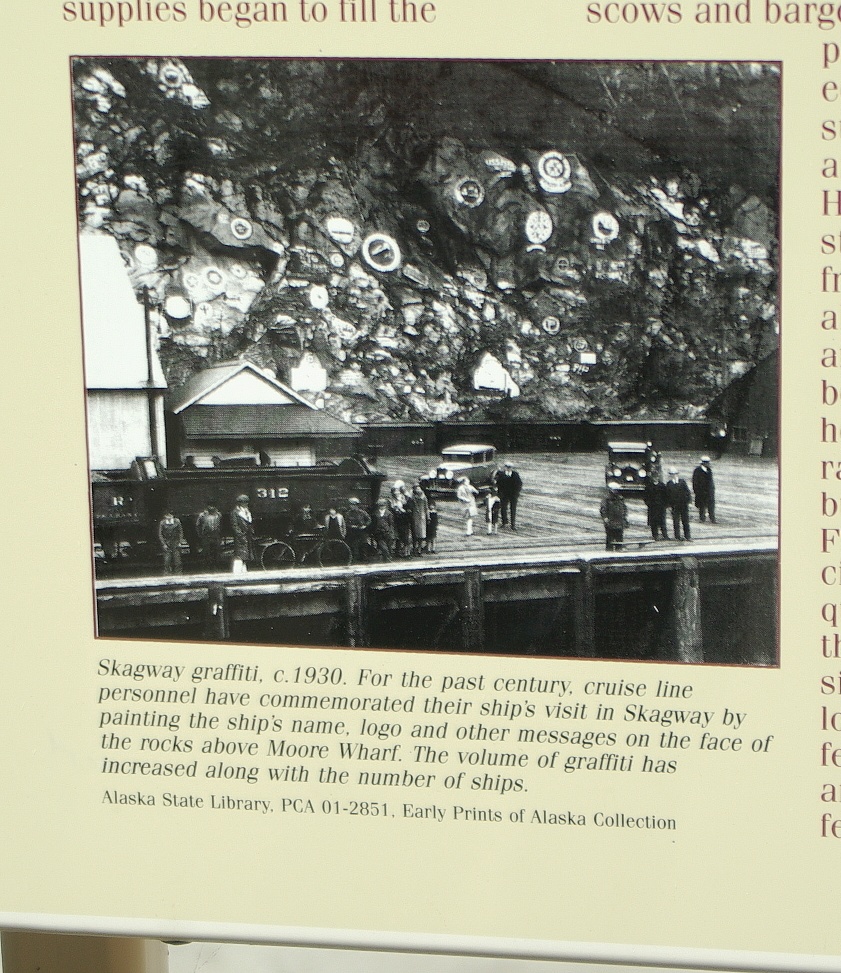
We were at first a little put off by the graffiti on the side of the mountain where our ship docked, even though one piece was guite artistic.


Click to enlarge


Click to enlarge


There was an explanation of it on an historical plaque:


Click to enlarge


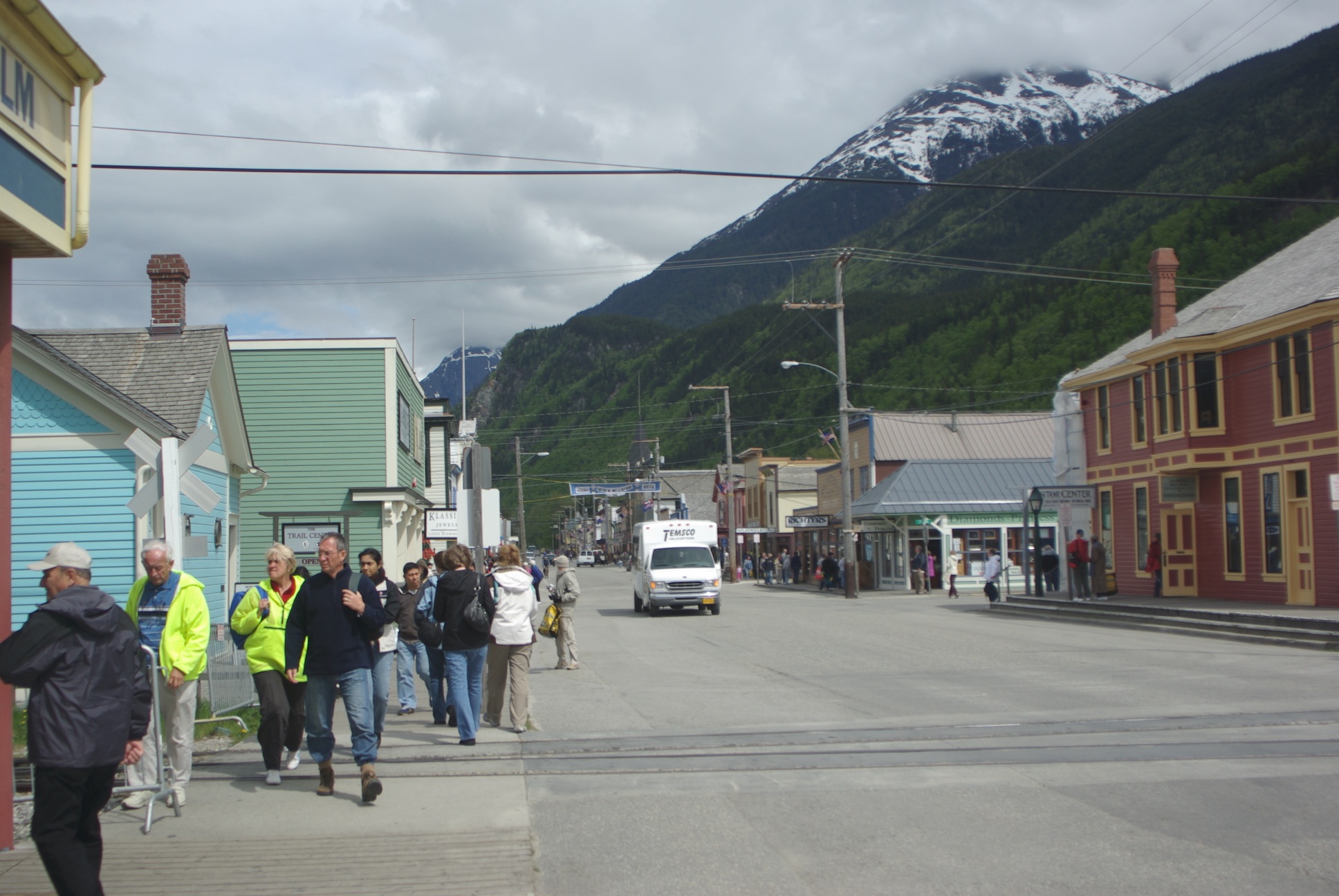
Skagway is even more of a tourist destination than Ketchikan:


Click to enlarge


The place has some history to it. This was the disembarkation point for the Yukon prospectors who went up and over Chilkoot Pass, on what became known as the Golden Staircase--which you have probably seen pictures of, such as this one. (There's a history of the Golden Staircase, and the human costs associated with it, here.) Unfortunately, the Golden Staircase was 14 miles up another valley, and not really accessible by car in the time that we had.
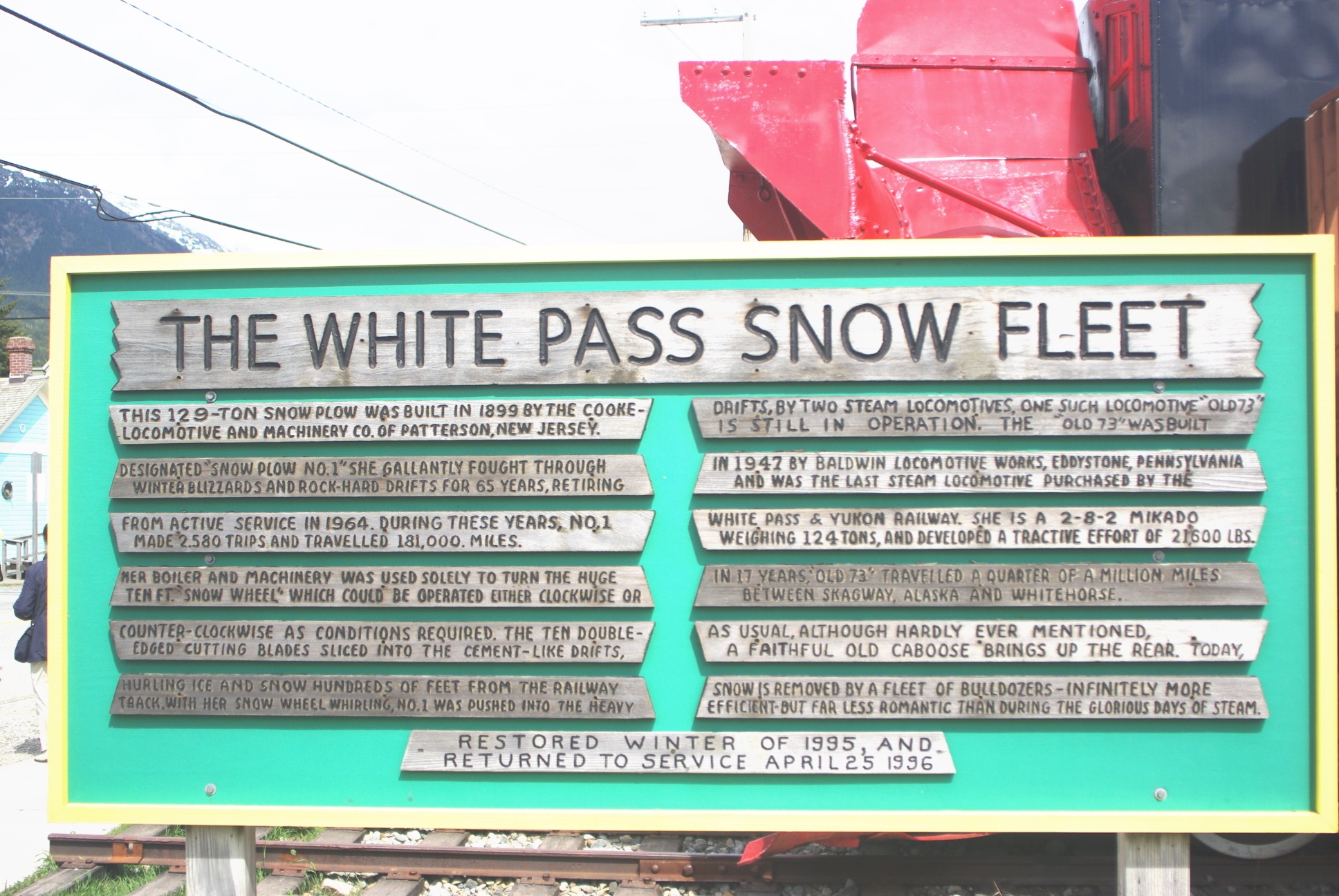
They had this rather odd front end on a locomotive in the center of town that at first I thought might have been used for drilling tunnels--but it was too small to allow the train to pass through.


Click to enlarge


It turns out to be a snow plow.


Click to enlarge


We signed up for a Gardens of Skagway tour, which wasn't expensive, nor a particularly investment of our time. The bus driver was the only redeeming virtue, since he was able to give us a bit of a history of the town, and a description of what it is like to live there during the tourist season. The town effectively shuts down for the winter, and only a hardy few artist sorts stay there. Skagway is very expensive--housing is scarce, and during the tourist season, many of the seasonal workers live in tents. Everything has to be brought in by barge, and so I paid $1.79 for a 20 ounce bottle of Coke. There is no doctor there; one flies in once a month to see patients.

Unlike Juneau, which has no road access to the outside world, Skagway does--but our driver explained that if you take the auto ferry to Haines, which is 14 miles away, you pay $80. You can drive to Haines--but it is 370 miles. The nearest real shopping is in the Yukon Territory, Canada.

I think we might have done better taking one of the other tours. A friend on the trip elected to take the narrow gauge railroad to Whitehorse, Yukon, and reported that it was very scenic. We found out that because of glacial isostasy (although the driver didn't use that term--nor probably knew what it was), this area is rising about one inch per century, as are a number of other places where the glaciers have been receding for many centuries. Our driver told us the railroad floats on the surface of the ground, rather than nailed down to the ties. Apparently many buildings in Skagway are similarly loosely attached to the ground, just to avoid flexure of foundations.

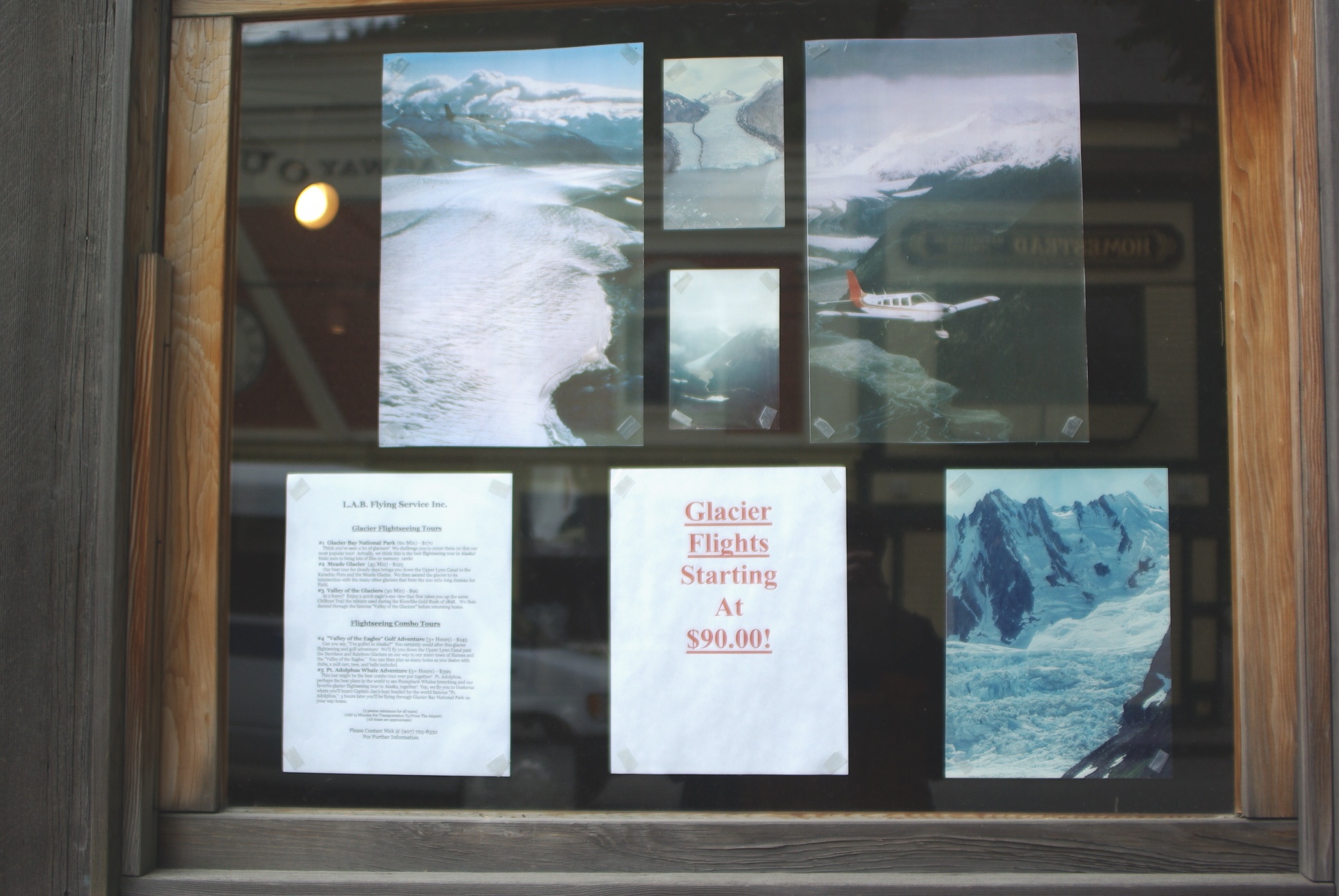
Here's one tour that I wish that I had known about in advance--we might have signed up for it.


Click to enlarge


Click to enlarge


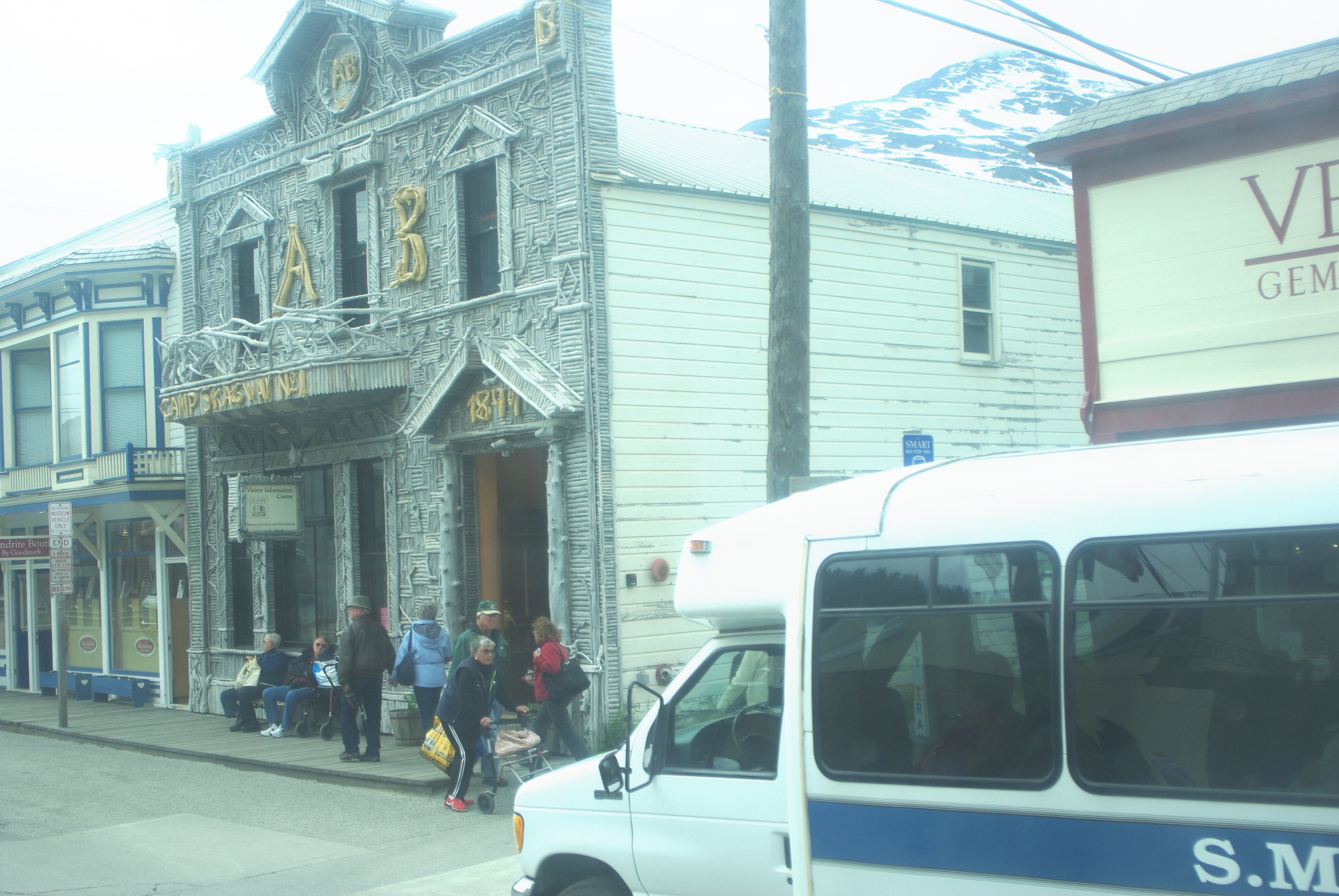
This is supposedly the most photographed building in Alaska--interesting because of the vast number of pieces of driftwood that make up the facade:


Click to enlarge


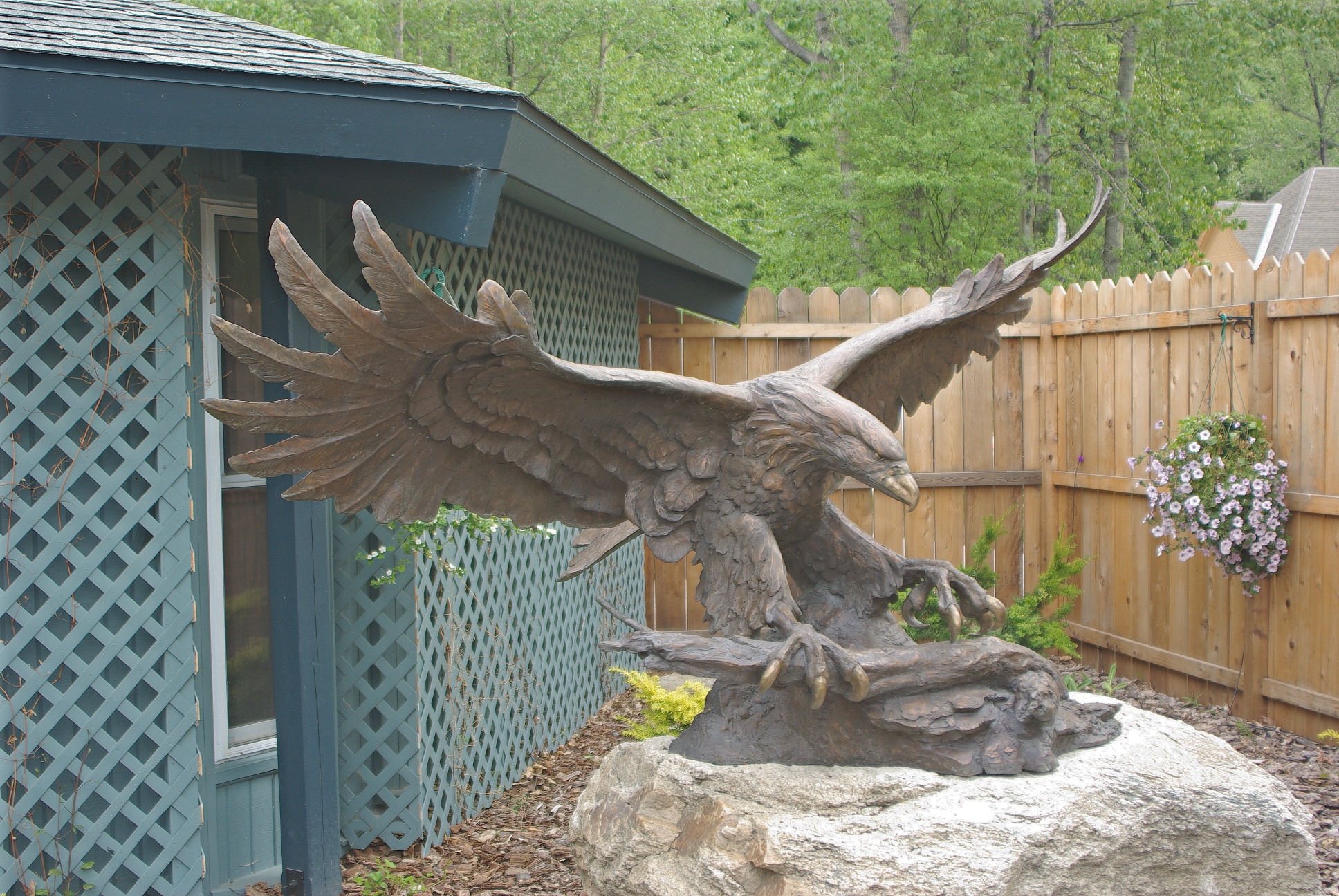
The garden tour turned out to include a sculpture garden. It was all well known bronze work, some of it highly realistic, some of it a bit more impressionistic.


Click to enlarge


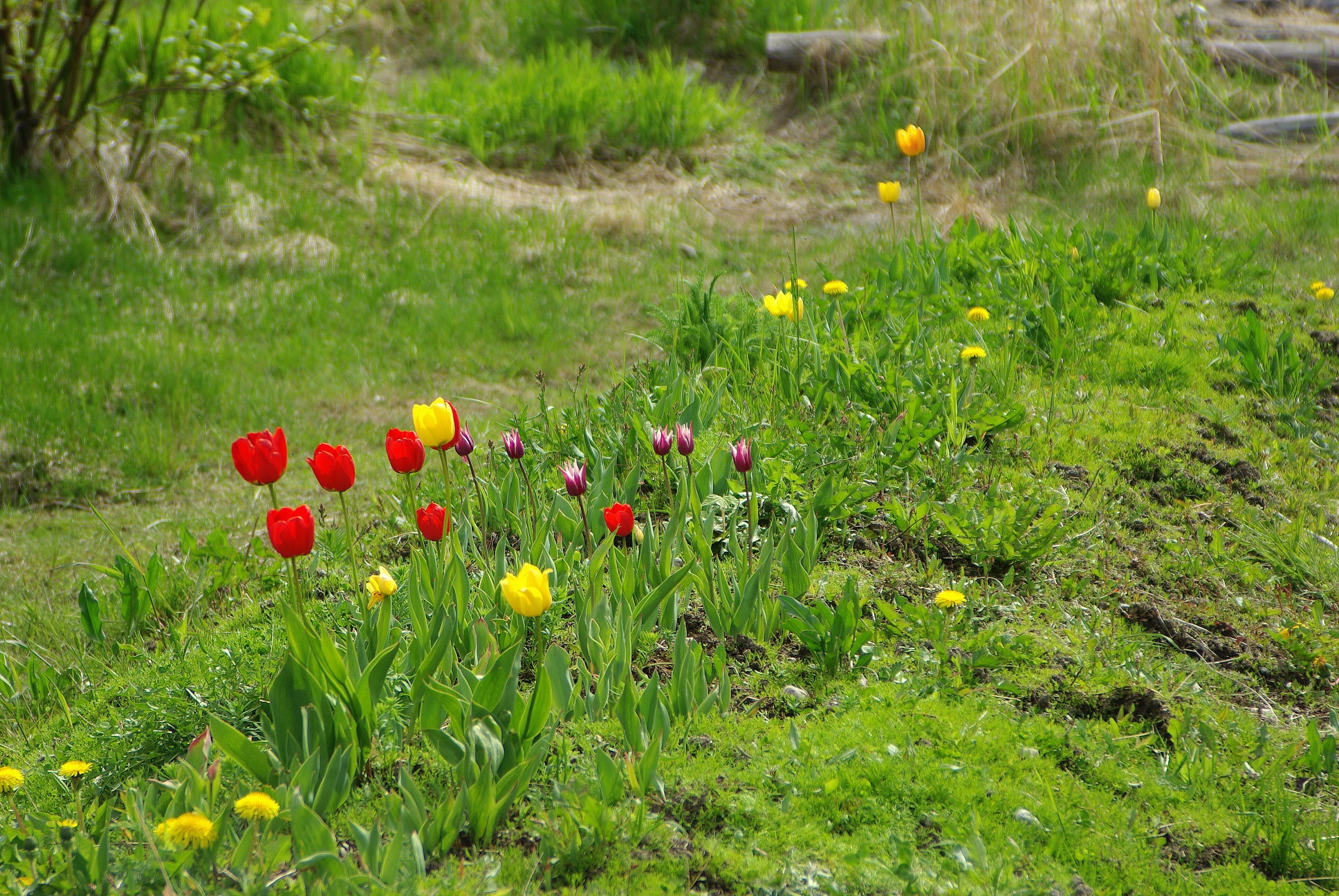
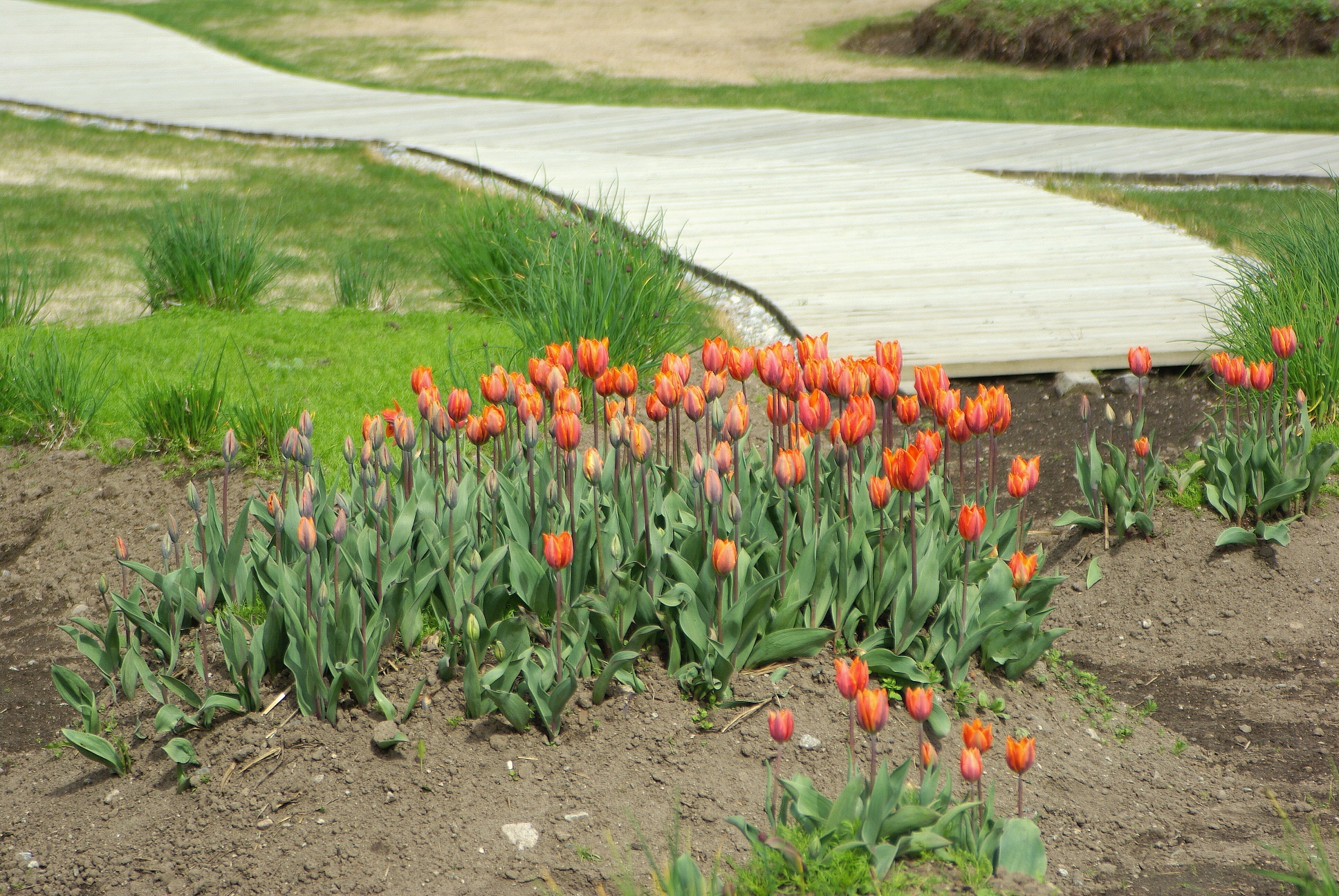
For a place this cold and far north, the plants and flowers are astonishingly vibrant in their colors.


Click to enlarge


Click to enlarge


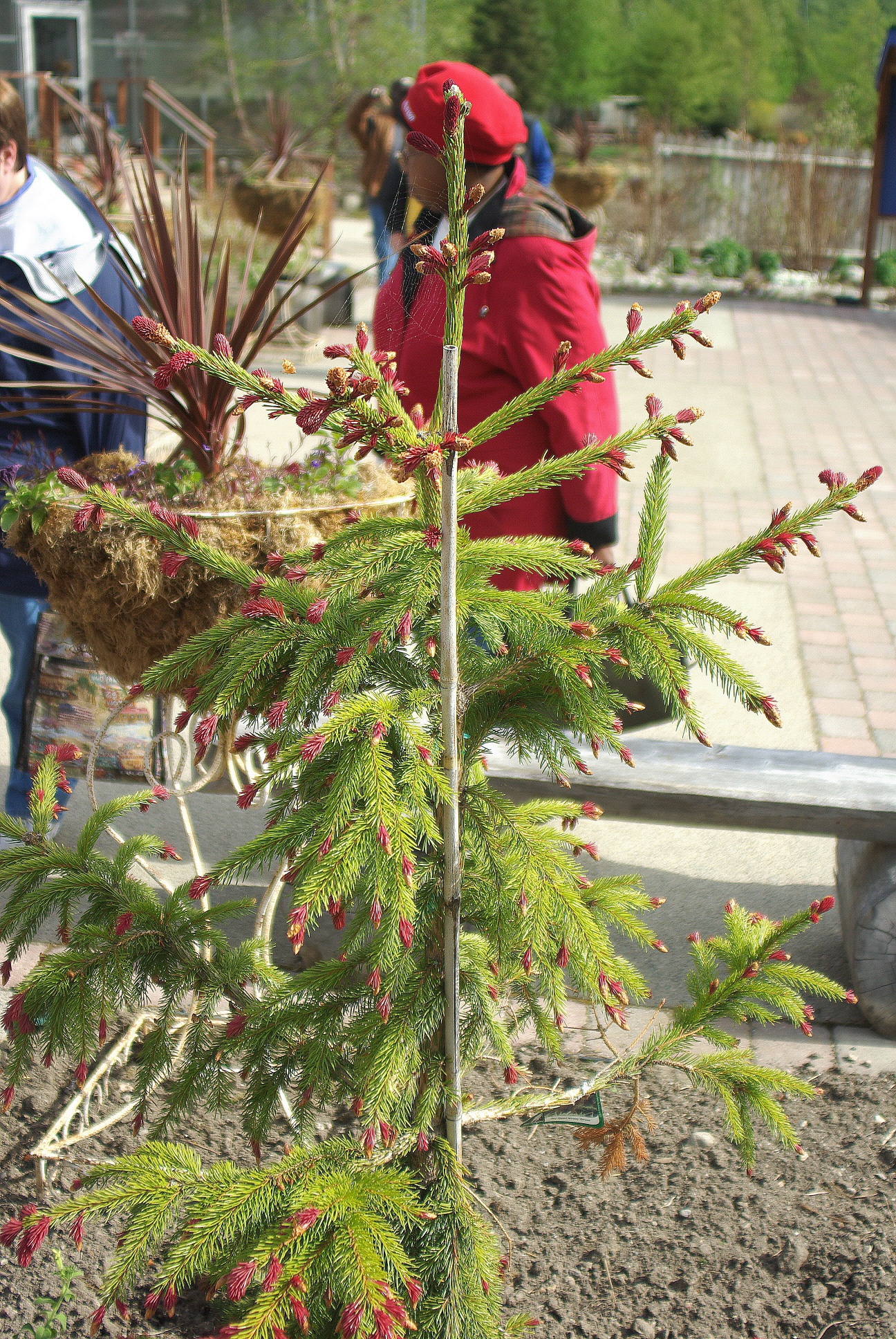
This spruce tree with red tips is called, surprisingly enough, a red-tipped spruce.


Click to enlarge


The hippie sort leading the tour tells us that the red tips are very rich in vitamin C. My son-in-law gave them a try, and reported that they were citrusy tasting.

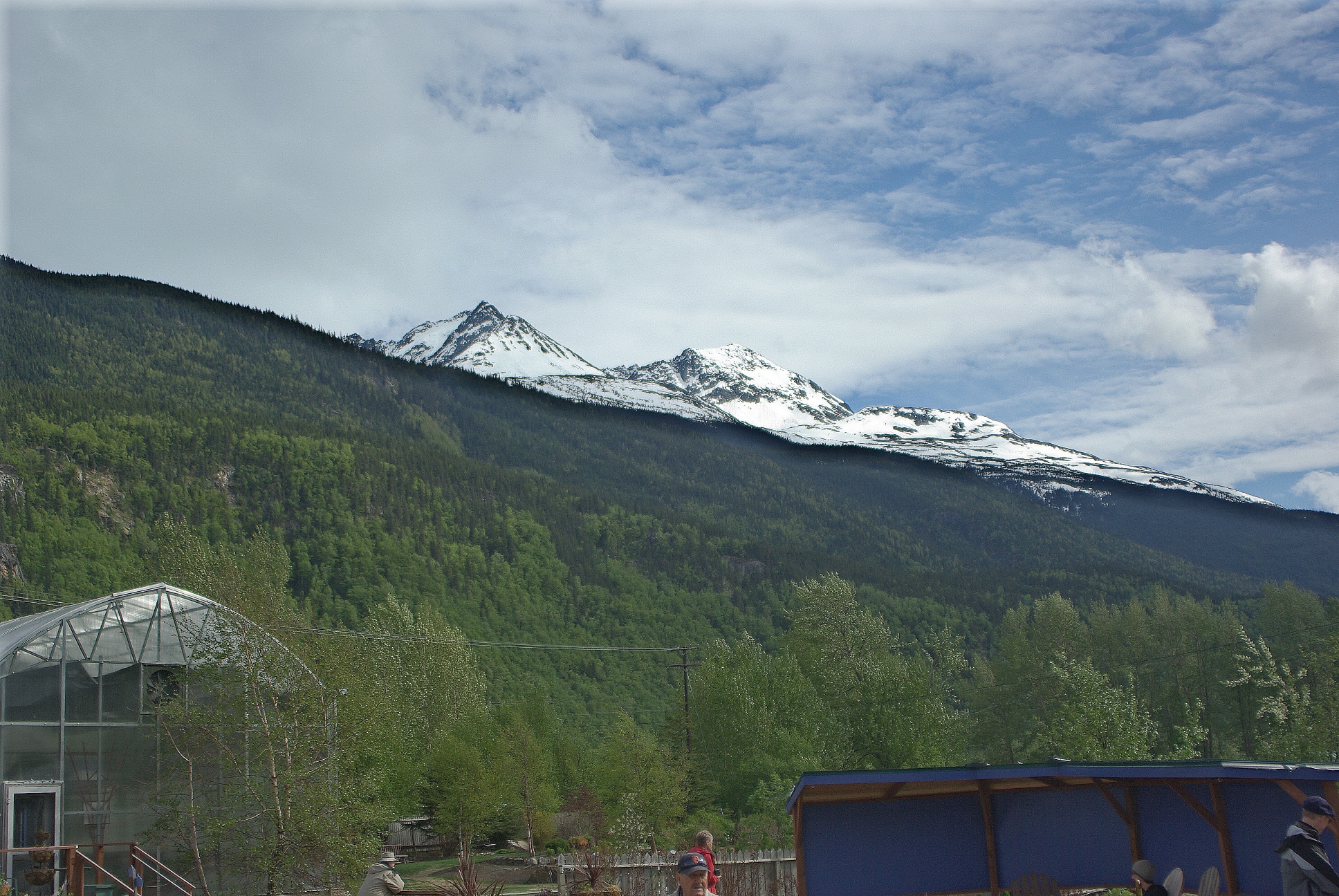
Of course, behind everything in Skagway is the ever-present reminders that the glaciers aren't far away.


Click to enlarge

Wednesday, June 6, 2007

Alaska Trip: The Mendenhall Glacier & Juneau

Juneau (named for Joe Juneau, one of the two gold miners who first set up shop in the area) is the state capital of Alaska--and must be about the smallest state capital that I have ever visited. I remember that some years back, there was talk of moving the state capital up towards the center of the state, on the grounds that the shortage of buildable land around Juneau made it impossible for the state government to grow. The Libertarian Party members of the state legislature essentially said, "Wait, that's a feature of Juneau, not a bug!" There is no access by car to Juneau--you can only get there by ship or airplane.

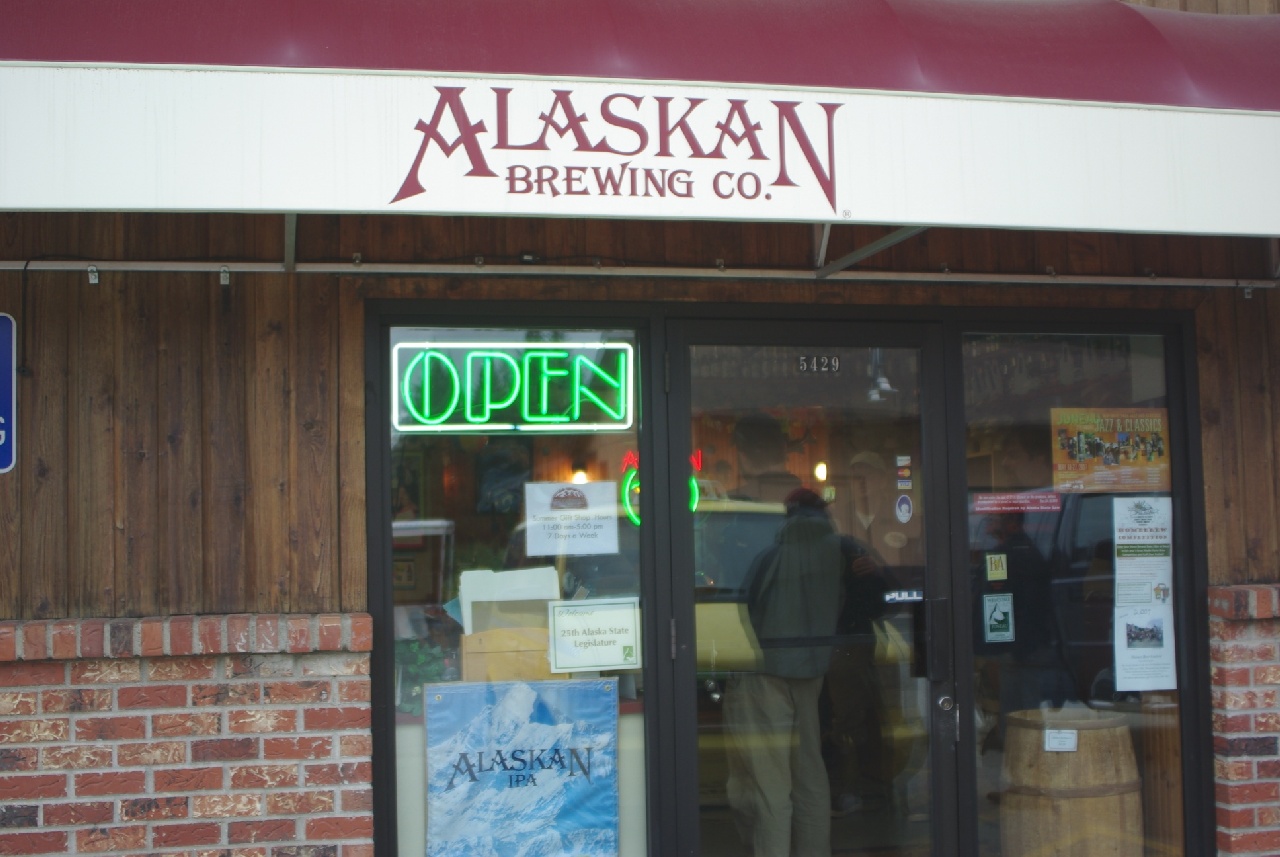
The big industries are government, tourism, and the Alaskan Brewing Company. I drink perhaps an ounce of alcohol in a year (generally wine or champagne), and never beer. (I hate the smell and the taste of it.) But not everyone on this trip has the same view of the foul-smelling liquid that I do, so we went on the tour.


Click to enlarge


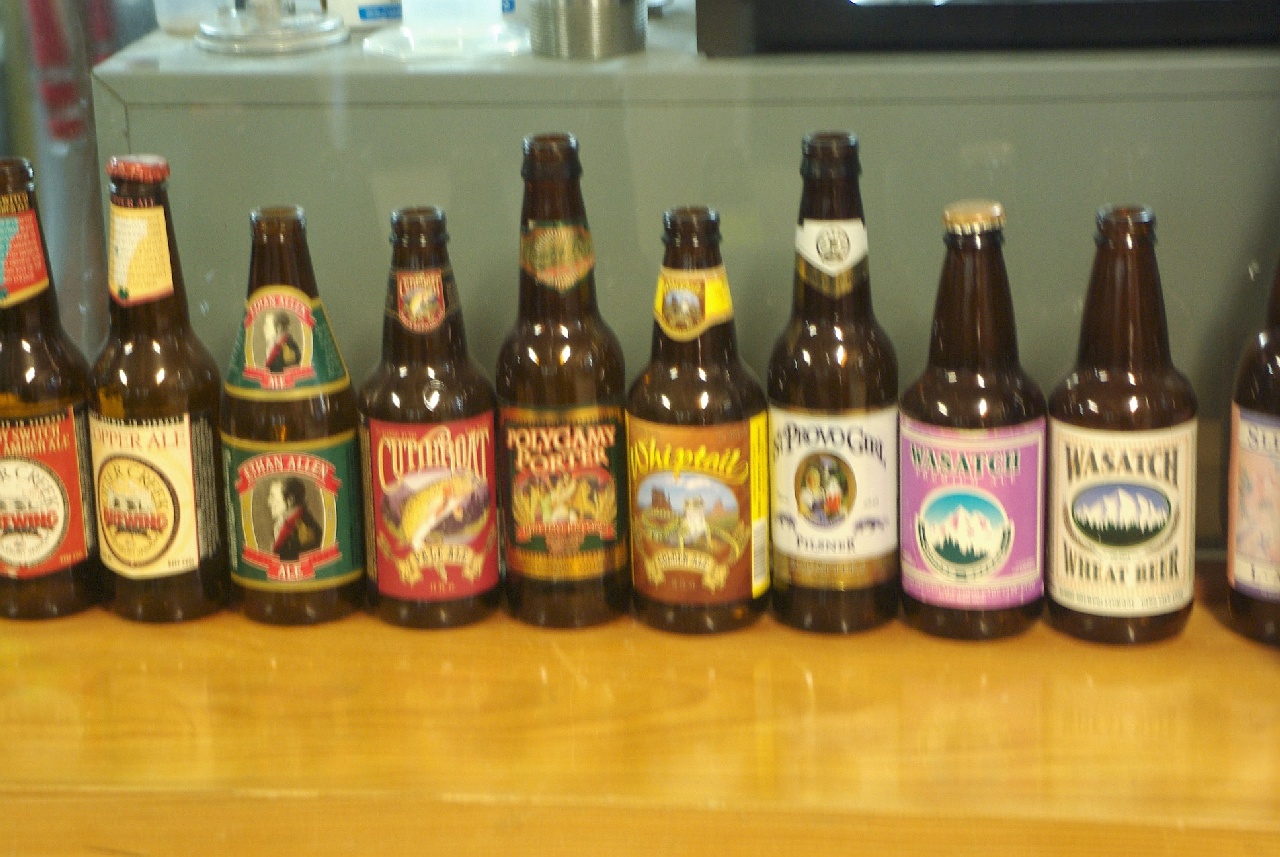
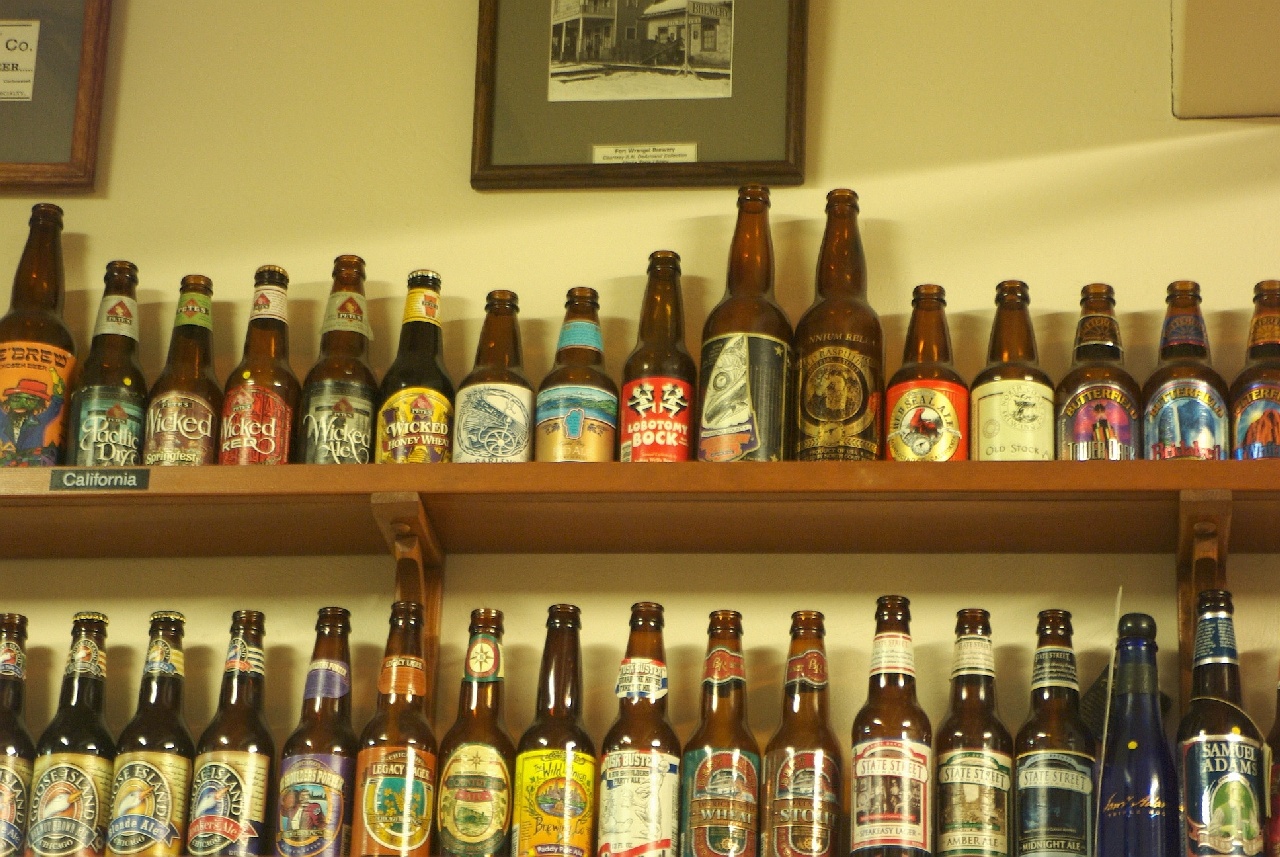
They have a bottle of as many of their competitors as they can obtain, from many states, and many countries. As you might expect, Germany is a very long shelf, and it is only because most German beers are apparently not bottled, but only in kegs, that it isn't longer. One of the more amusingly cheeky collections are from Utah brewers. You may have heard of Polygamy Porter (their slogan, "Why have only one?") but I was unfamiliar with St. Provo Girl, parodying the St. Pauli Girl beer label. (The light wasn't great, and a flash didn't help, sorry about the blur--pretend you have been sampling the local product for a while):


Click to enlarge


There are also some amusingly labeled beers from California, such as the Lobotomy Bock in the center of the top shelf.


Click to enlarge


By the way: they give you a chance to sample every beer they make, all eight of them--no charge. By the way, one little surprise: most (all?) states have laws that either prohibit supplying alcohol to minors, or prohibit anyone but parents supplying alcohol to someone under 21. Alaska law makes it a felony punishable by up to five years in prison to supply alcohol to someone under 21. I would suspect that at least part of the reason for this very severe punishment is that Alaska has a lot of Indian villages where alcohol has long been a serious social problem. A number of villages completely ban alcohol as a result.

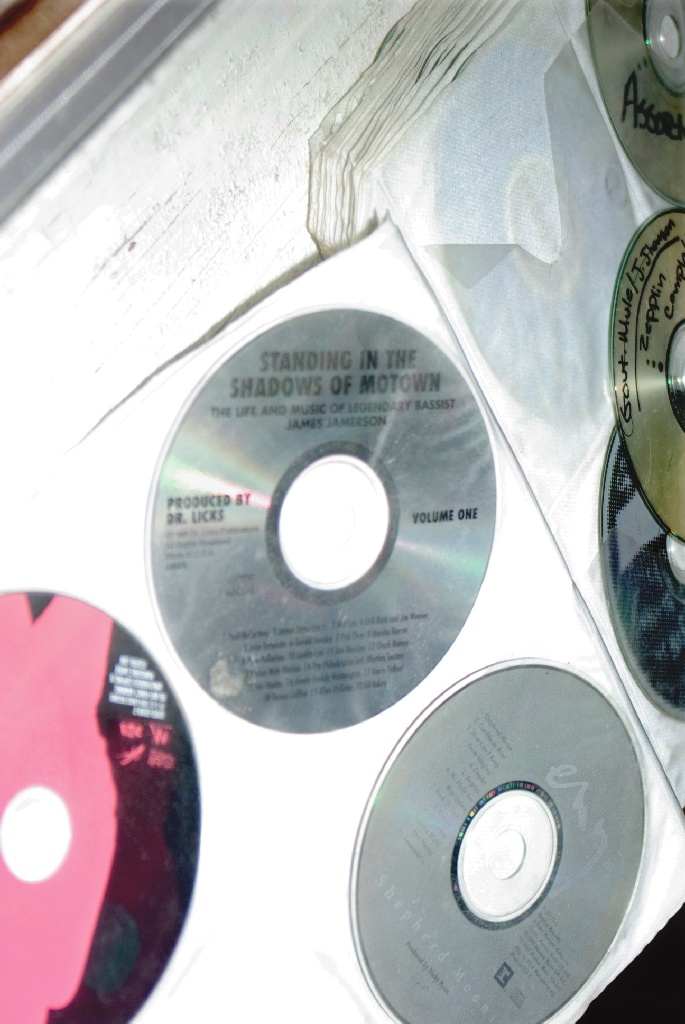
The bottling plant was operational when we arrived, but it had shut down by the time we were done. I took this picture to show you the CDs that they apparently play while bottling beer--and primarily because a friend of my was one of the producers of the documentary Standing in the Shadow of Motown:


Click to enlarge


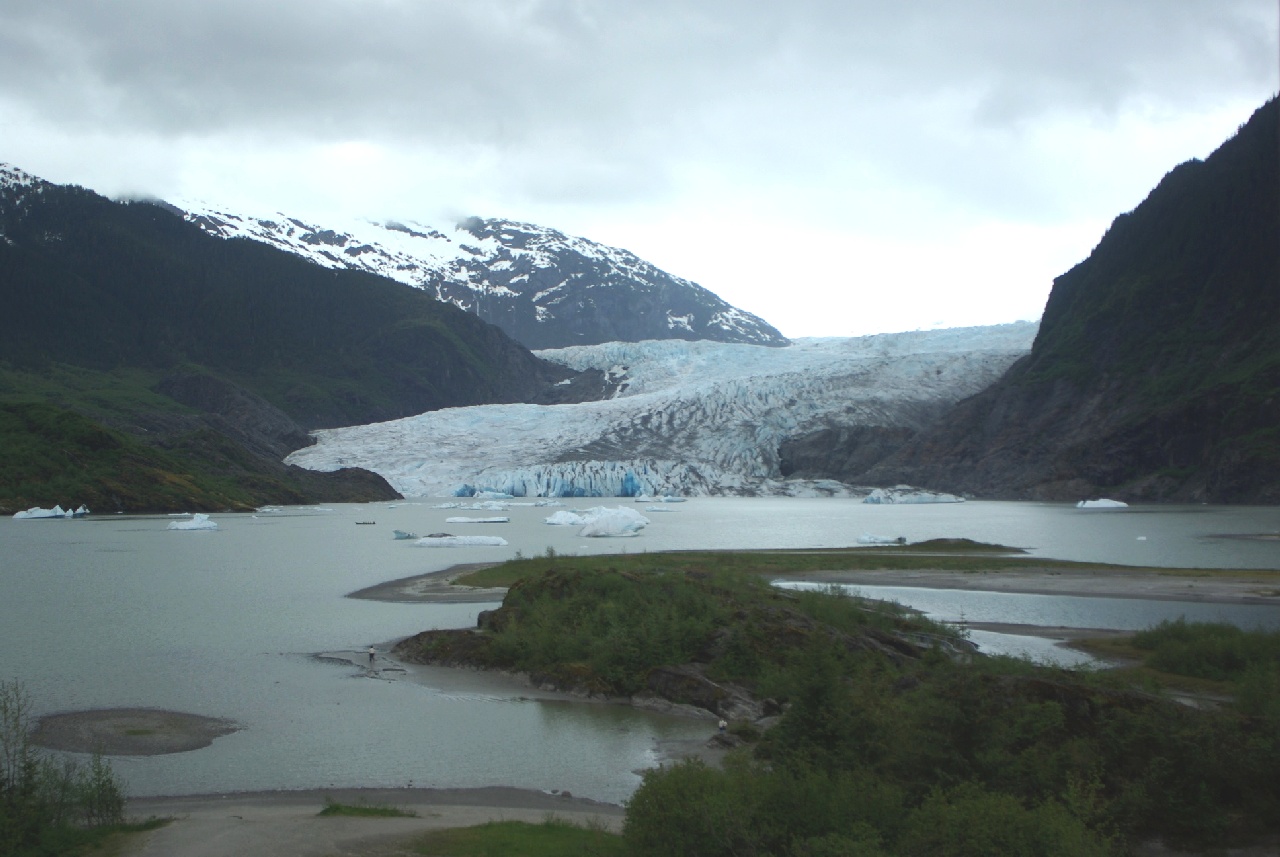
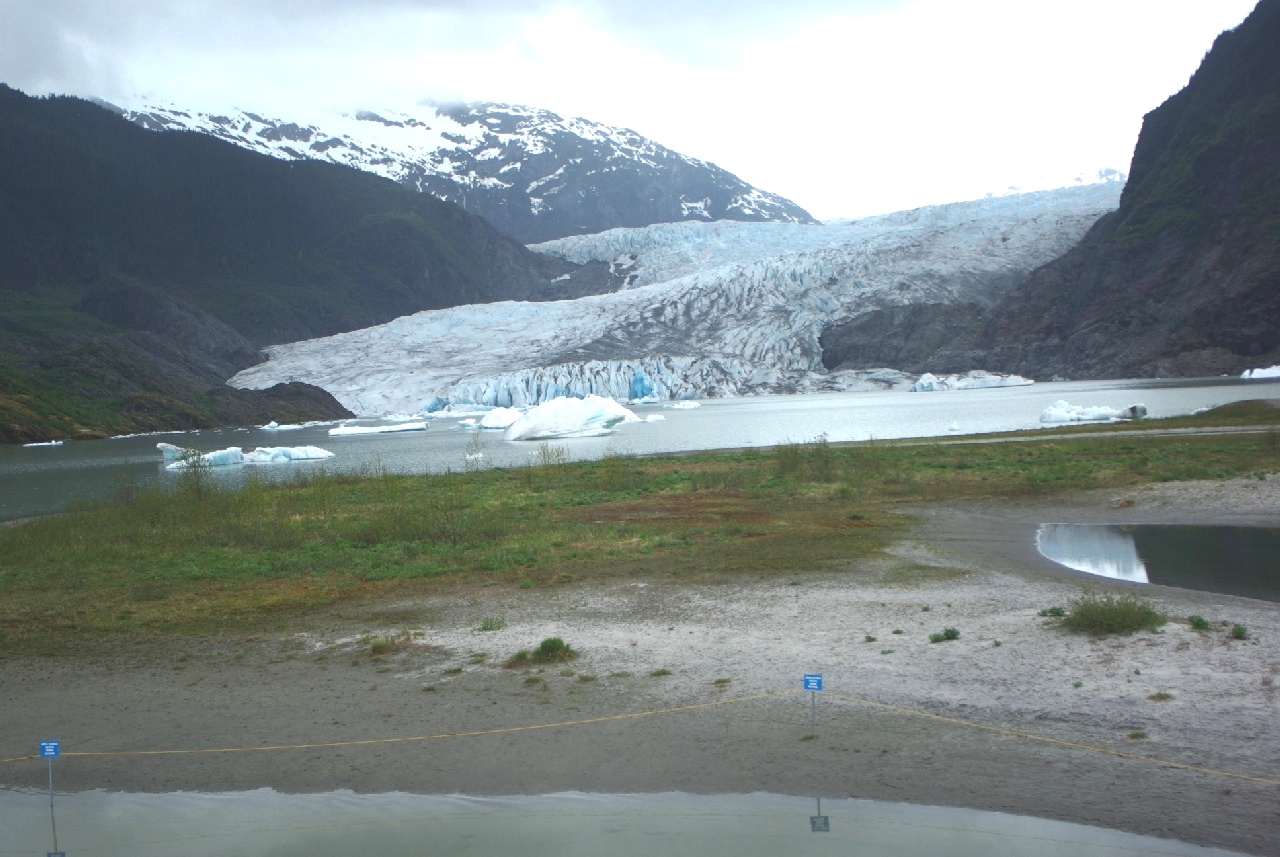
Anyway, we went to visit the Mendenhall Glacier. As someone (maybe with the Park Service) explained it to me, this isn't the biggest glacier in Alaska, or even in this area. It just happens to be the most accessible by car in the area, so it is the tourist glacier.

None of the pictures that I have taken really captures the majesty of Alaska, and this set of pictures is even more inadequate to really get how beautiful and vast of a place that it is. The name "Alaska" is reputedly from the Aleut words for "The Great Land," and it really is.

There were bald eagles everywhere--but generally too far away for me to get a decent shot.


Click to enlarge


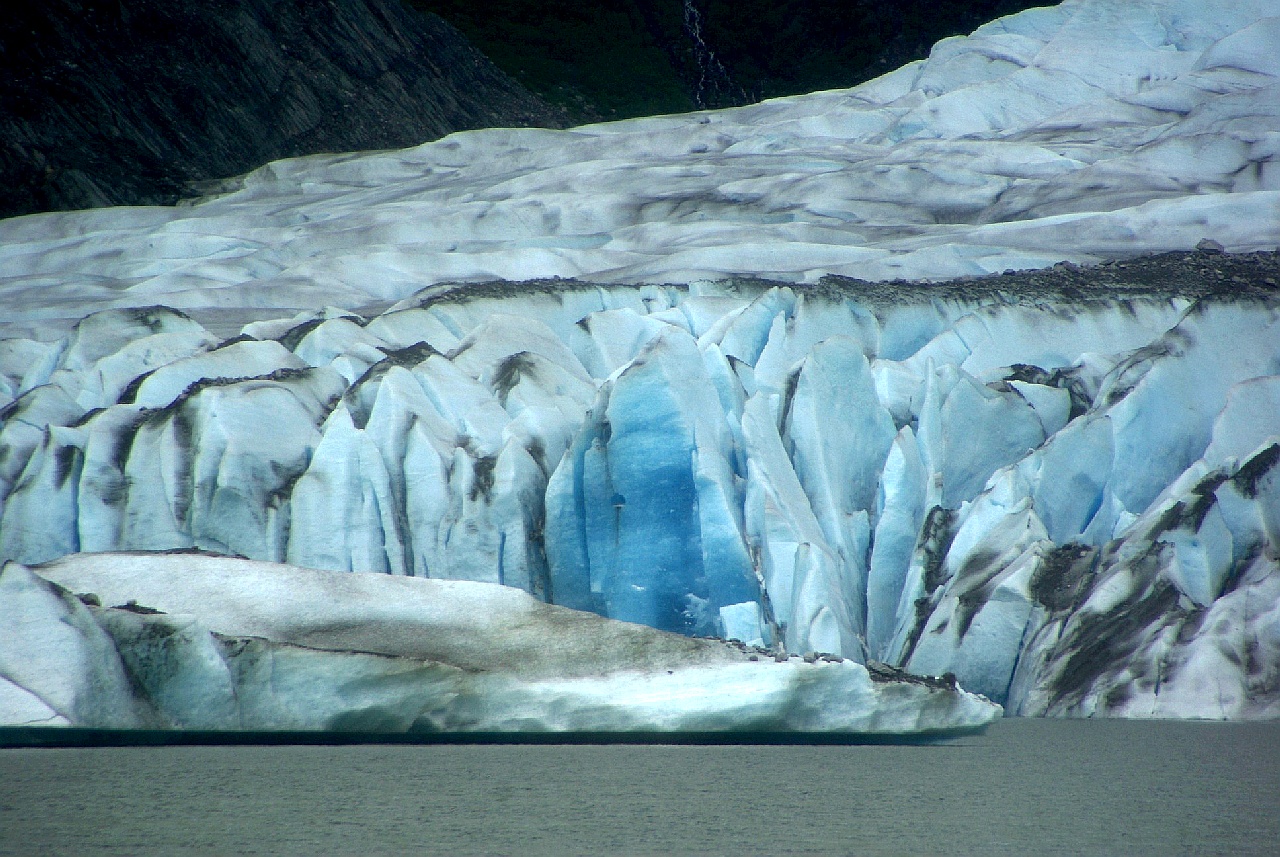
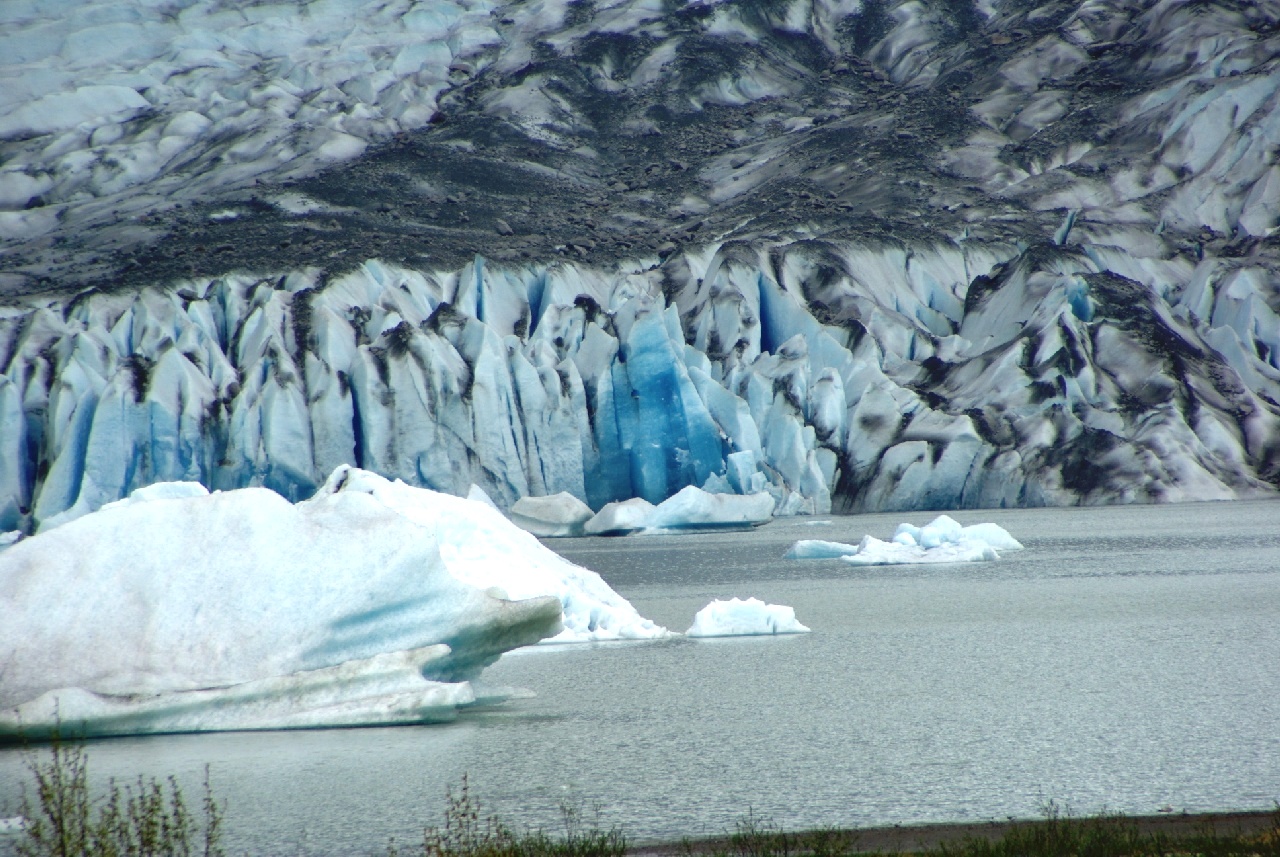
Here are some shots of the Mendenhall Glacier from various distances--and this should give you an idea of how big this is.


Click to enlarge


Click to enlarge


Click to enlarge


Click to enlarge


Click to enlarge


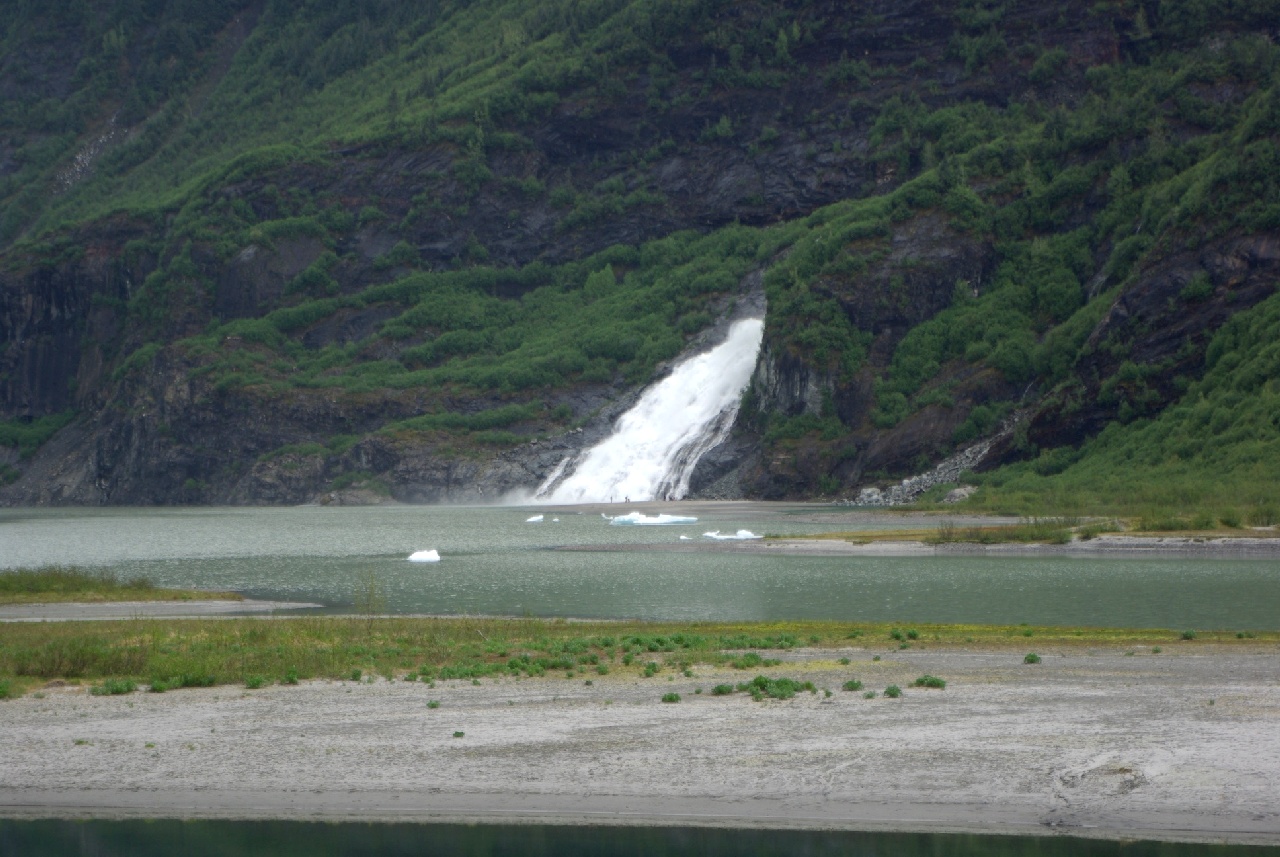
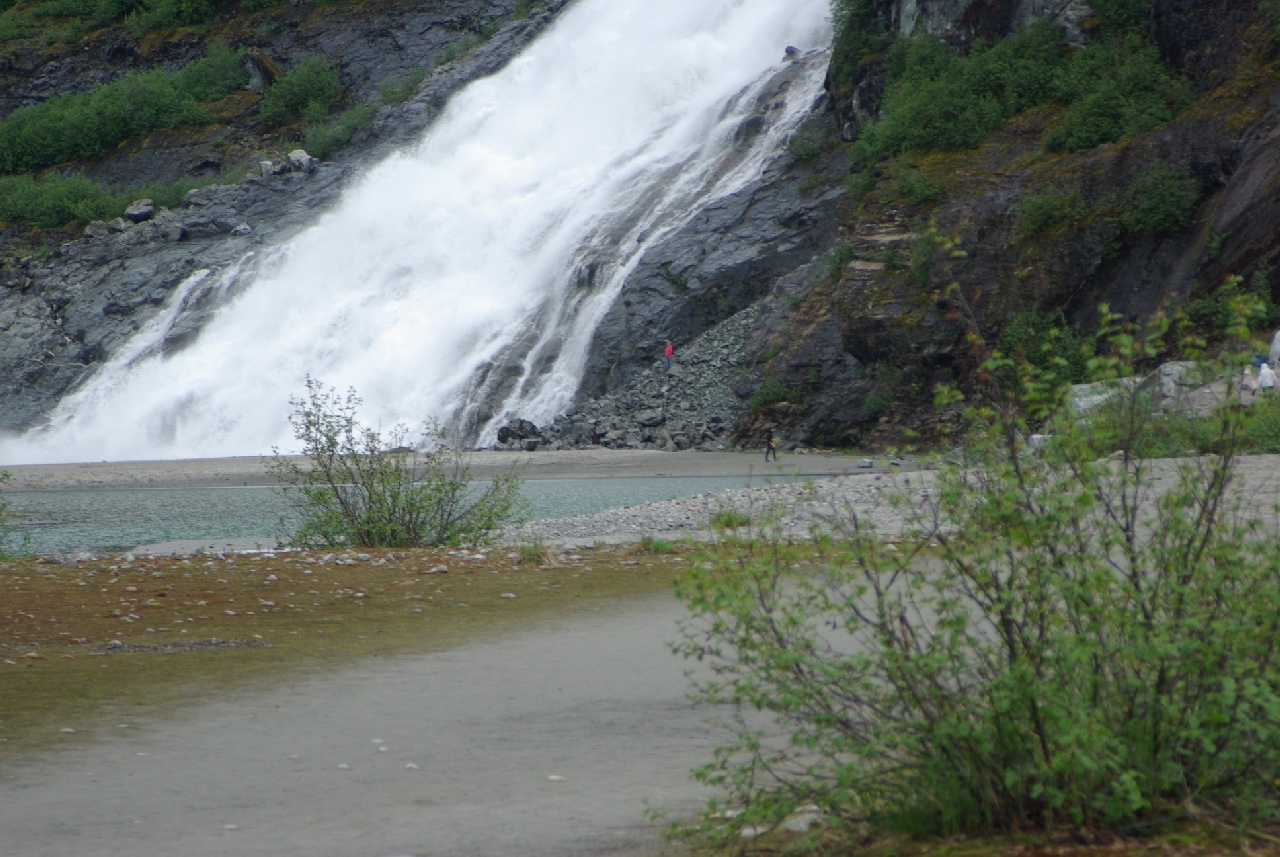
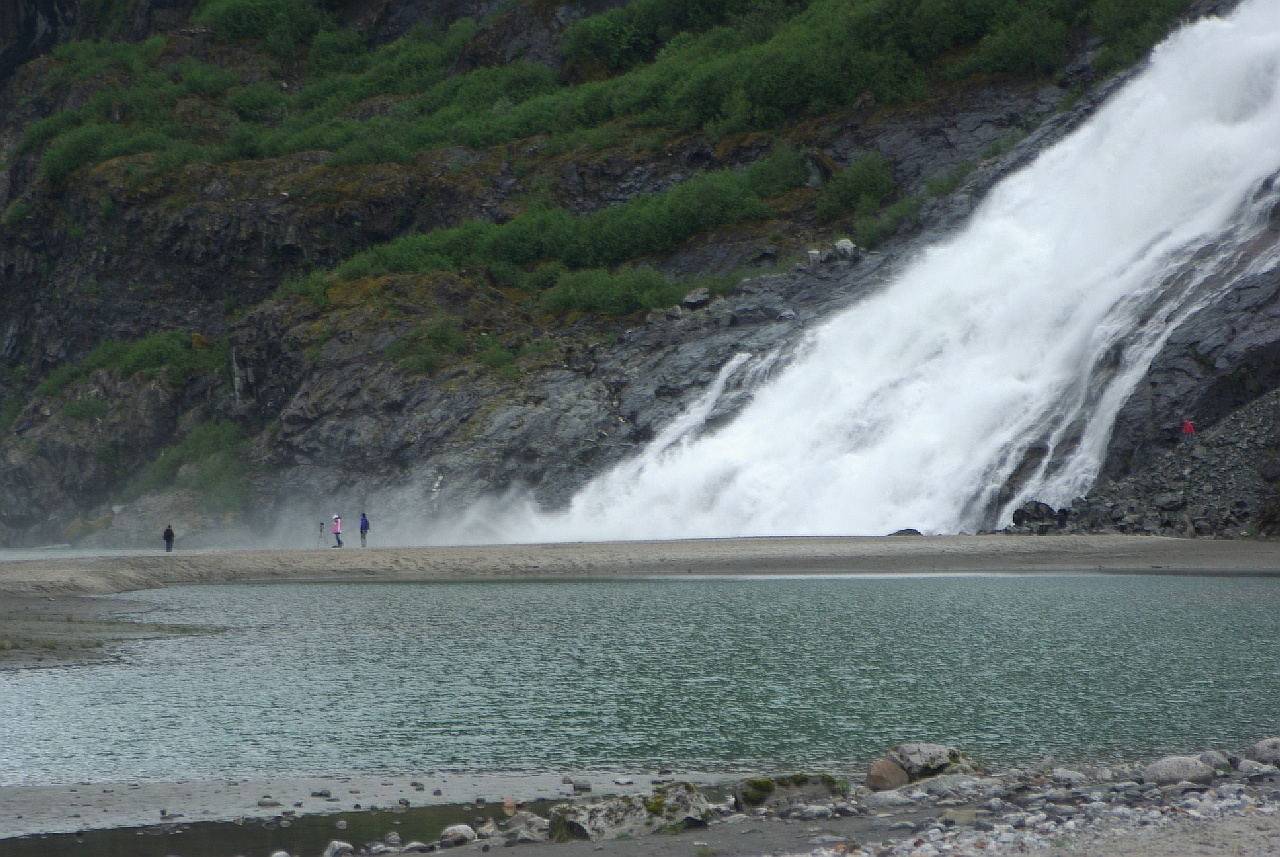
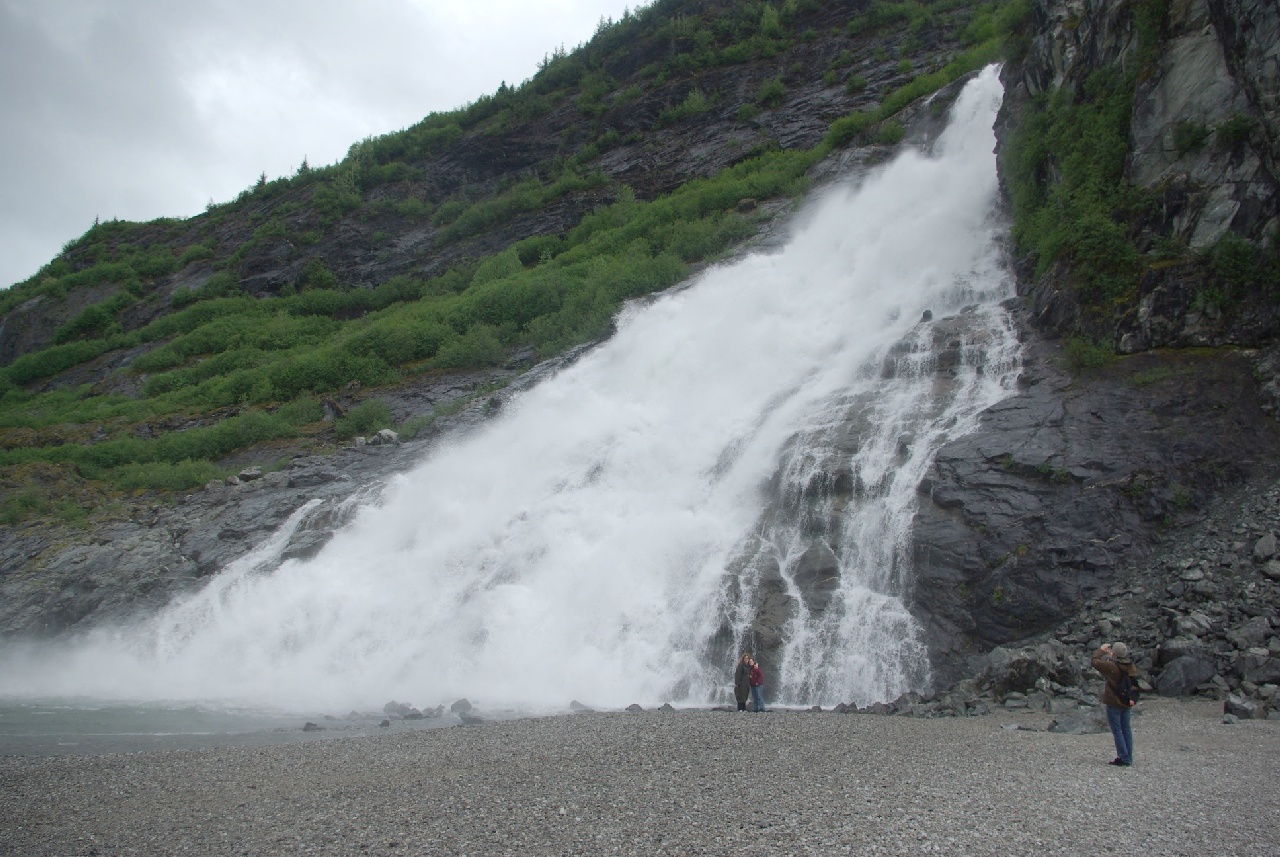
On the right (south) side of the glacier there was a waterfall--but until you get close--and notice the scale of the people below it--you don't really get the size.


Click to enlarge


Click to enlarge


Click to enlarge


Click to enlarge


This was a mildly challenging rock climb to get to--not really difficult, but enough of a struggle to impress our kids that Mom and Dad weren't too old and decrepit to attempt it.

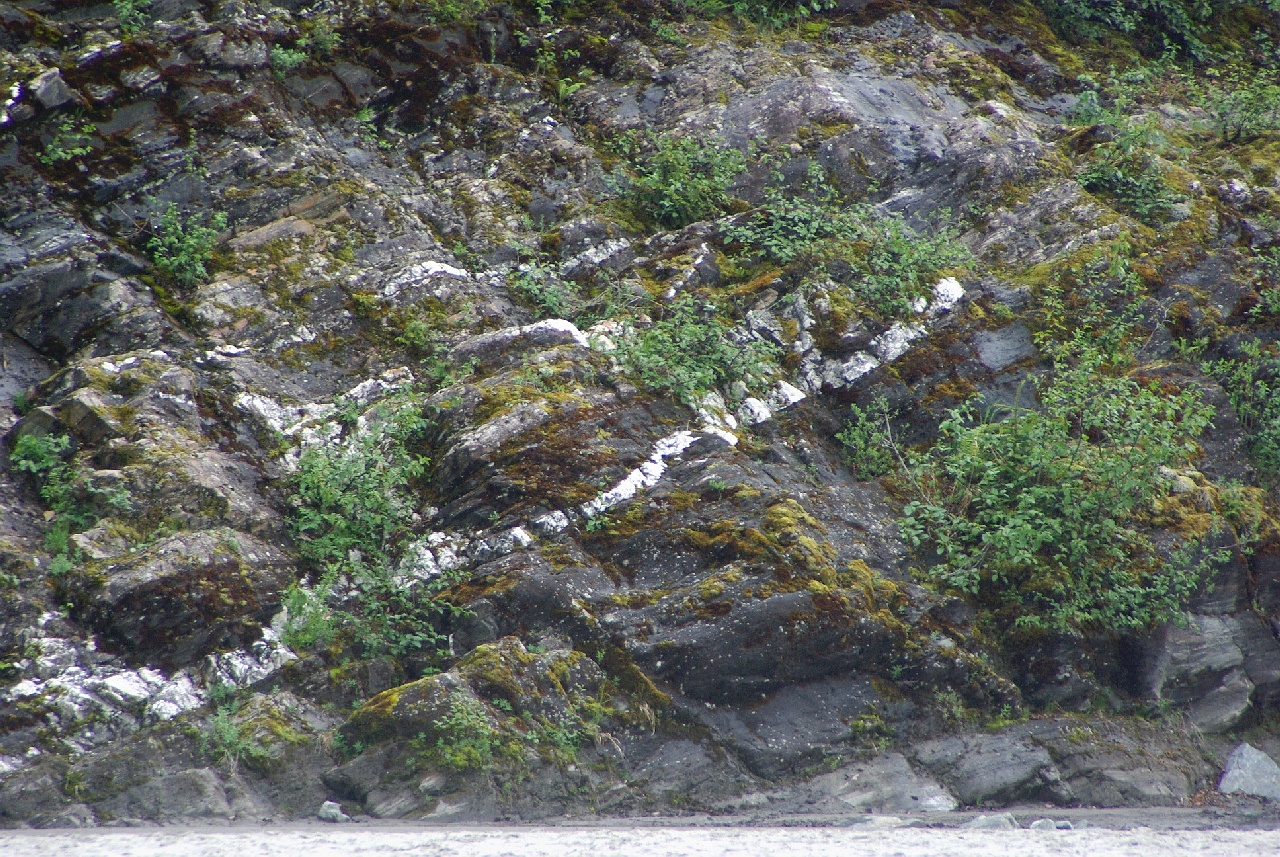
The underlying rock is granite with big, beautiful quartz intrusions in it. If you are a gold miner (like Joe Juneau was), they are especially beautiful! If you see quartz veins in granite, a gold miner could do worse.


Click to enlarge


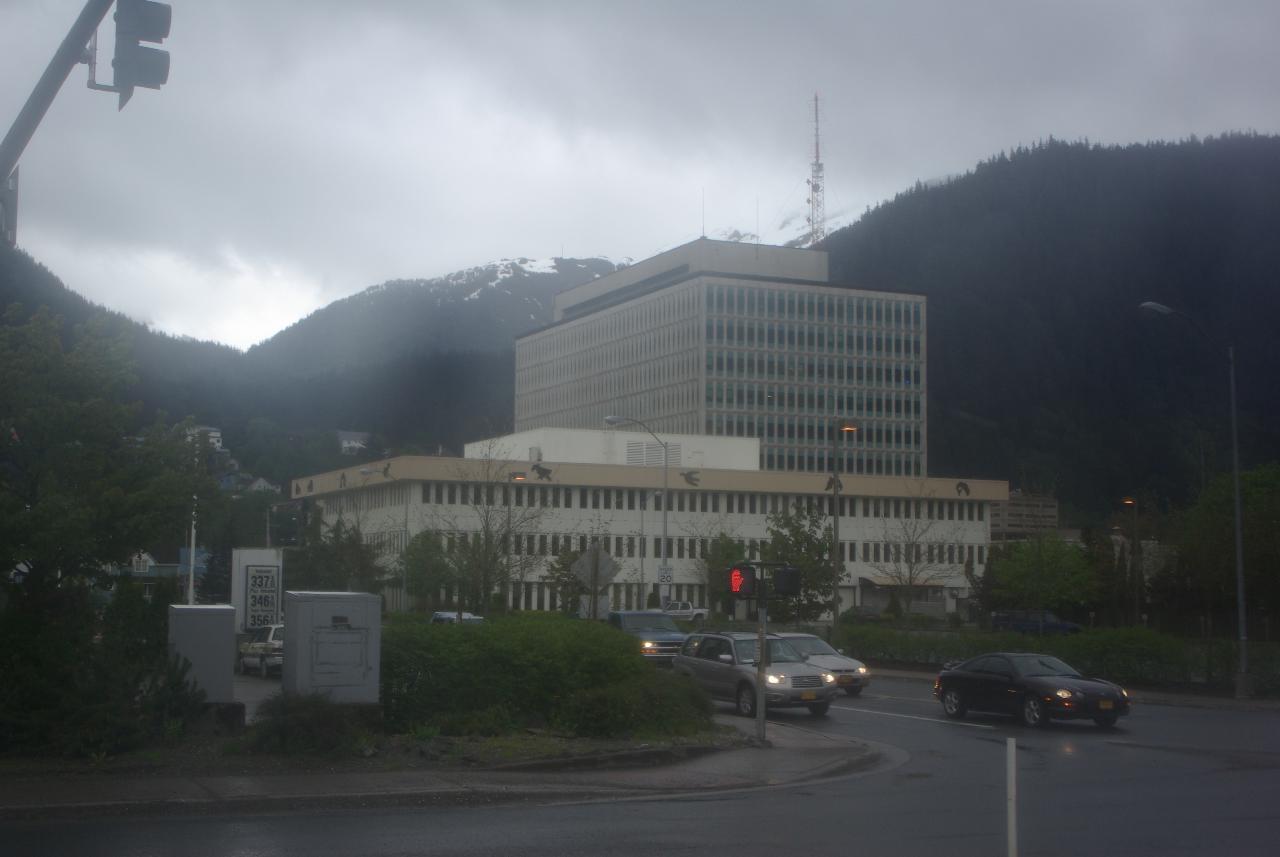
This not terribly impressive building (photographed through a foggy bus window) is the current Capitol building--a leftover federal building that was never replaced with something more grand while they were arguing about whether to move the state capital out of Juneau or not.


Click to enlarge

Tuesday, June 5, 2007

Alaska Cruise: Tracy Arm, Fjords, Glaciers, and Global Warming

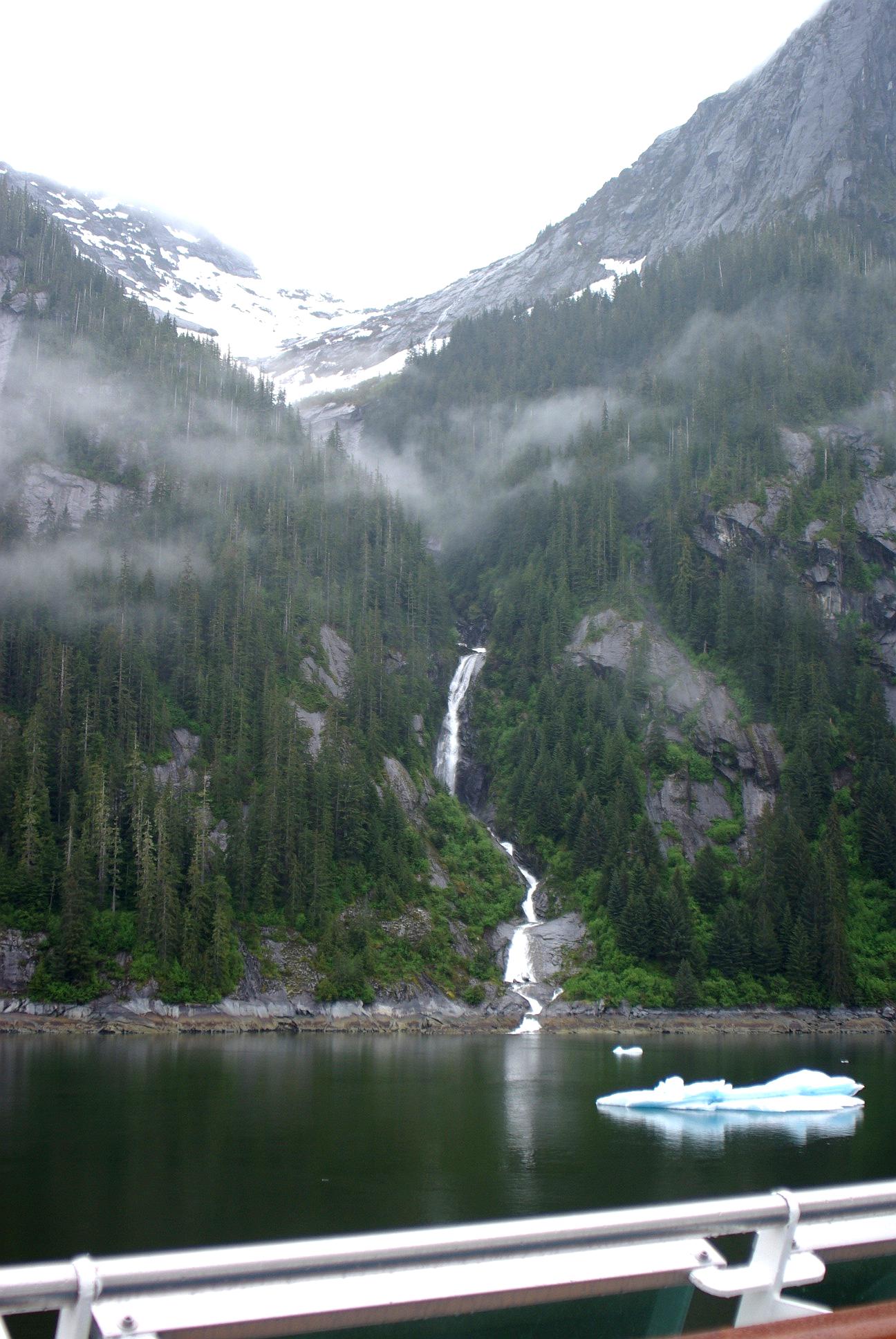
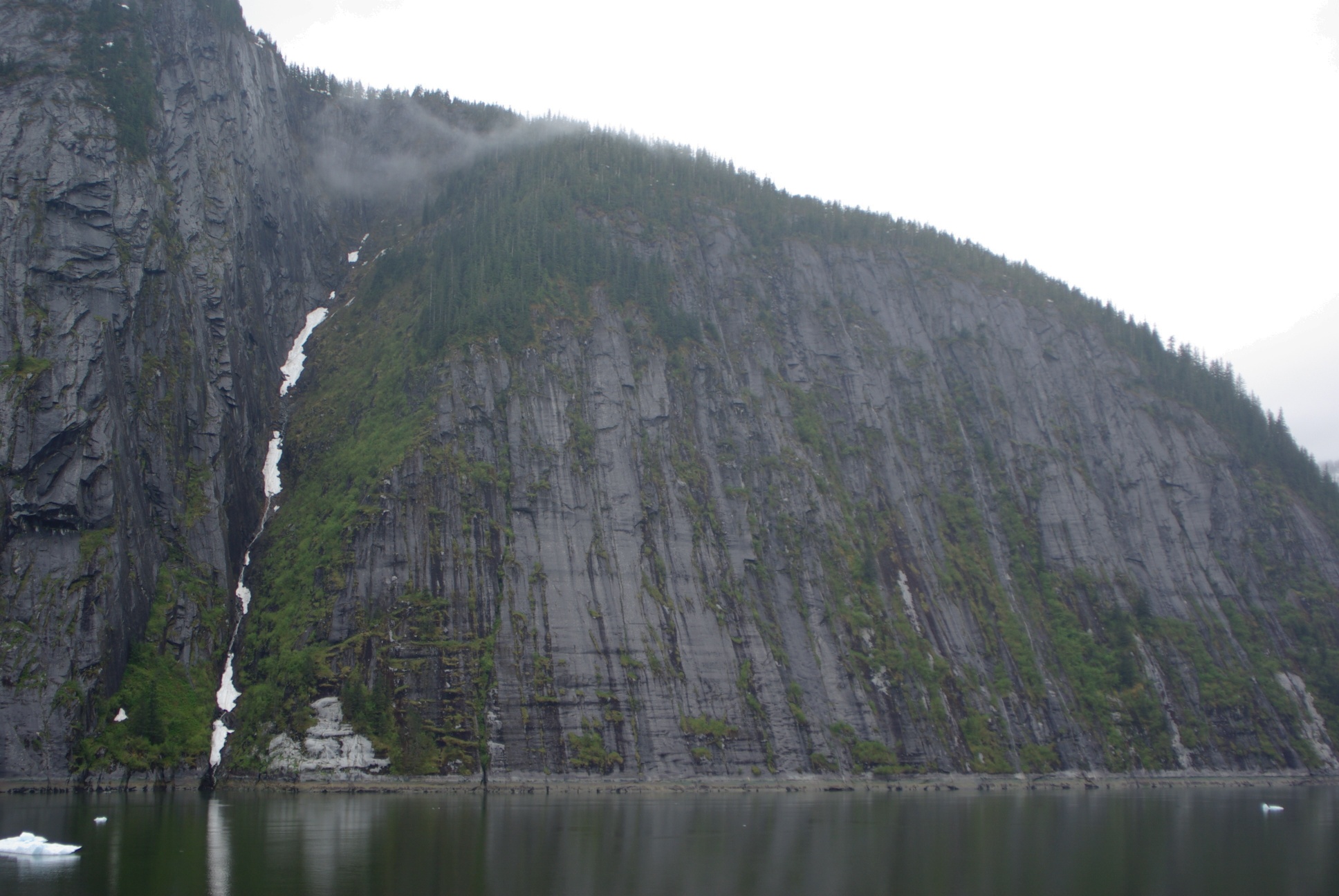
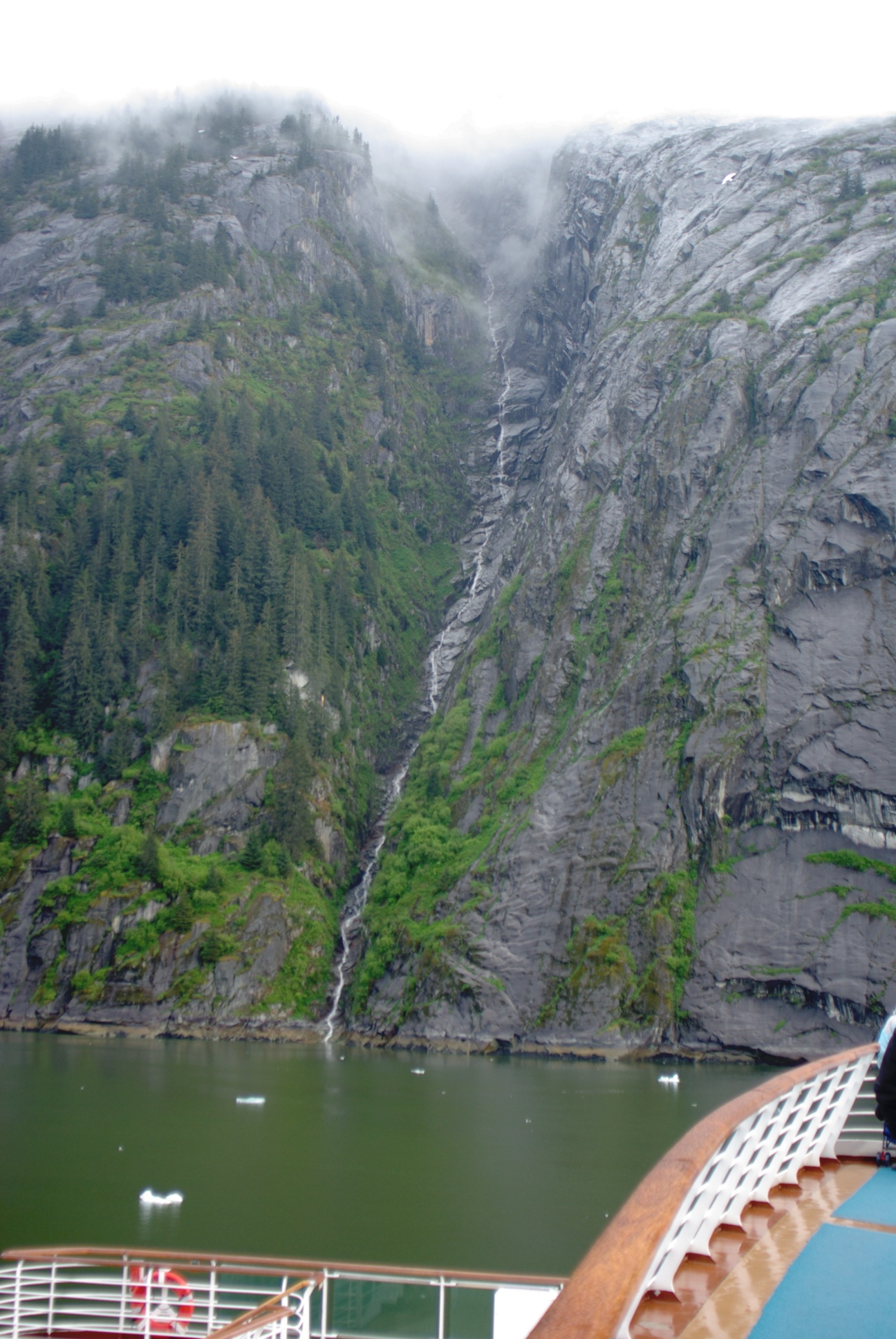
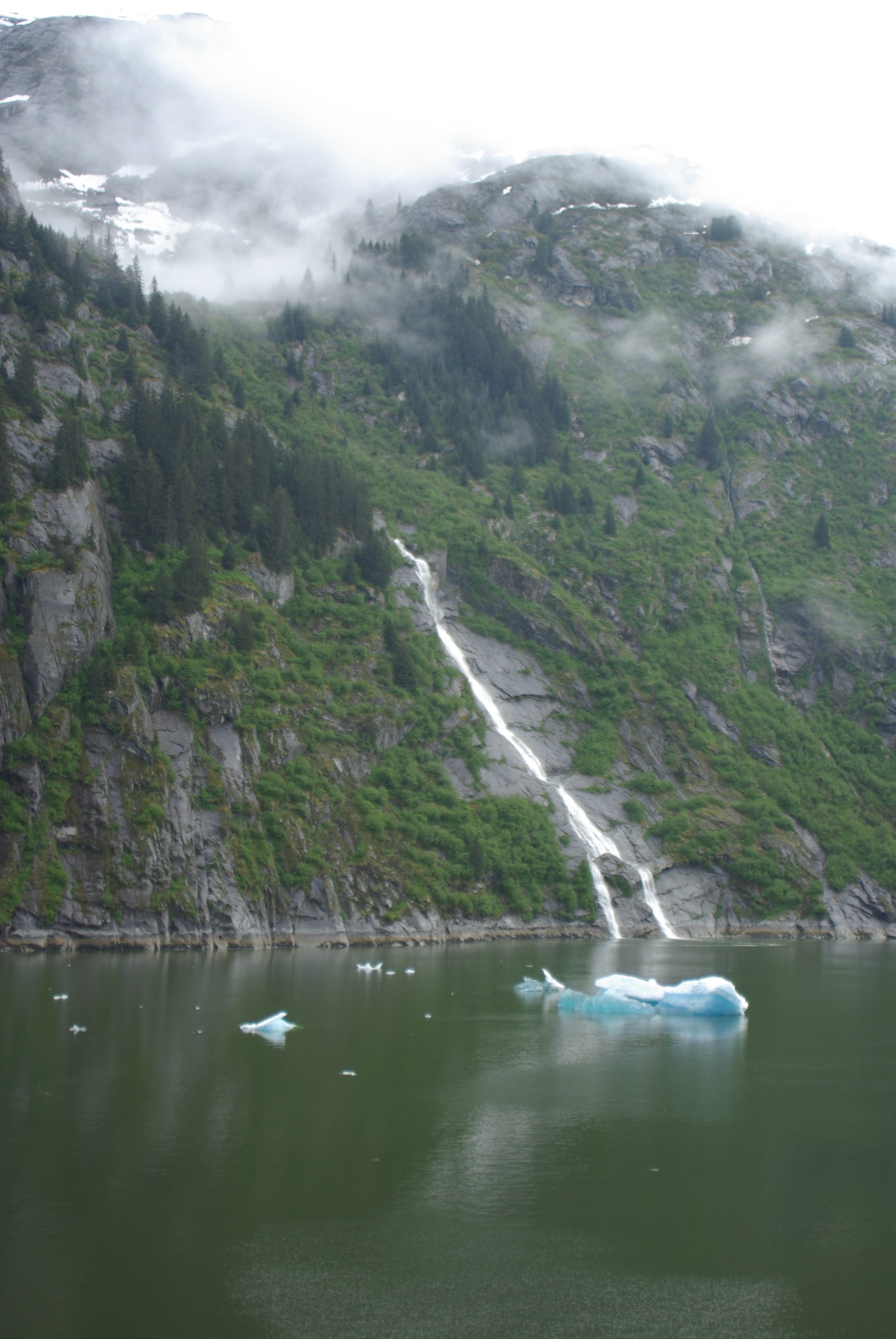
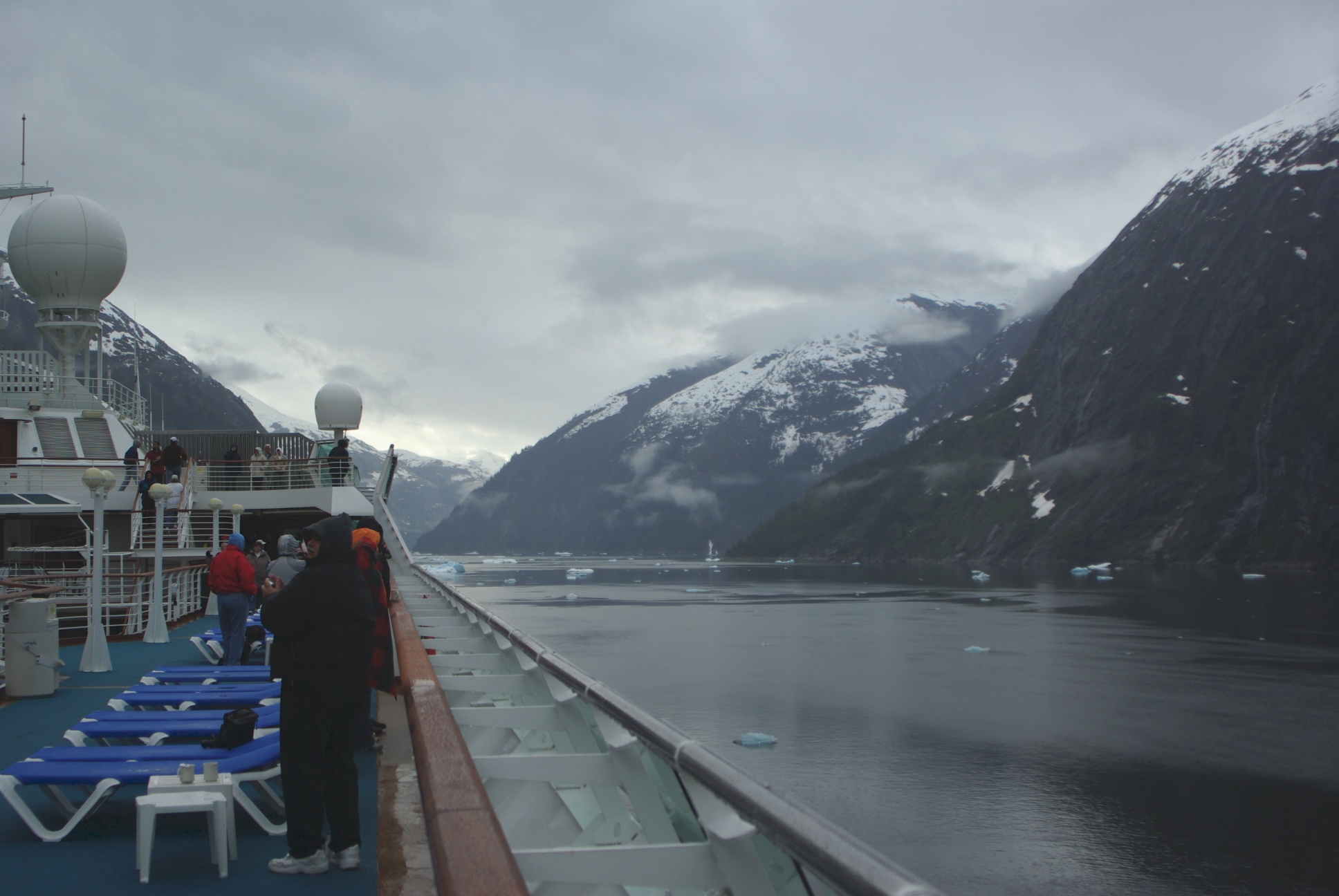
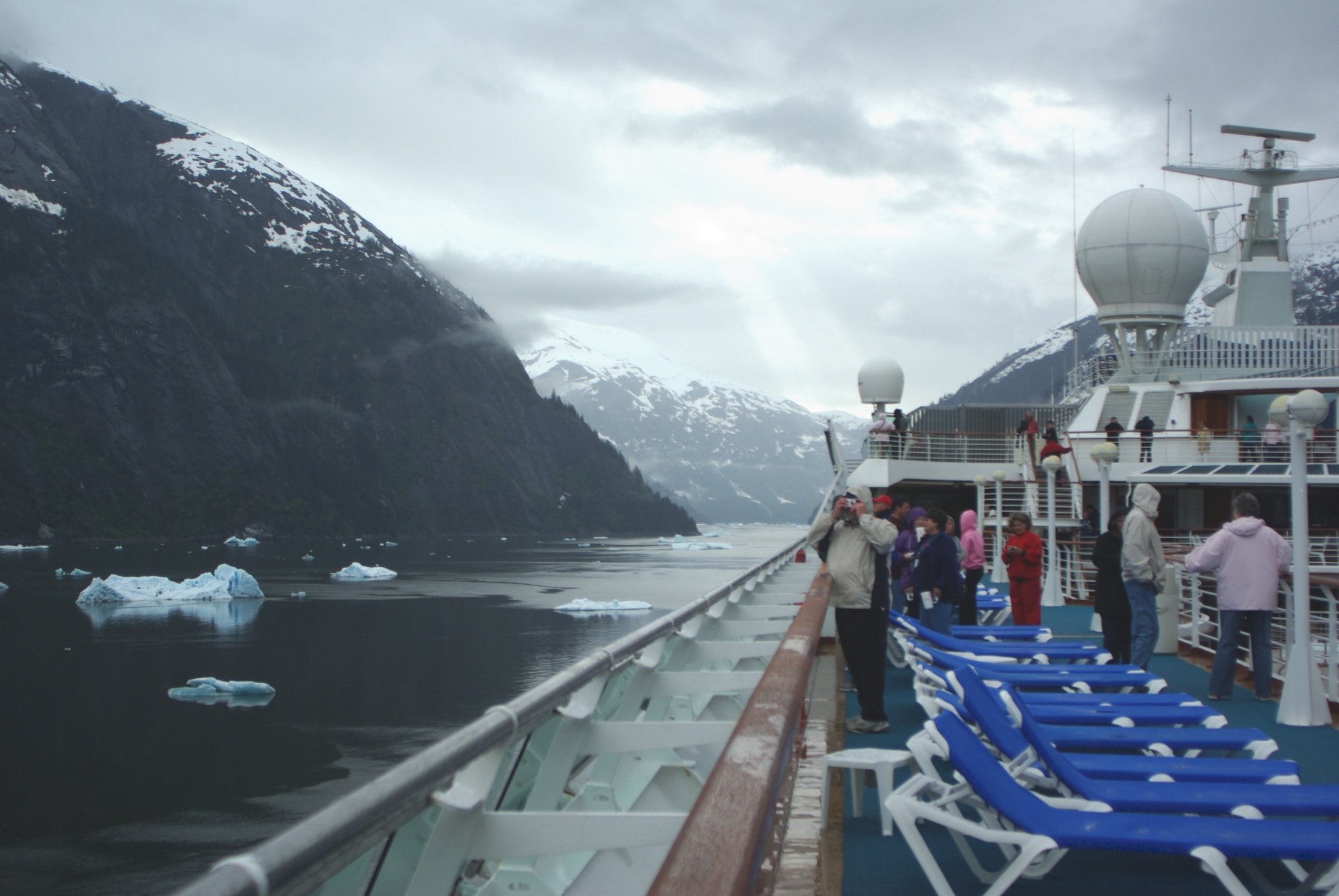
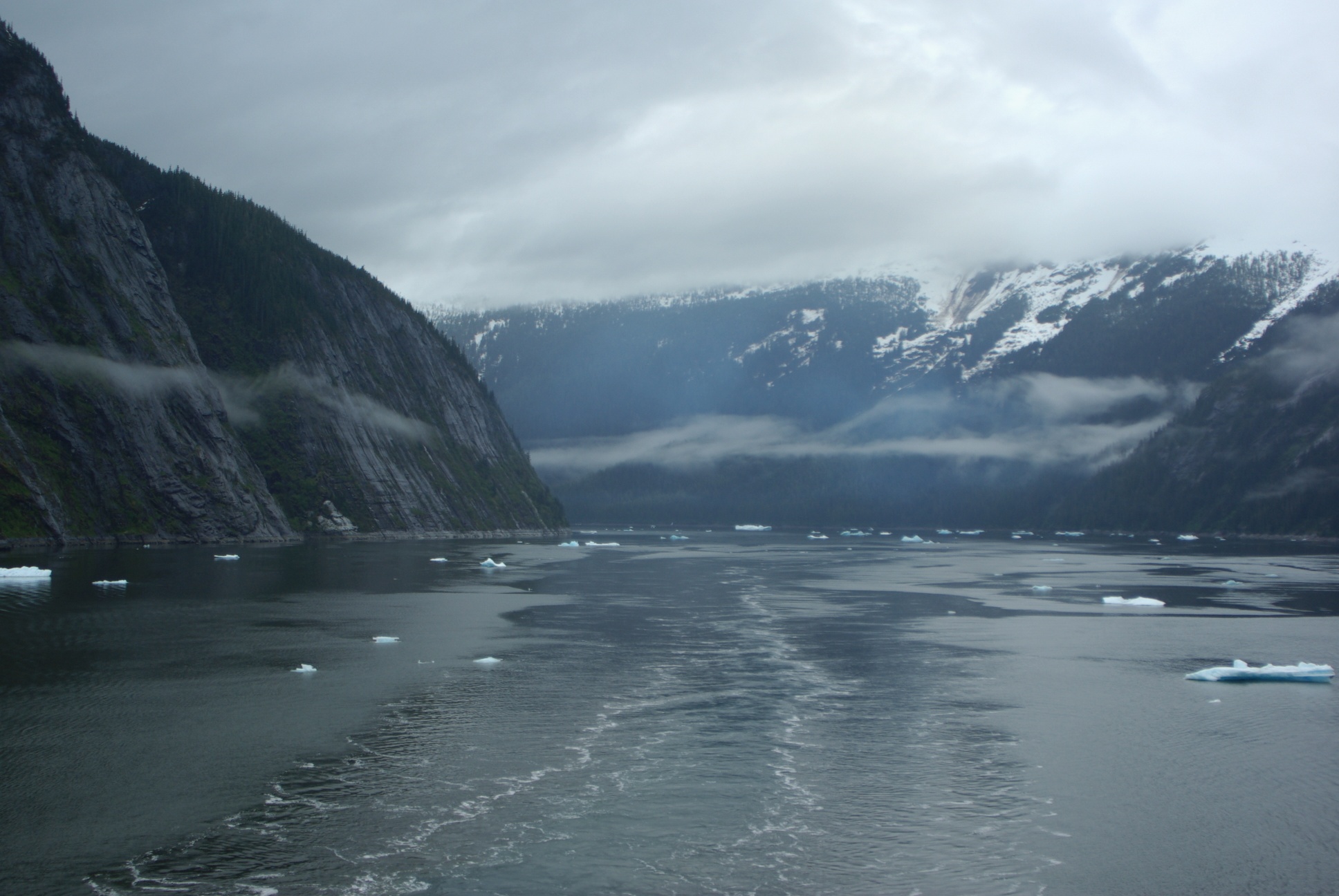
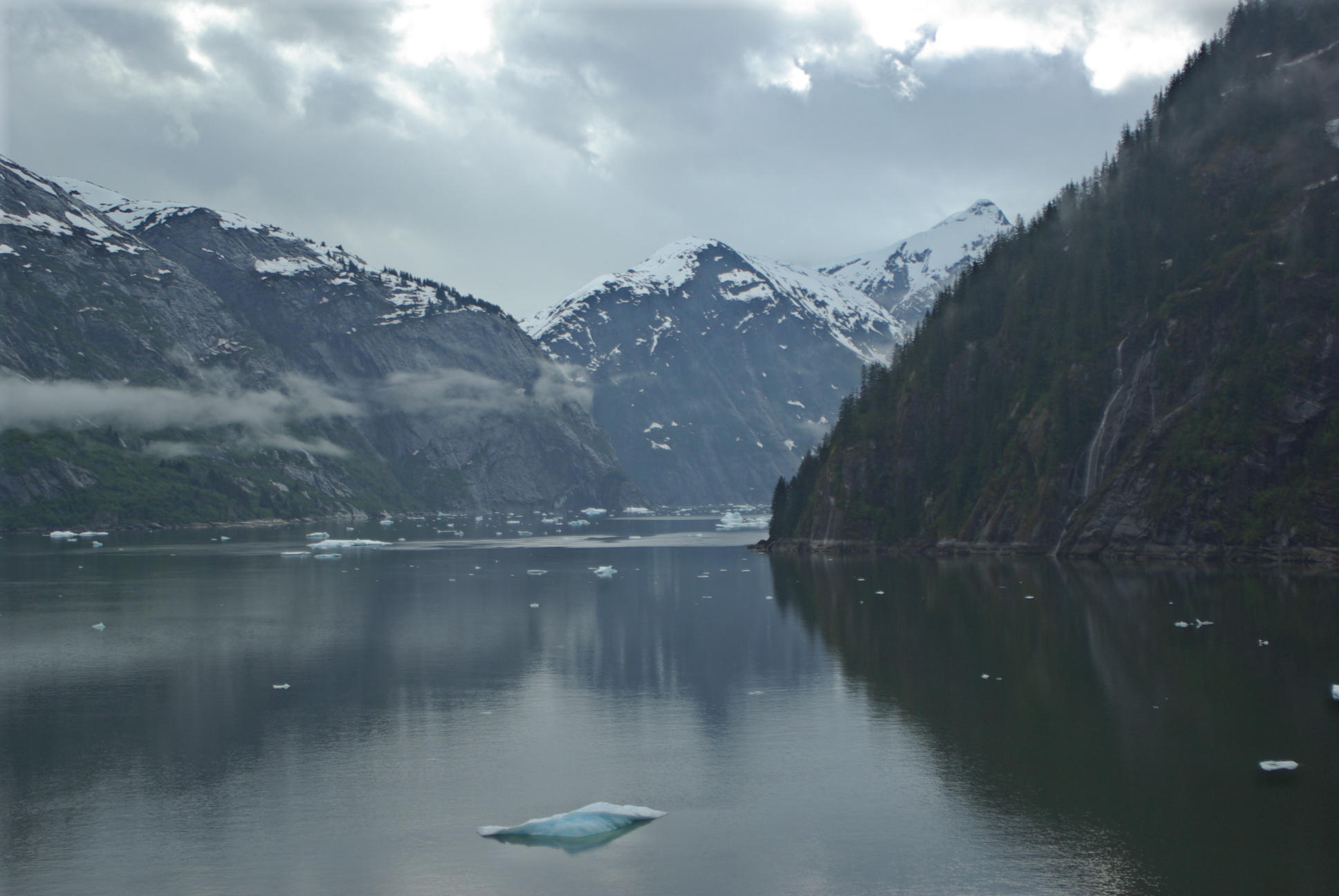
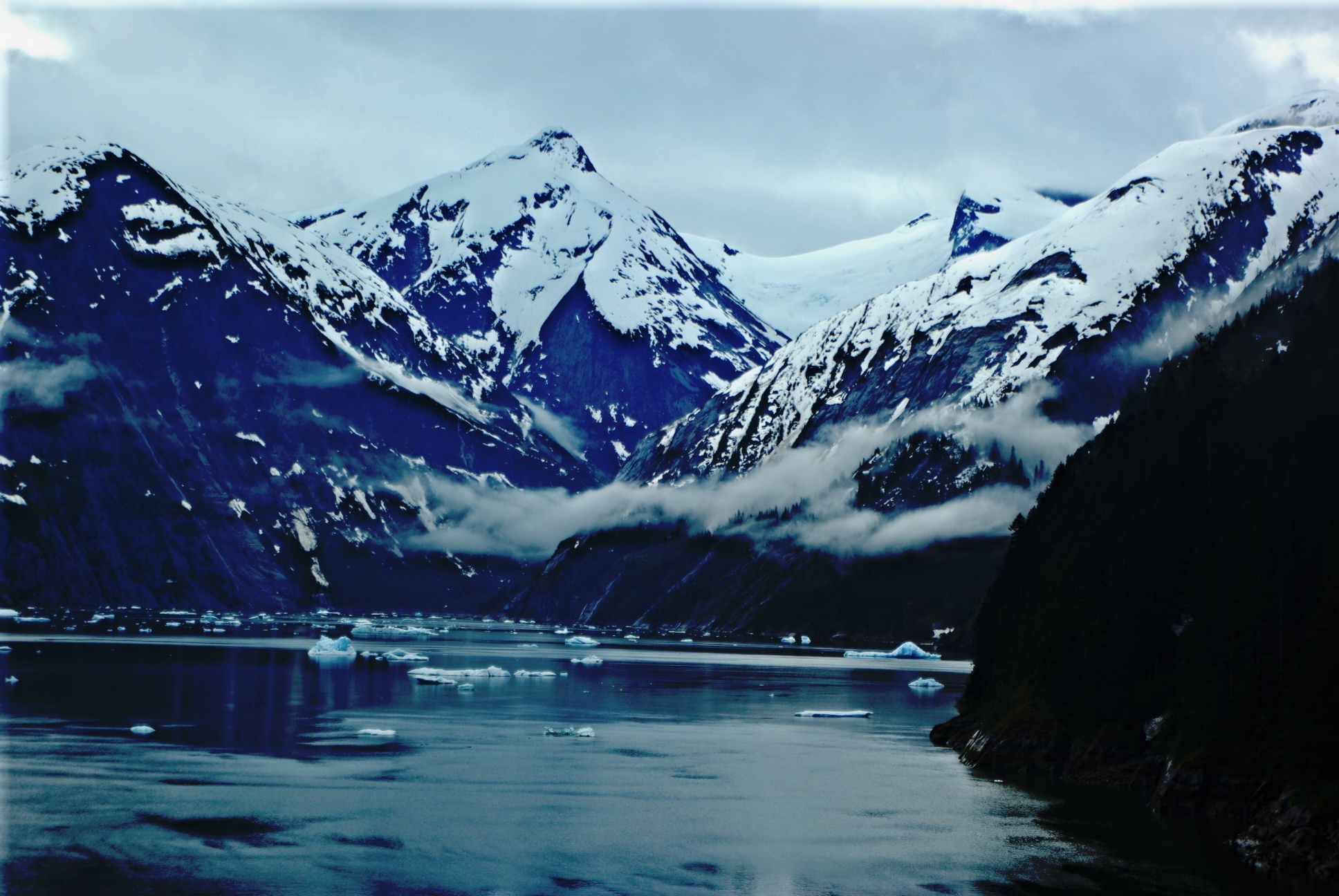
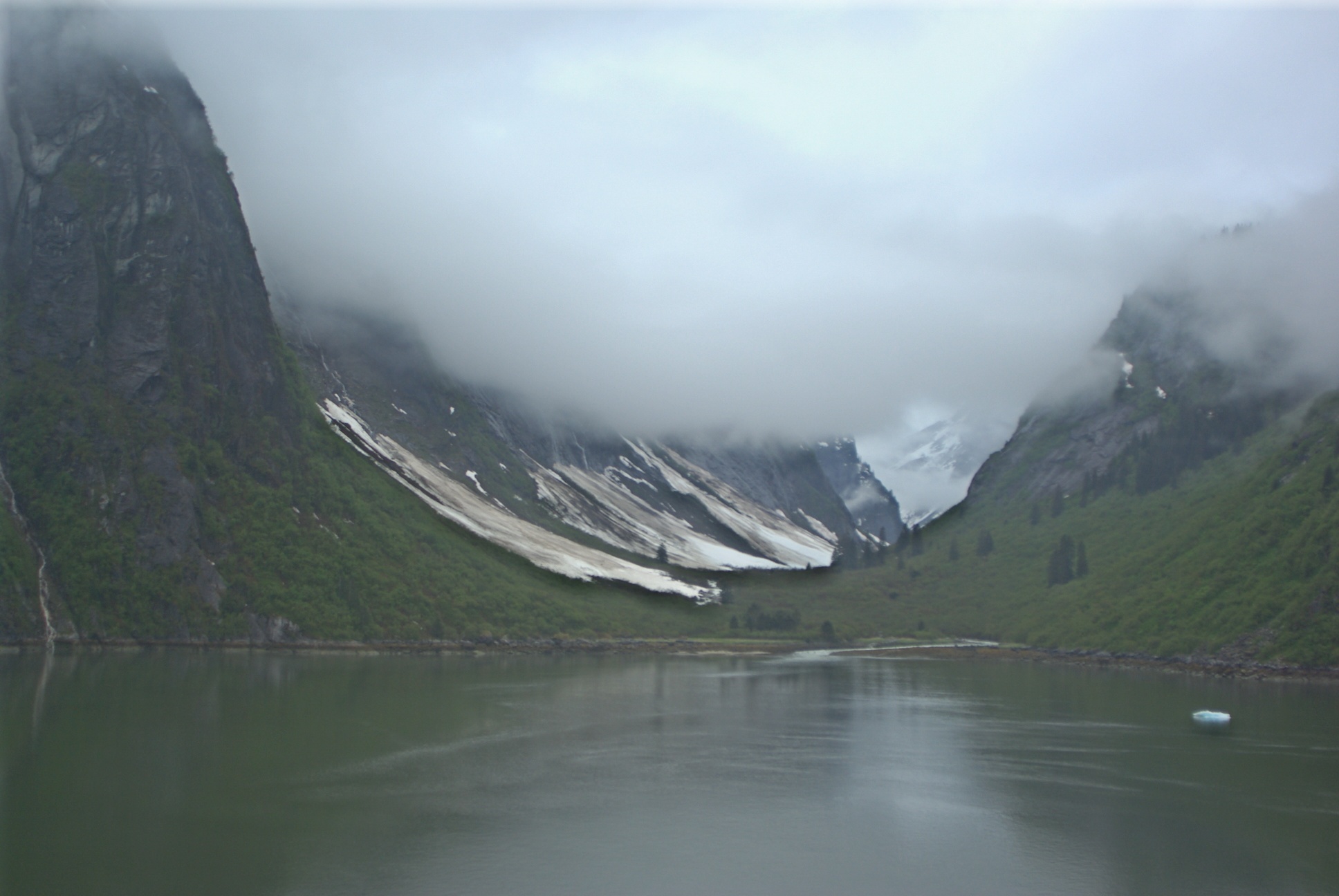
The morning after Ketchikan we were supposed to be traveling through Tracy Arm, a fjord in Alaska. I had heard that it was spectacular, so I got up early--and then went and woke up the rest of my party. Wow! These pictures just don't do it justice.

Another passenger who has seen Norwegian fjords says that Tracy Arm is actually more impressive--steeper cliffs, and deeper water. Fjords are the result of glaciers scraping through a valley during the last Ice Age, when ocean levels were typically 300-350 feet lower than today (all the water was locked up in glaciers), and so when the ocean levels rose, those glacier-filled valleys became steep inlets of the ocean.

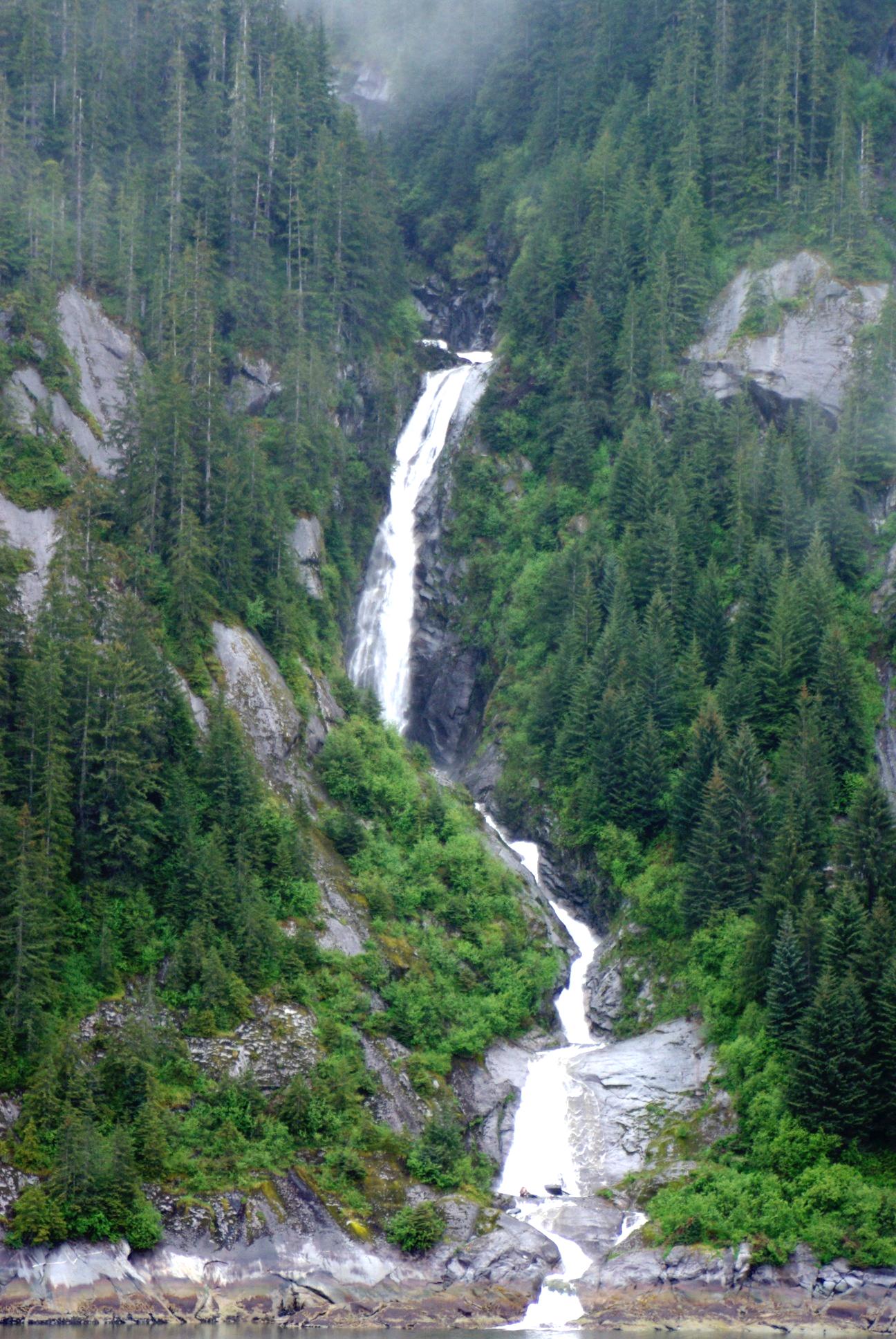
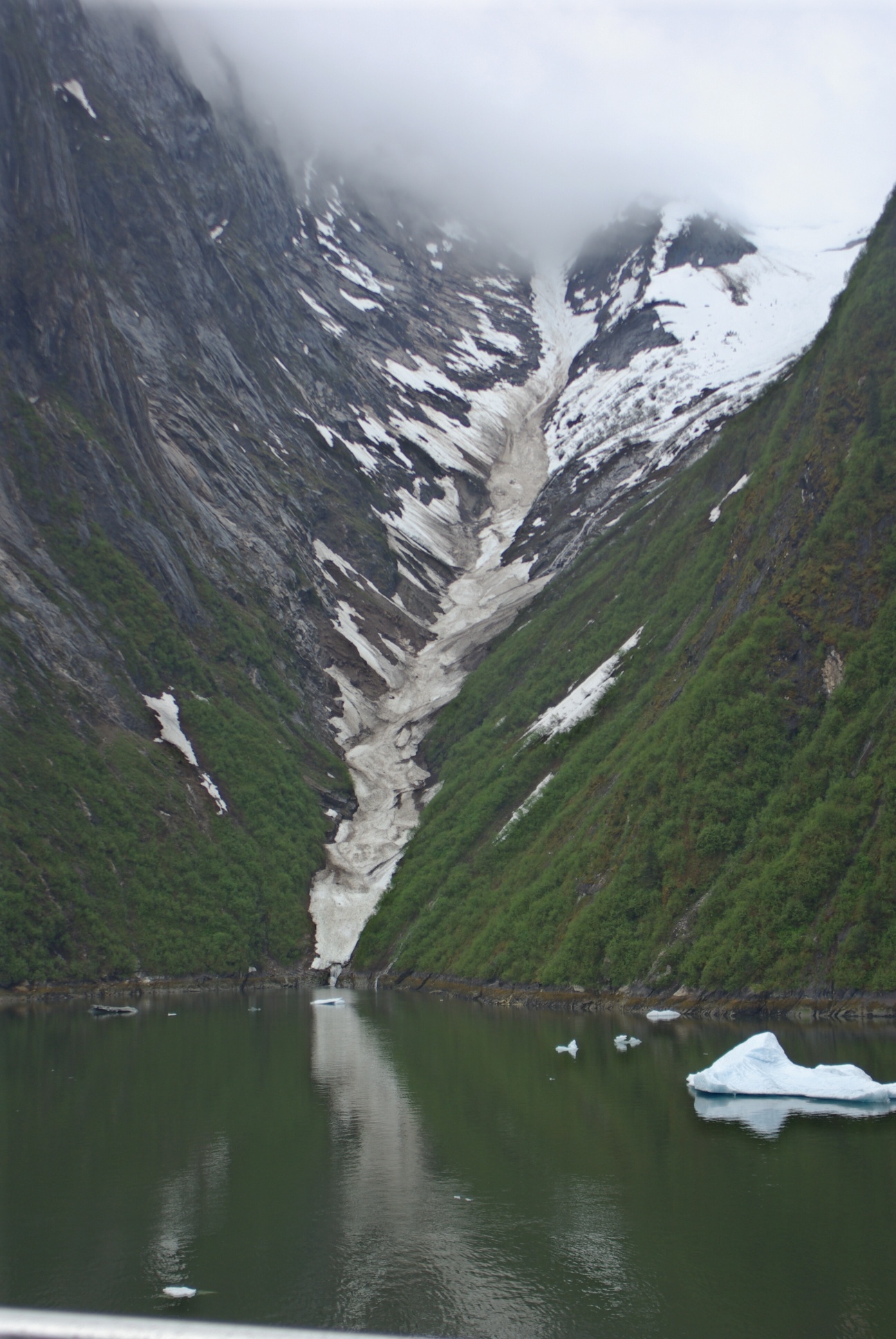
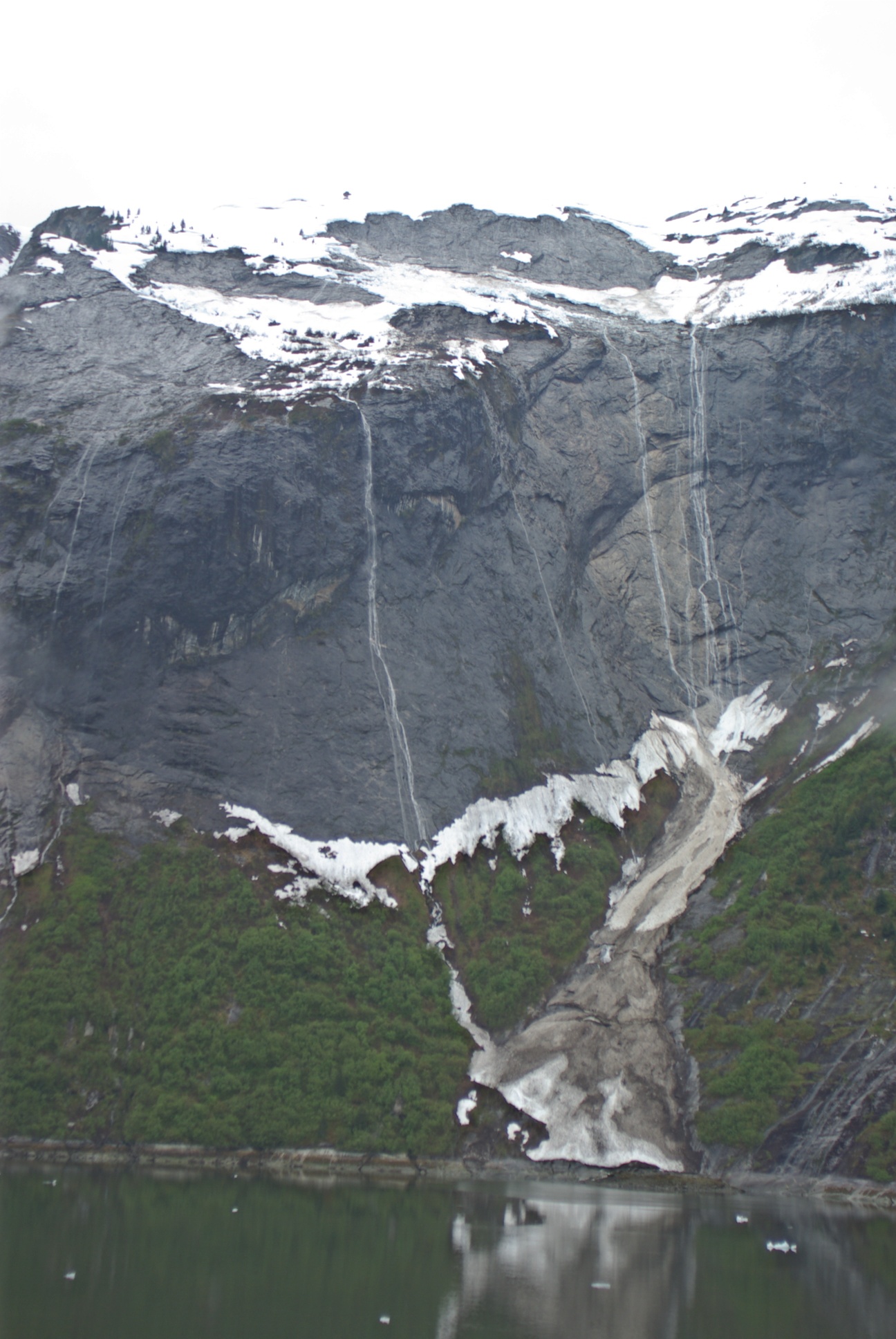
In many cases, we had frozen streams all the way down to the water.


Click to enlarge


Click to enlarge


Click to enlarge


Click to enlarge


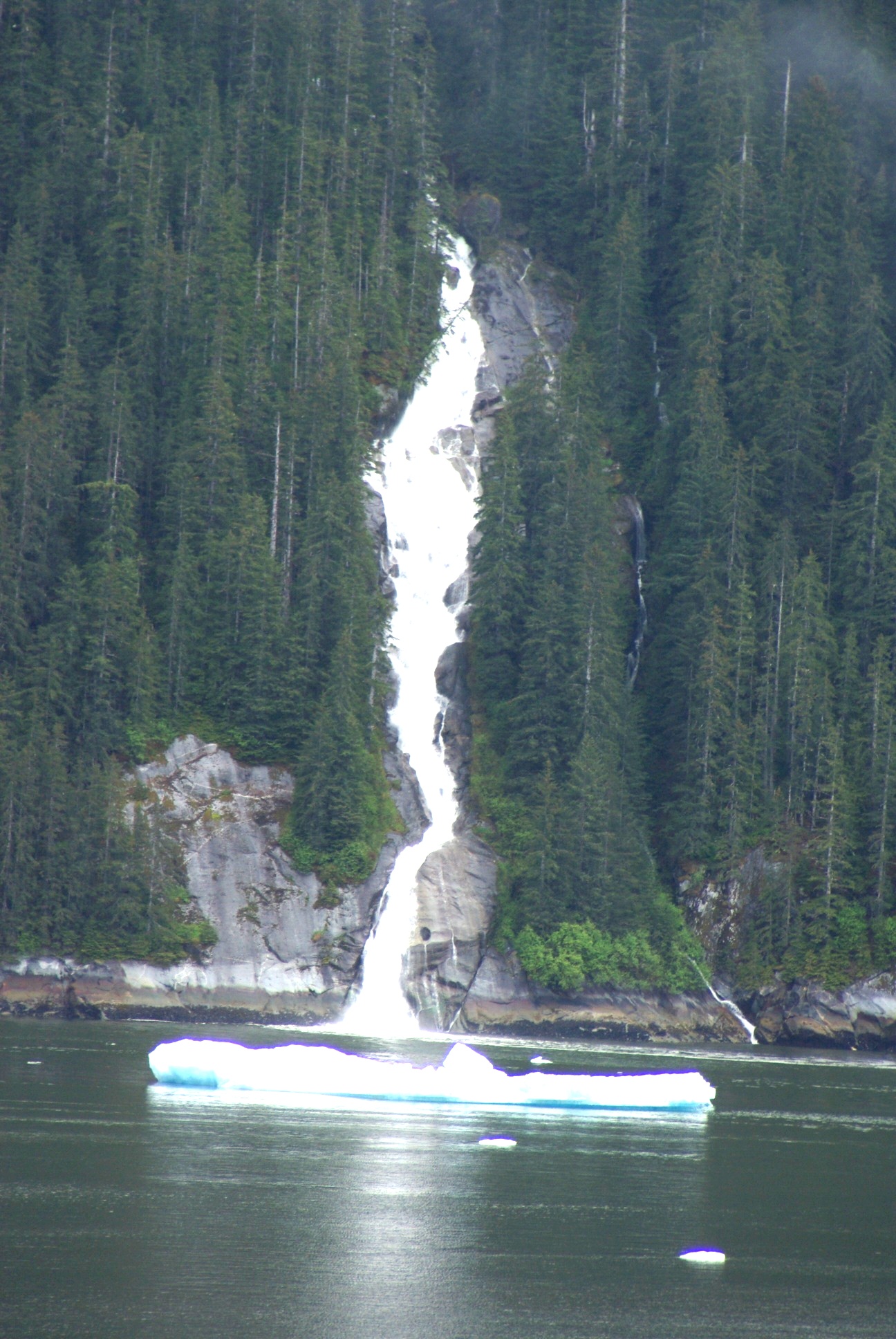
In other cases, the streams were still flowing. (Contrast problems, combined with subdued lighting from cloud cover, impair the quality of some pictures--sorry.)


Click to enlarge


Click to enlarge


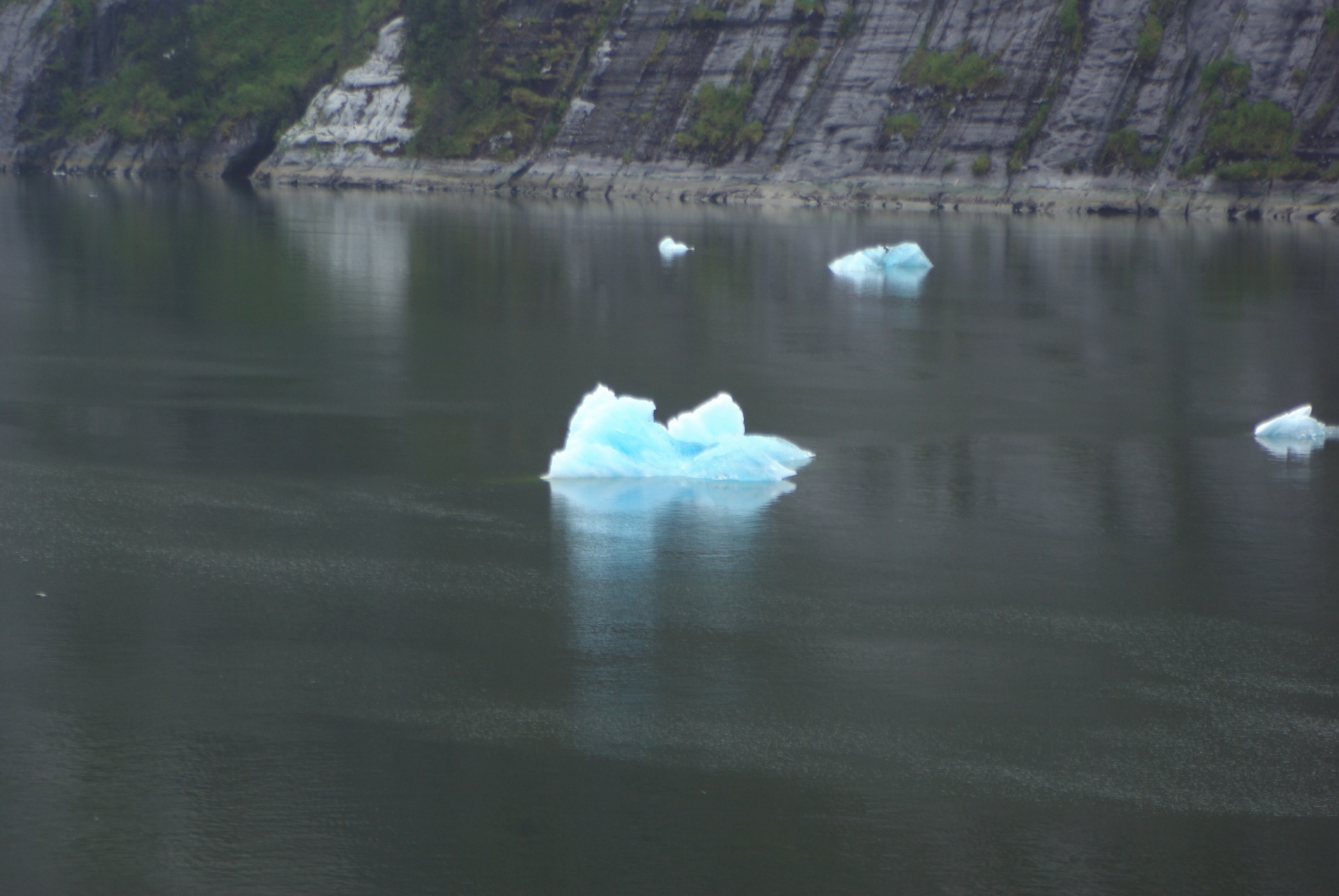
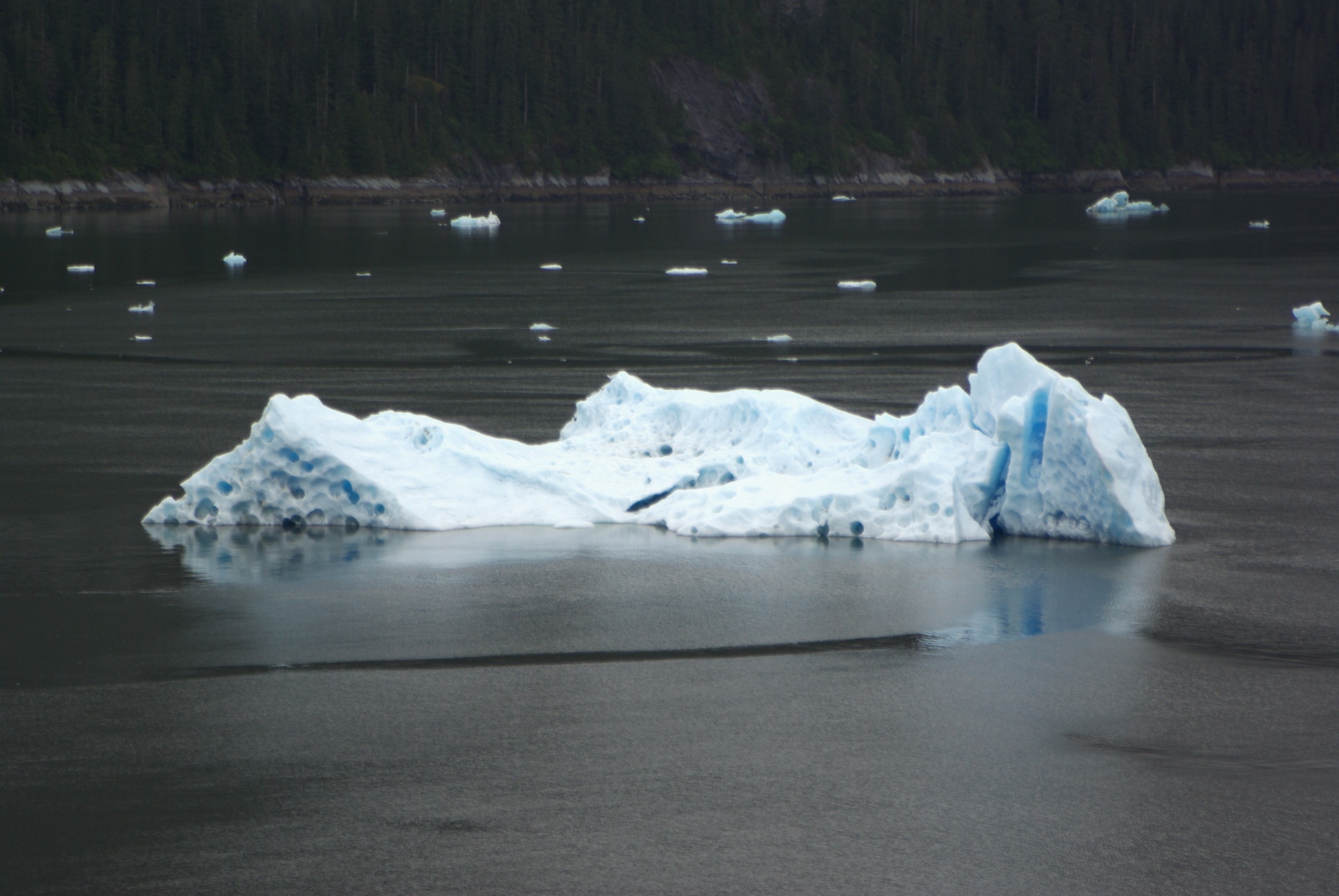
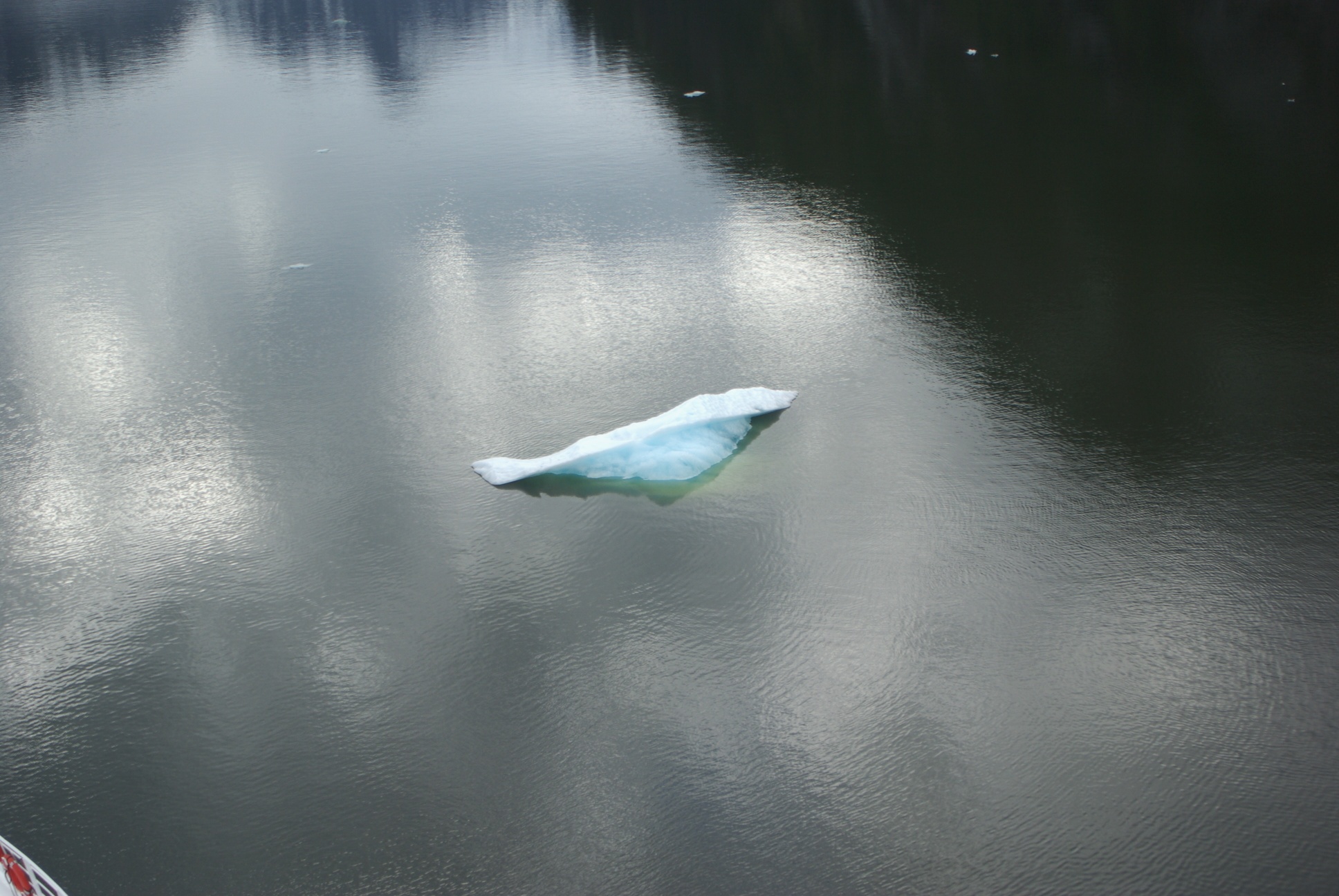
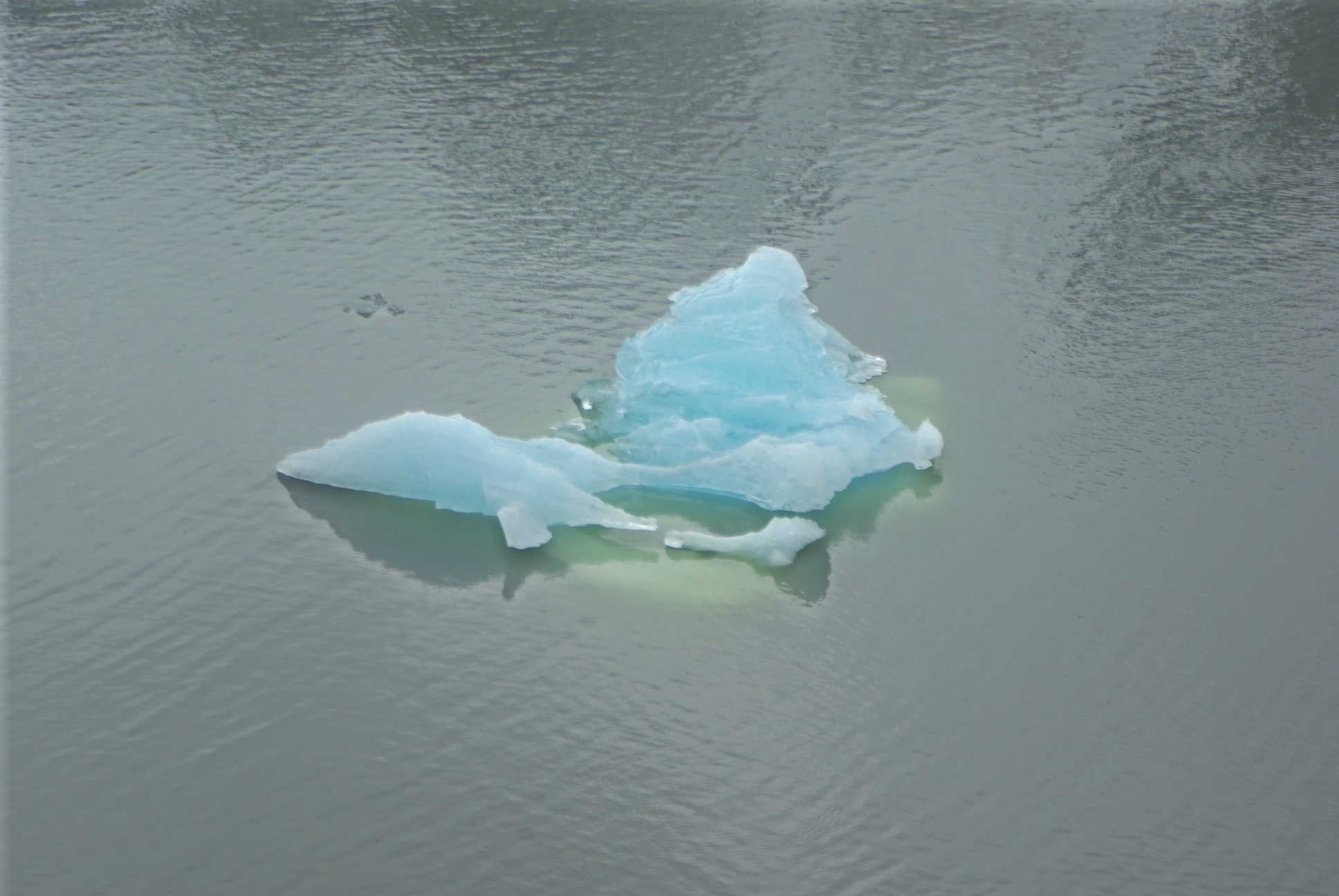
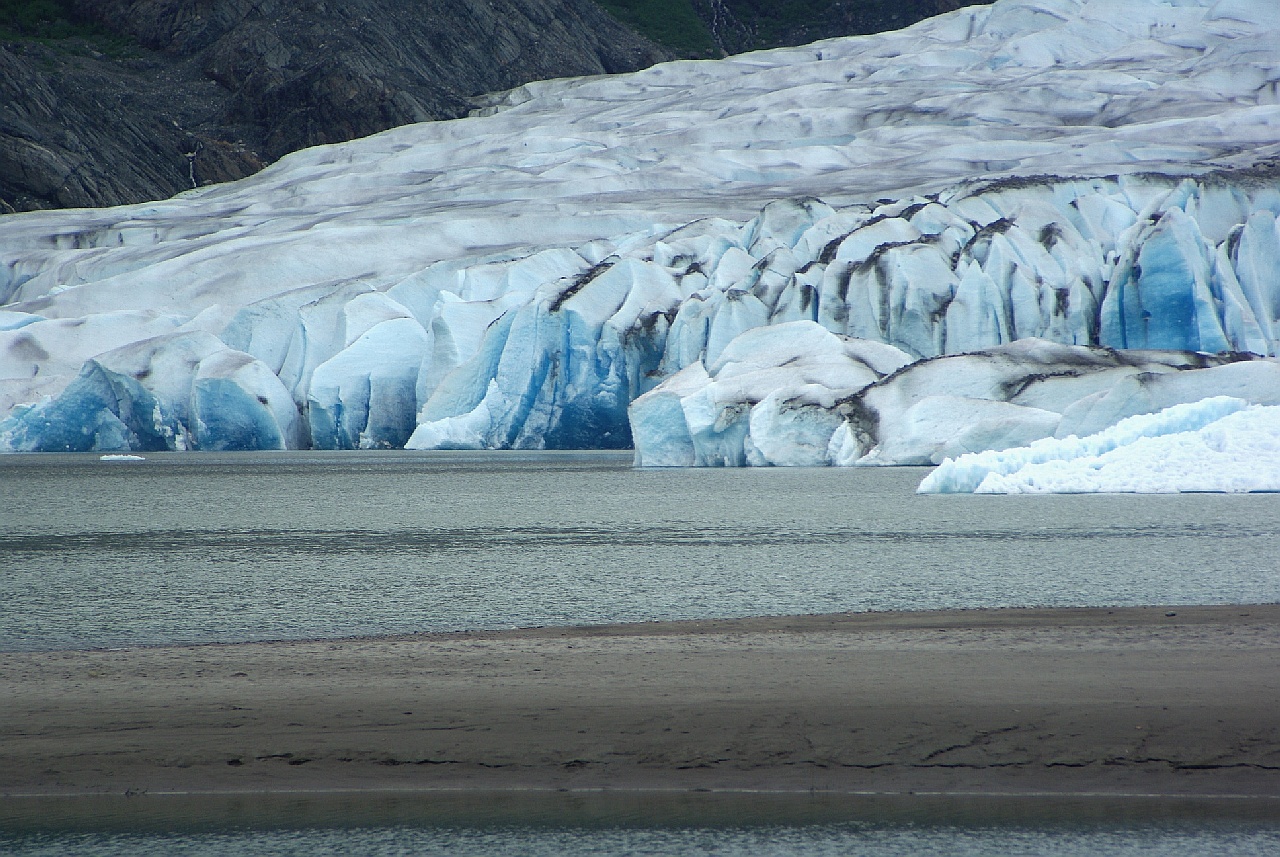
There were miniature icebergs everywhere, some white, some blue, depending on the number of air bubbles contained in the ice. I didn't see any calving off of glaciers, but perhaps I should have been up earlier.


Click to enlarge


Click to enlarge


Click to enlarge


Click to enlarge


Click to enlarge


Click to enlarge


Click to enlarge


Click to enlarge


Click to enlarge


And some of these were genuine glaciers, down to sea level!


Click to enlarge


Click to enlarge


There were hanging valleys, too, which are what happens when glaciers gouge out a tributary valley more slowly than the main glacier gouges out the main valley.


Click to enlarge


The naturalist onboard gave a very well done presentation over the loudspeakers about the geology of Tracy Arm--and I was both pleased and surprised to hear him explain that the relationship of human activity to the shrinkage of these glaciers remains a controversial point among glaciologists. Regular readers of my blog won't find this surprising--I'm sure it surprised many of the passengers.

Where Tracy Arm meets the Pacific Ocean is a terminal moraine. Terminal moraines are where a glacier deposits rock and gravel at its end. The naturalist explained that the glacier extended up to this terminal moraine as recently as 400 years ago--meaning that whatever is causing the glacier to recede is a bit older than the Industrial Revolution.