Showing posts with label astrophotography. Show all posts

Tuesday, June 15, 2010

Storms, Planets, Satellites

We had a pretty impressive storm pass through last night.  While it blew out any hopes of doing any serious astrophotography, it was very atmospheric.  Here's a picture of one of the enormous clouds that was making north Boise County and south Valley County very exciting for a while.


Click to enlarge


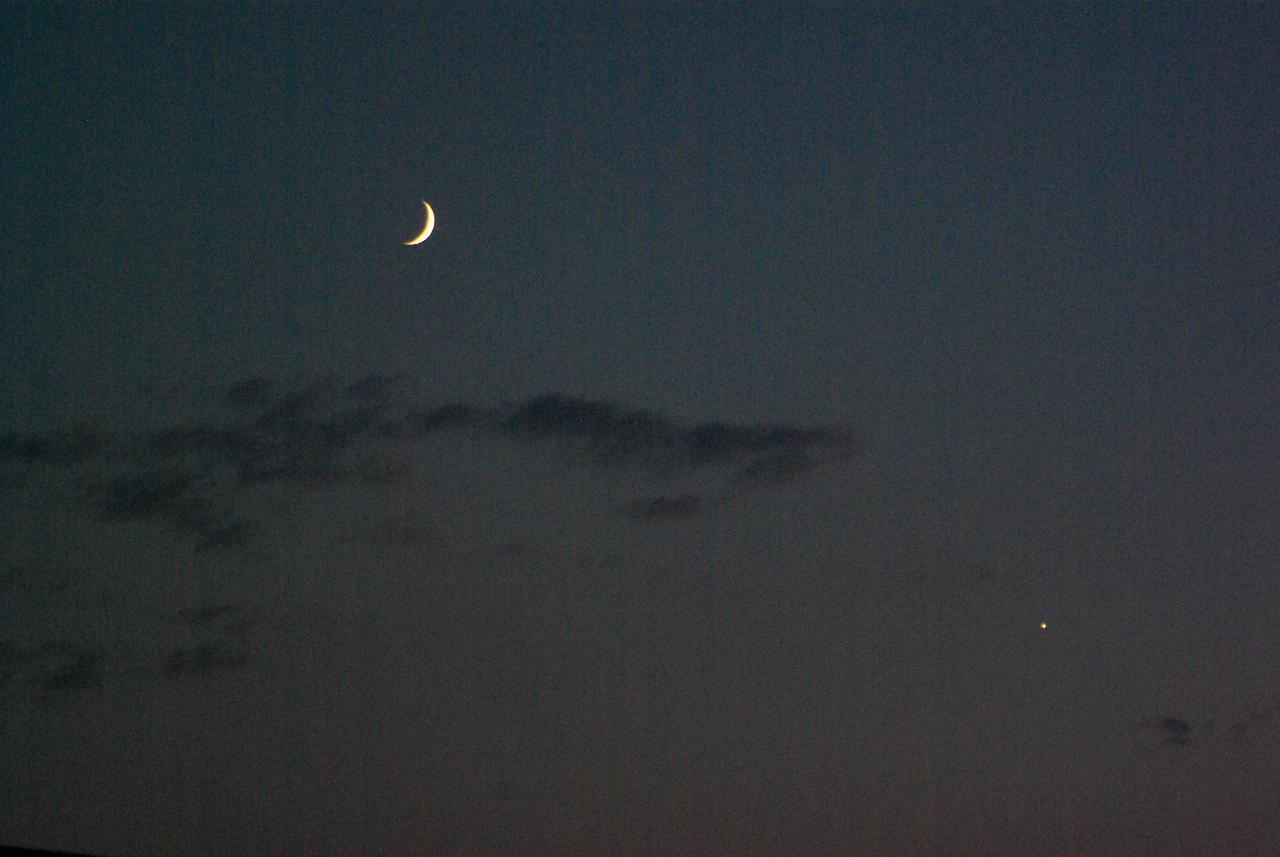
During a break in the clouds, we did manage to snap a picture of the Moon and Venus--but you can see from the motion that I didn't have the camera on anything motorized to track it.  This was a six second exposure.


It would not have tolerate any larger of a size.

And here's a picture that I took the night before just as the Moon was hitting the horizon.  You can see some Earthshine on it.


Click to enlarge


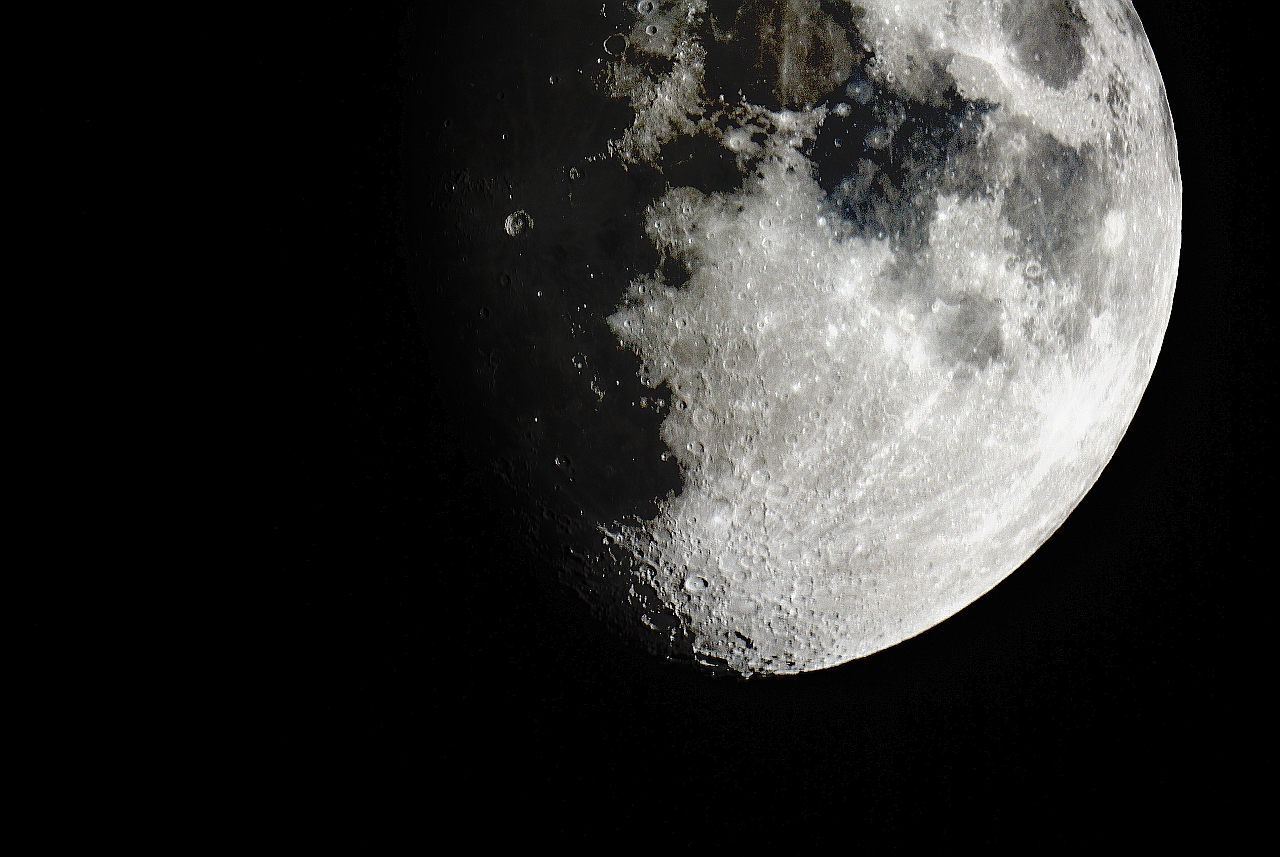
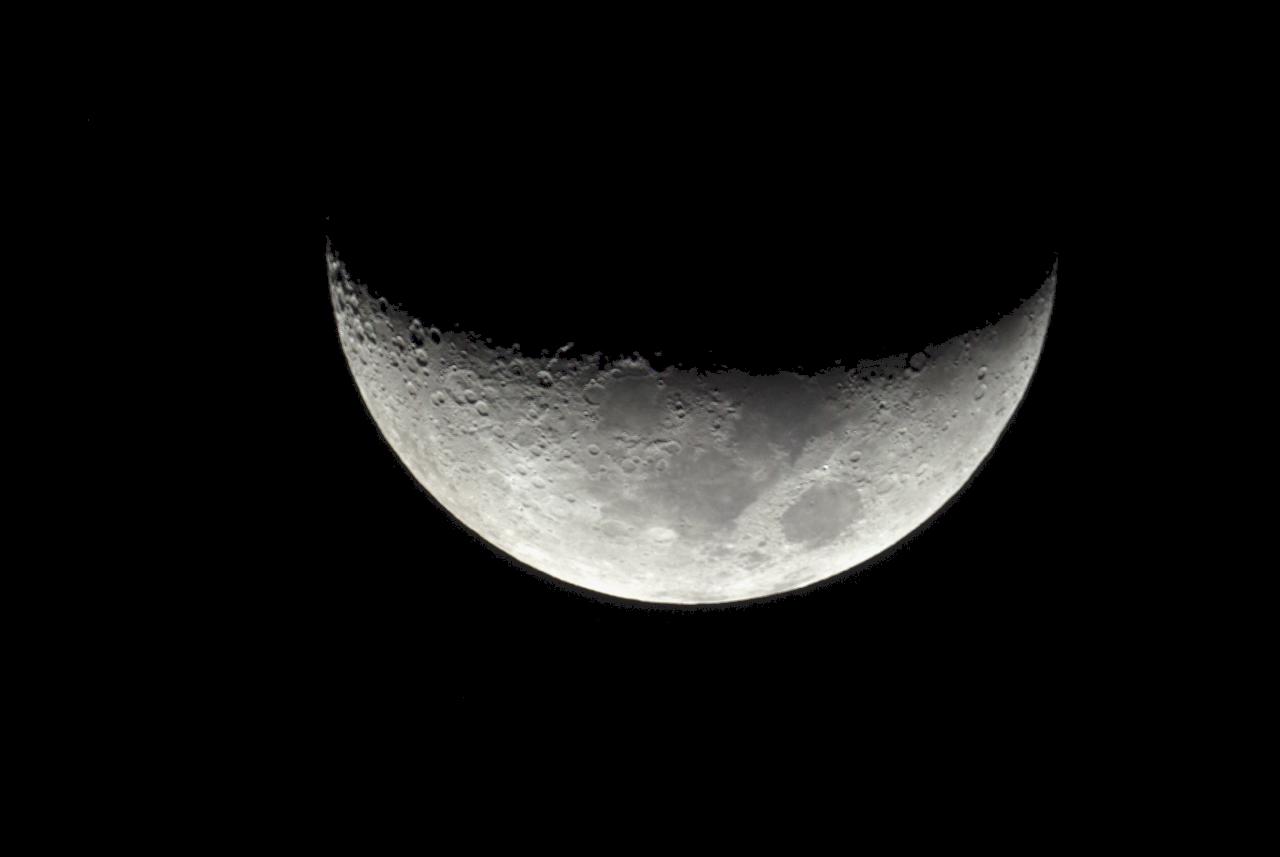
Here's a picture I took at prime focus through Big Bertha--but I didn't have my battery charged up to operate the clock drive, so there's no detail on the crescent.


Click to enlarge


I'm hoping to do better if the storms ever stop!

Saturday, June 20, 2009

As It Got Dark That First Evening...

As It Got Dark That First Evening...


I used the 200mm (300mm equivalent for 35mm film) zoom lens at 1/60th second, ASA 100, and then cropped the picture. It's a reminder that you really need a bit more focal length to get detail, but it still came out rather well.

Saturday, July 19, 2008

Moon Over Bogus Basin; Jupiter

Moon Over Bogus Basin; Jupiter

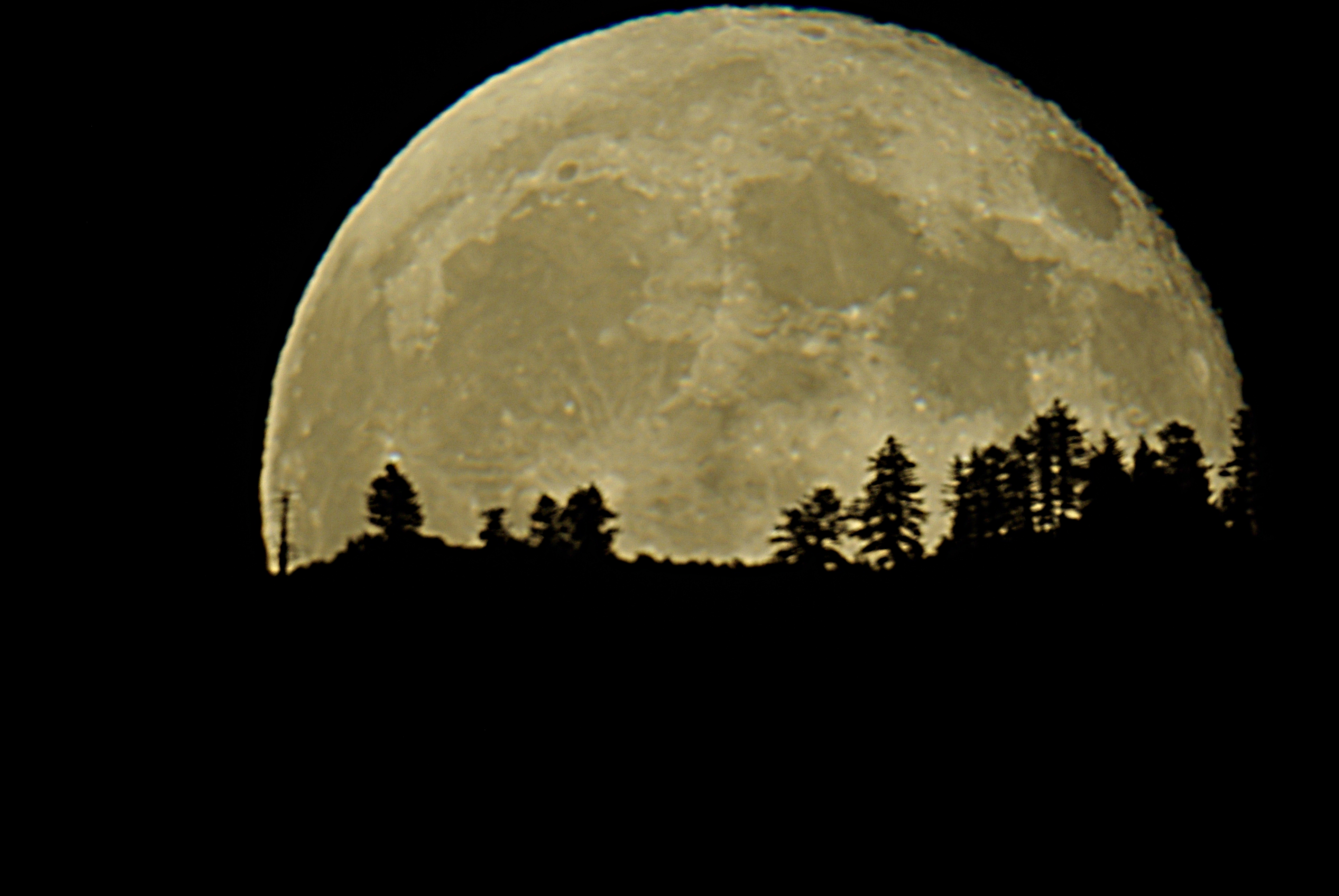
Unfortunately, I was so ga-ga over how beautiful the framing was, I didn't notice that I wasn't very sharply focused--on either Moon or trees (although they should be effectively identical focus). This is a prime focus at ASA 100 with the 17.5" f/4.5 reflector, 1/90th of a second.


Click to enlarge


I also tried to do eyepiece projection on Jupiter--still having a heck of a time getting a decent focus. You can tell that the cloud bands are there. Being still low in the sky, and with the Moon washing everything out, the cloud bands weren't dramatically more crisp in the eyepiece. This was 1/20th of a second, ASA 400, with an 18mm orthoscopic eyepiece projection.


Click to enlarge


I have also decided that whatever the limitations of Big Bertha's mirror, it is not clear that it has a turned edge. I am beginning to think that the problem was the lack of support of Big Bertha 1.0. I took the mirror mask off last night, and I couldn't see that there was any decline in image quality. I also tried to do the star test on Antares. While I couldn't get the diffraction rings (Antares was low in the sky, and there was a bit of turbulence), I didn't see any of the outside focus symptoms of turned down edge. It may not be a great mirror, but I can feel comfortable using the full aperture of the mirror now.

The big problem is that I need to get the telescope back down to Earth! I have the mount sitting on a 10.5" plus 12" column right now to get it high enough off the ground board to avoid collisions. What I need to do is is take out the 10.5" column, and build appropriate hardware to bolt the 12" column to the ground board. I still need a better stepladder than I am using, but even taking 10.5" out of the elevation would make a world of difference.

Friday, June 13, 2008

Progress For Big Bertha!

Progress For Big Bertha!

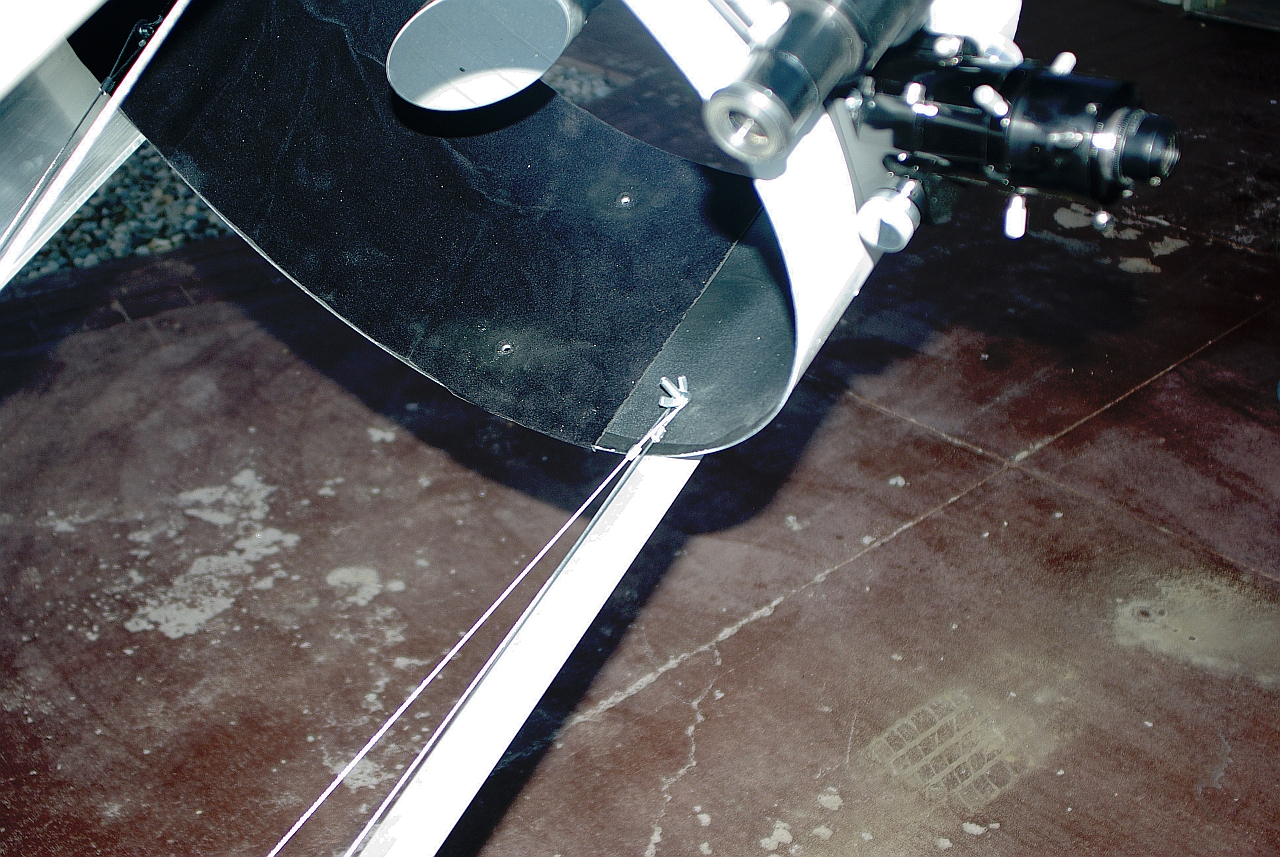
One of my readers made a very good suggestion on how to stiffen up Big Bertha: use steel wire to brace the various parts. The first try wasn't very successful; the guy at Lowe's told me to clamp the ferrules onto the wire with pliers. I used a vise. That didn't work.

So I asked a friend of mine, J. Norman Heath, perhaps the only person who is both a circus rigger a published scholar on the Second Amendment. (Weirder things have happened, but I don't know where.) He gave me some tips--including why using a vise to close a ferrule doesn't work. His blog is here.

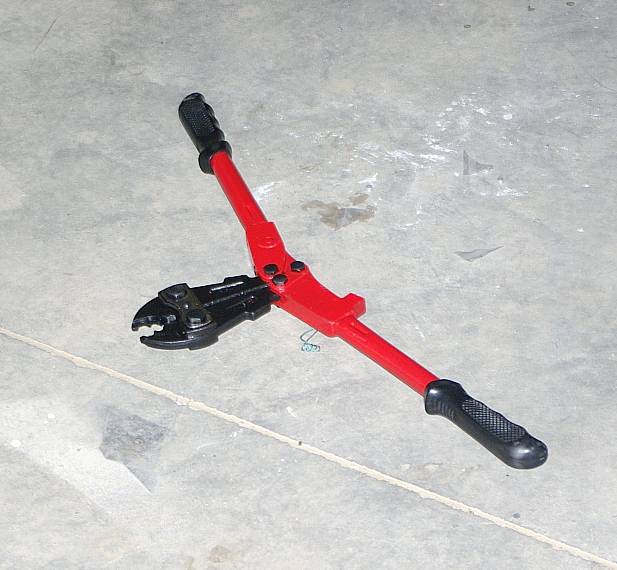
The right solution was to go back to Lowe's, and hunt around until I found this swaging tool for crimp these correctly.


Click to enlarge


It does rather look like something with which Jack Bauer would torture midgets to get information out of them, doesn't it?

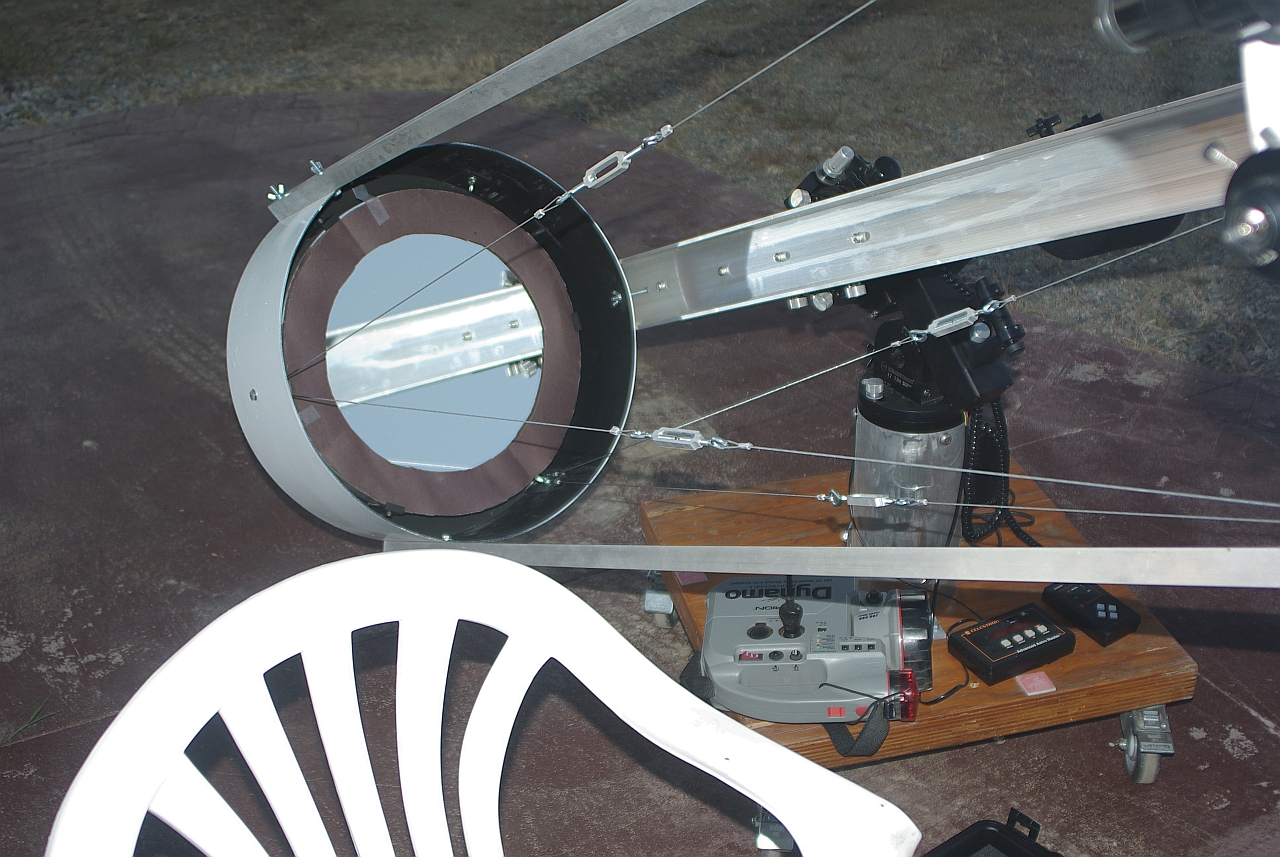
Here you can see the way that the turnbuckles tighten the steel wires, tensioning the system diagonally.


Click to enlarge


Click to enlarge


Click to enlarge


And no, the mask on the mirror is black--it's just overexposed.


Click to enlarge


It still isn't right. I ran out of turnbuckles, and so this is asymmetric. Once these four are tensioned, it moves the optical components enough of alignment that there isn't enough play left in the mirror cell screws to collimate correctly. So I fumbled around a bit, and settled for something that wasn't quite right--but still did okay. (I'll finish this tomorrow.)

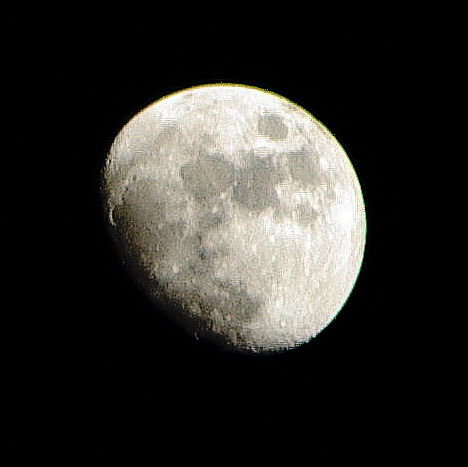
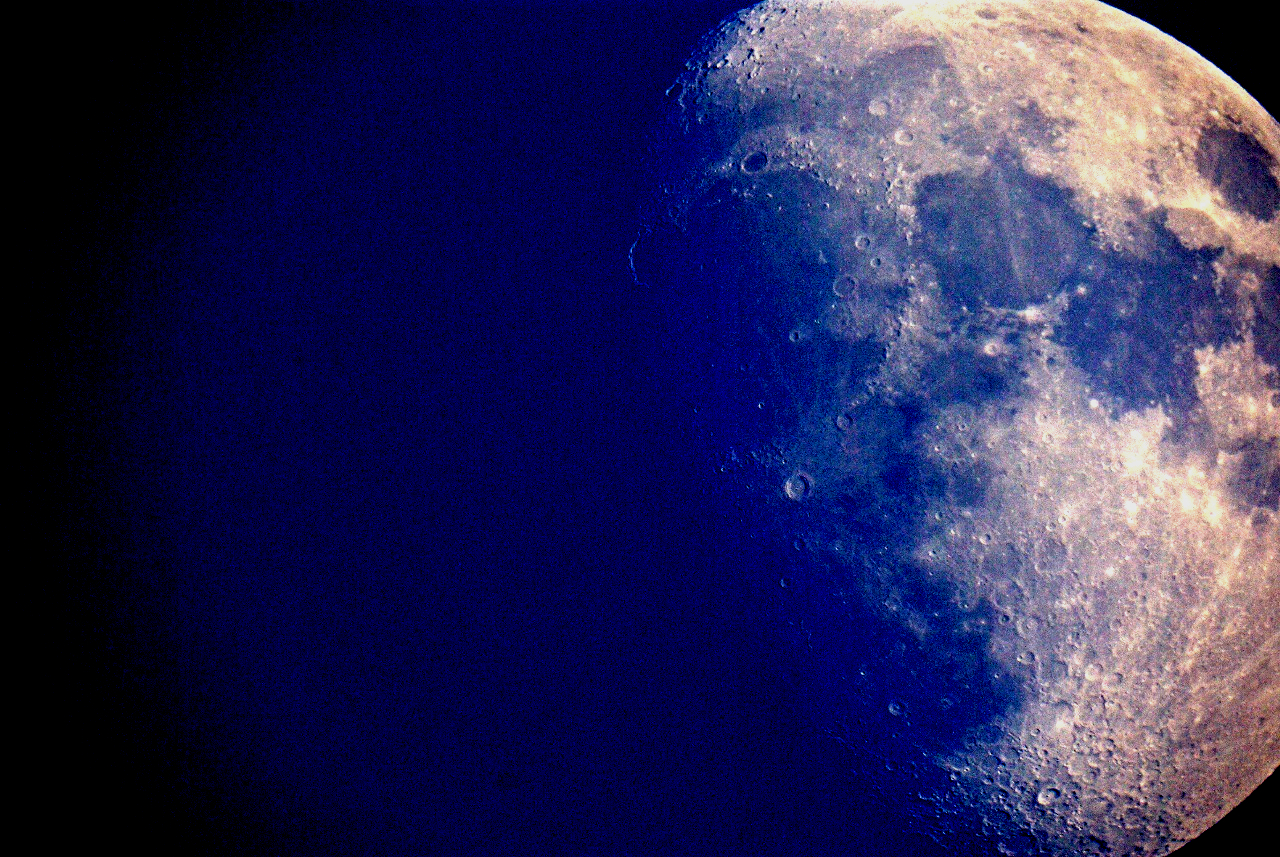
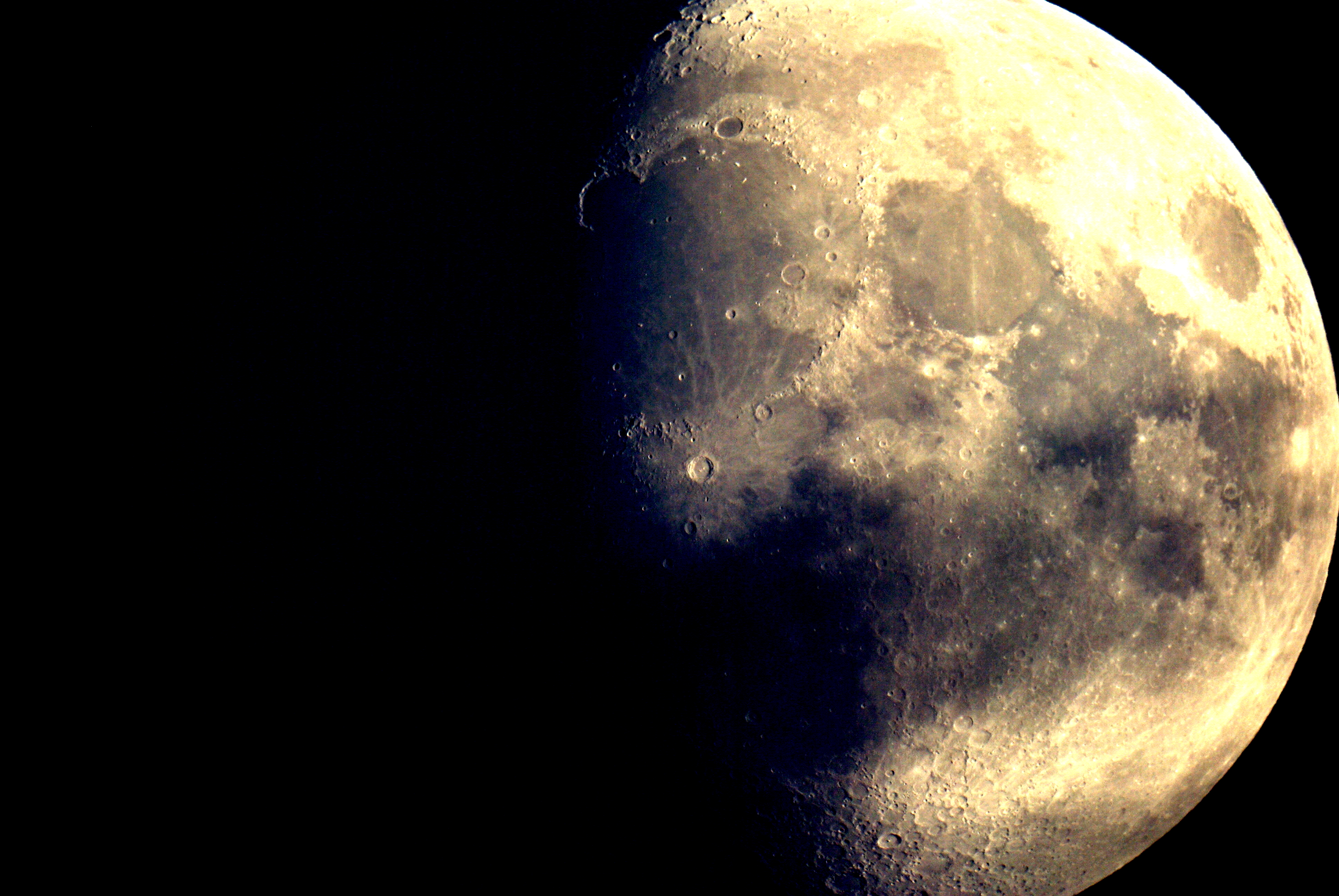
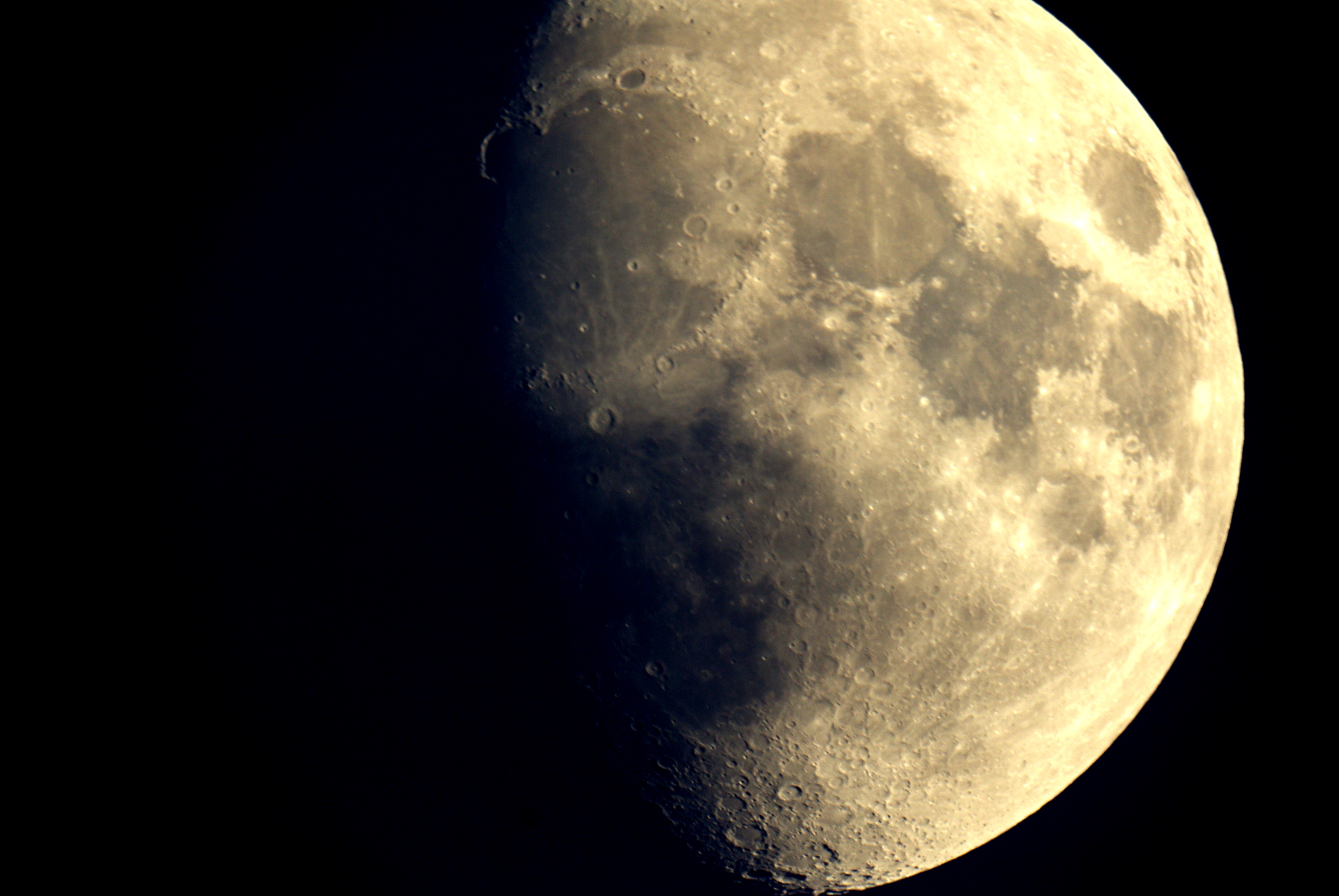
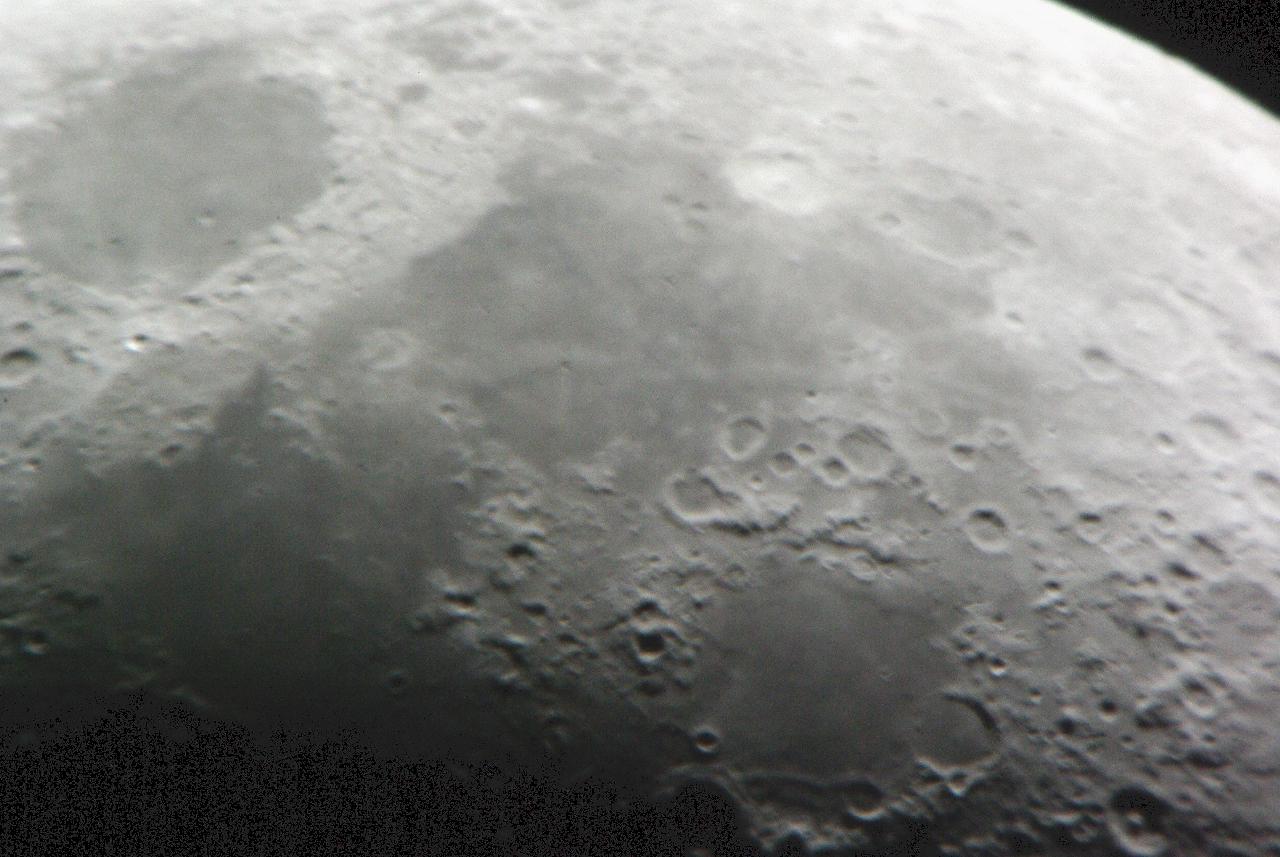
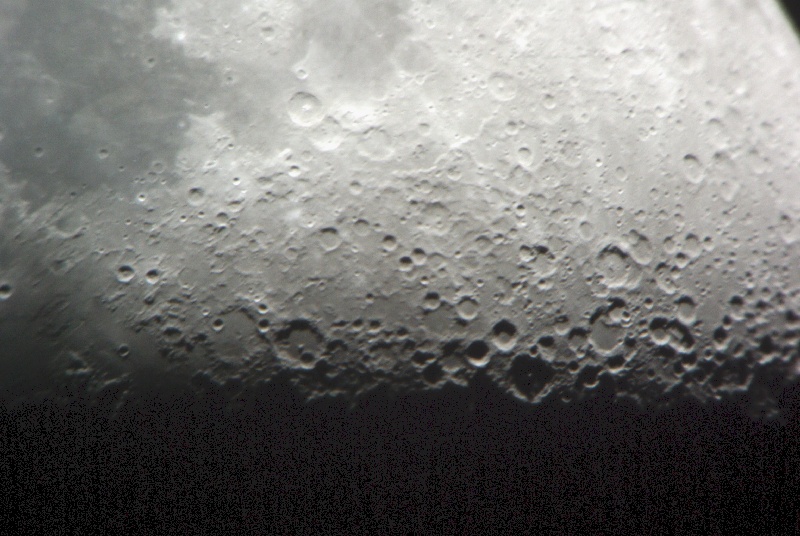
Here's a picture of the Moon at prime focus, 1/125th of a second, ASA 100:


Click to enlarge


Here's a shot done with eyepiece projection, using an 18mm orthoscopic, 1/45th second at ASA 800:


Click to enlarge


It should collimate better tomorrow.

By the way: through the eyepiece looks far better than these pictures.

Thursday, March 6, 2008

The Orion Nebula

The Orion Nebula

I still don't have Big Bertha 2.0 ready yet--waiting on a 4" wide aluminum channel to arrive. But in the meantime, I have my small reflector mounted on the CI-700 mount, becoming more familiar with the digital setting circles.

The great struggle with exposures of more than a few seconds is that you have to get the polar alignment very exactly on target. This isn't easy--especially because the most exacting method--the star drift method--requires you to start the mount running, and see if a star drifts north or south, and adjust the polar axis alignment accordingly. This can take a while--and when it is fiercely cold (for an ex-Californian, at least), this isn't a pleasant wait.

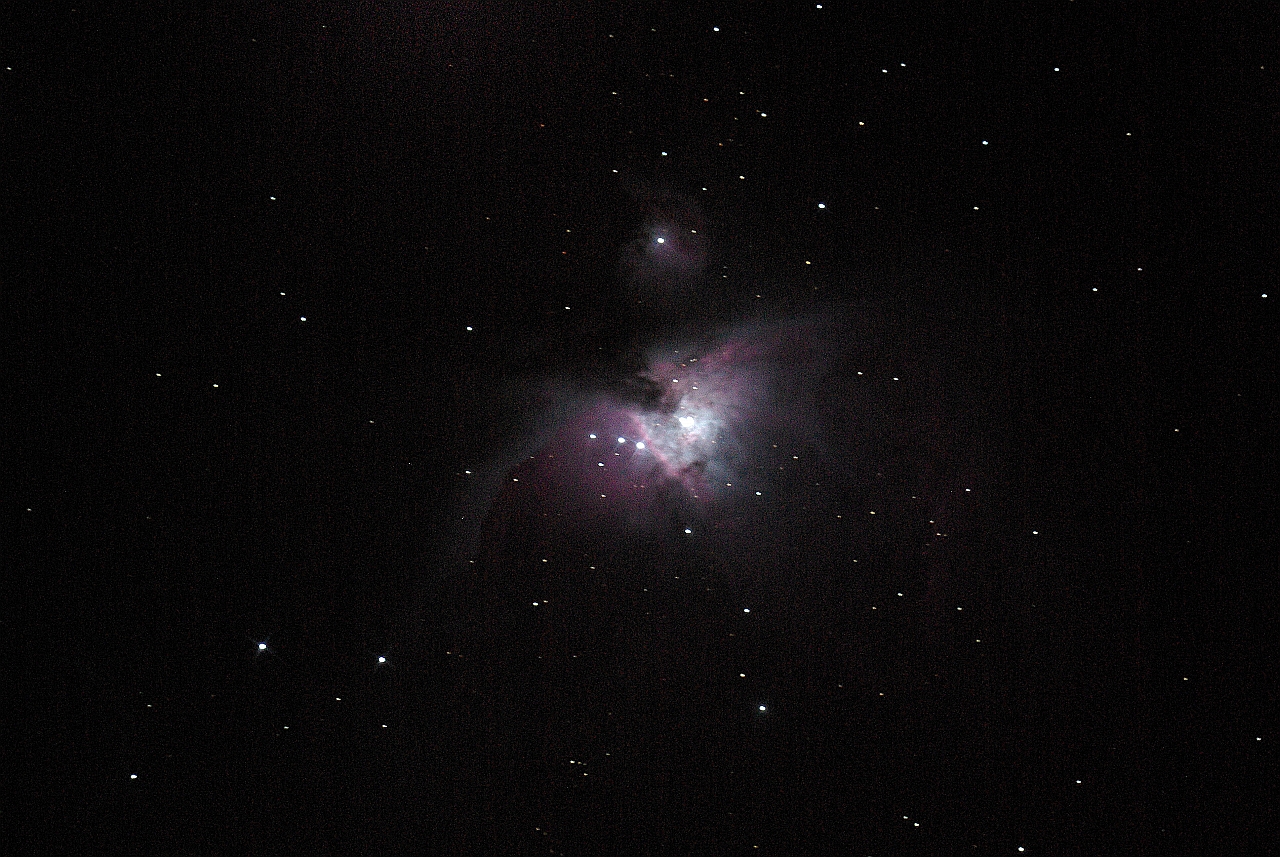
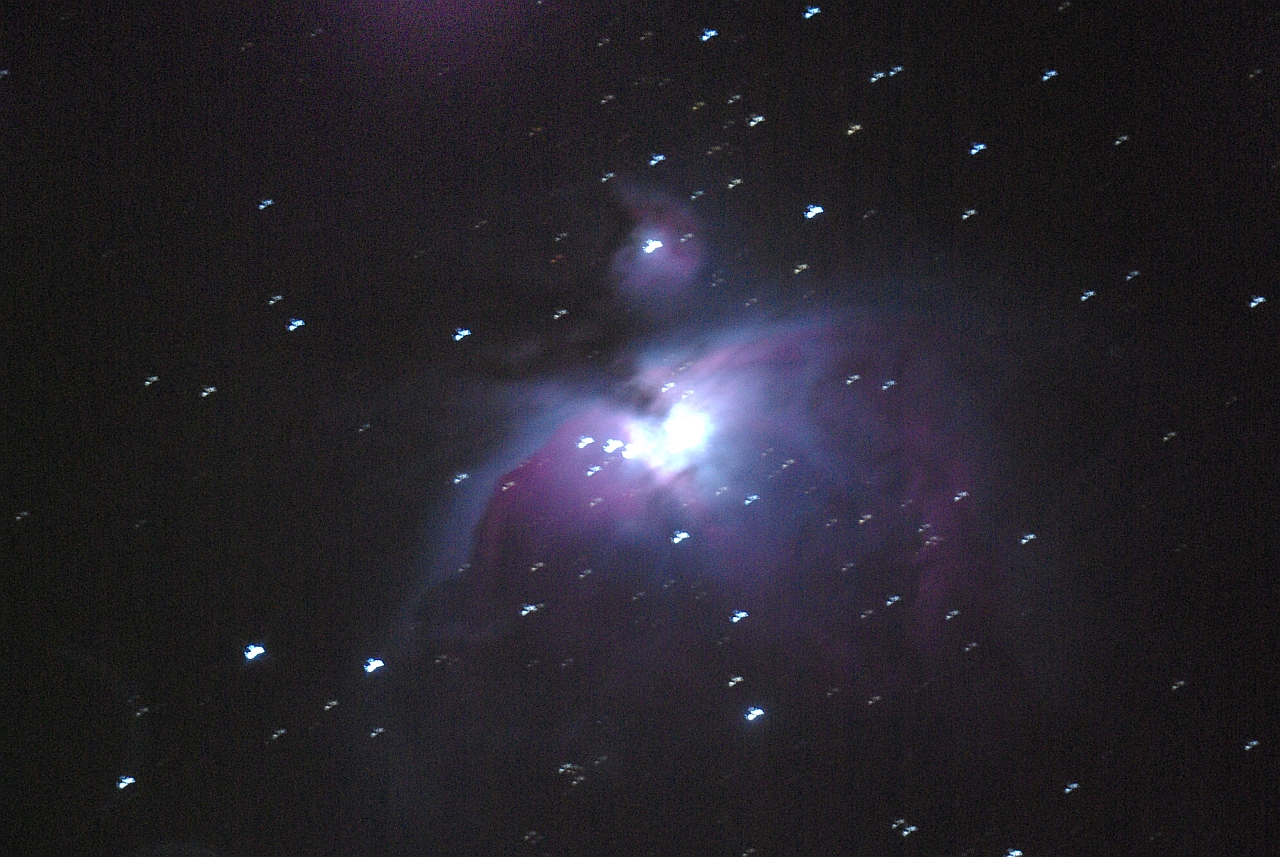
Anyway, here are a series of prime focus exposures of M42, the Orion Nebula, taken at ASA 1600 for exposures of 18 seconds, 41 seconds, and 151 seconds, respectively. The little arcs instead of round little circles for the stars show that I still didn't have the polar axis perfectly aligned. It's still pretty impressive! Although the four stars that form the Trapezium are pretty well burned out into a solid mass.


Click to enlarge


Click to enlarge


Click to enlarge


Saturn was, as usual, awesome, but I was getting cold and tired, and photographing Saturn is a bit more work, because you can't do it at prime focus.

Wednesday, February 20, 2008

Yes, There Was A Lunar Eclipse Tonight

Yes, There Was A Lunar Eclipse Tonight

and no, there won't be any pictures. We had high thin clouds here--it just ruined all the pictures I took.

Tuesday, November 13, 2007

Comet 17P/Holmes

Comet 17P/Holmes

I mentioned a couple of days ago
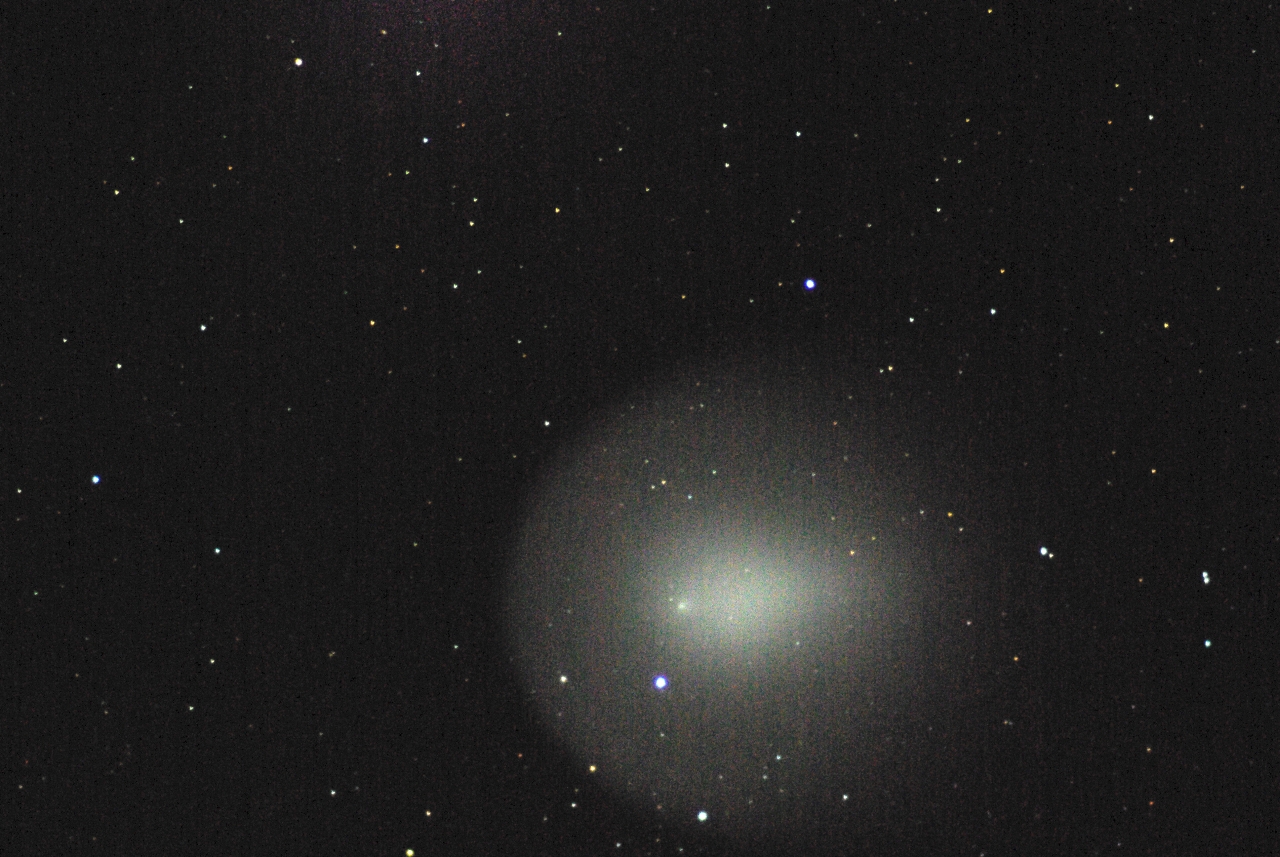
that I was going to try and get a picture. I did. At ASA 1600, 30 second exposure. My battery pack ran out of juice for the telescope mount drive, so....


Click to enlarge


I may have overprocessed the picture--but ASA 1600 is a pretty grainy speed setting on film.

I've reduced the image size substantially--from about 6MB to about 800KB--but it doesn't seem to have done any real harm to the picture.

I would have taken some longer exposures, but it takes a while to recharge the battery pack (which I haven't recharged recently enough to have a full charge), and by the time it was getting to full charge, there just wasn't any way to stay warm enough outside.

Tomorrow night, I will try this again, perhaps at ASA 100, with a 25 or 30 minute exposure.

UPDATE: I suppose that I should give all the grubby details. Pentax K10D, prime focus on a Photon Instruments 5" f/9 achromatic refractor.

UPDATE 2: To find the comet (you will want binoculars), find the big W of Cassiopeia, and then take about a 30 degree line down to the eastern horizon. A bit farther than the width of the W will be several bright stars that make up Perseus. Just to the west of the brighter stars in Perseus will be a faint fuzzy. Aim your binoculars at it.

Monday, November 5, 2007

Too Much Play for Astrophotography?

Too Much Play for Astrophotography?

I have had a couple of ScopeRoller customers who have complained that the Deluxe wheel set has too much play for astrophotography. One of my customers sent a picture of of his scope mounted on ScopeRoller Deluxe casters--and some long exposure astrophotos he took--more than two hours. You tell me: are these good enough?


click to enlarge


click to enlarge


click to enlarge

Friday, July 27, 2007

Miracles of Image Processing

I mentioned a few days ago
that some pictures that were almost not recognizably pictures were salvageable in the digital darkroom. In going through some recent pictures, I found two especially entertaining examples.

The first picture is one that I took at ASA 100 with Big Bertha, 1/1000th of a second. It came out completely black. There's no data there, right? (Fortunately an apparently black image isn't terribly large.)


Click to enlarge


So I loaded this apparently completely dead image into HP Photosmart, and hit the "Auto Adjust" button. I have no idea what this does, exactly, but about half the time, it perfectly balances contrast and image brightness--and perhaps another 1/4 of the time it gets me close enough to fiddle with the other controls.


Click to enlarge


Hard as it may be to believe, all that information was present in the "black" picture. Just because it doesn't look like much on the camera's screen, doesn't mean that there's nothing there!

There are limits to what you can do with this, of course. Here's another example that was completely white (1/6th of a second, ASA 100, again through Big Bertha). There was enough motion during that time, and enough light still in the sky, to make it a complete washout, no matter what I did to it.

As it came out of the camera:


Click to enlarge


Best effort digital darkroom:


Click to enlarge

Wednesday, July 25, 2007

Fix It In The Darkroom!

One of the marvelous things about a digital camera is how easy it is to fix problems in the darkroom! (Inside your computer.) As an example, I took the three pictures below at three different shutter speeds: 1/350th, 1/250th, and 1/125th of a second, ASA 100. (Maybe not the best choice for the Moon.) The first one was indistinguishable from random noise, the second was at least apparently the Moon, and third was a faint image. But once I had the chance to fiddle with them in HP Photosmart Premiere, they all came out roughly equivalent.


Click to enlarge


Click to enlarge


Click to enlarge


The data was already there--the levels were way too low on the first two pictures. Now, these aren't great pictures. When I worked at Jet Propulsion Labs, I worked on the boring part of the telemetry processing systems--not the sexy part, the pictures. One of my friends worked on the Viking image processing software--and he showed me a raw image as it arrived from the Viking Orbiter--and after post-processing. And yes, it was even more dramatic of a change than I experienced cleaning up these images.

I've written image processing software for amusement, back at the beginning of time. What you are doing is conceptually taking a collection of numbers that correspond to different brightness levels. If 0 is black, and 65535 is white, then taking the very first image, you find that effectively everything is a number between 0 and about 300; raising the image brightness involves rescaling 0 to 300 to be 0 to 65535. Obviously, the results won't be quite as precise and detailed as if you had a picture that all the values from 0 to 65535 in it. But it is astonishing how well you can fix an apparently "spoiled" picture this way!
Big Bertha & The Moon

This was 1/350th of a second, ASA 400, using Big Bertha, my 17.5" reflector. Wow!

I've reduced this down a little because some of you don't want to download a 7 MB file.


Click to enalarge

Wednesday, July 18, 2007

Moon and Venus

This was a beautiful site on the western horizon last night--a three or four day old Moon with Venus.


Click to enlarge


This was a 1/8 second exposure at ASA 1600. Hand-held, too.

Tuesday, April 3, 2007

Made A Hartman Mask To Improve Astrophotography Focus

It looks like it should work. It is certainly the case that two holes in the mask at the front of the telescope produces two separate images out of focus--and one image when precisely at focus.

Okay, the sky is clear (or clear enough), the telescope is reasonably well polar aligned--and then I discover that I left the Pentax on while downloading pictures, and apparently it doesn't power itself off in that mode, so I was already to go, but with no ability to take pictures. Groan.

Monday, March 26, 2007

Improving My Focus

I was hunting around looking for some way to improve the focus on my Pentax on Saturn, and I found this method of getting a sharp focus which is fiendishly clever--and I did not know about. You make what is called a Hartman Mask, which contains two holes the same size on opposite sides, and which goes over the front on your telescope. Aim it at a reasonably bright star, and out of focus, you will have two images of the star; in focus, and you have one. I'll make one and report back when next we get clear skies. Right now, we have a wind storm going on that is truly disturbing.

Saturday, March 24, 2007

More Astrophotos

The nice thing about seeing these on the blog, is that unlike vacation pictures or baby pictures, you can just skip right over these, and you don't have to say things that you don't mean like, "Oh, how adorable she is," instead of what you are really thinking, "Is this the same species as we are?"

I still need to figure out how to get these a bit sharper. I'm not sure if the problem is that I am not precisely focused, or if the atmosphere is quivering too much.

This was shot at ASA 100, 1/90th second, prime focus:


Click to enlarge


This was shot at ASA 800, 1/15th second, with an 18mm eyepiece:


Click to enlarge


ASA 800, 1/20th second, 18mm eyepiece:


Click to enlarge


ASA 1600, 1/2 second, 9mm eyepiece:


Click to enlarge


ASA 1600, 1/2 second, 18mm eyepiece:


Click to enlarge


At least you can tell it is Saturn!

ASA 1600, 1 second, 7mm eyepiece:


Click to enlarge


This is the longest exposure that I am going to show you, 30 seconds, ASA 1600, prime focus, of the Orion Nebula (M42):


Click to enlarge


As you can see, there is still a little bit of a tracking problem. I have figured out how to make vernier adjustments to the polar alignment without the suffering involved in using the polar alignment scope. (Suffering, because you have to get down on your knees, then scrunch down even more, trying to look up the scope in th polar axis of the mount, towards Polaris.) I just need a bit more patience, and I will be able to share much longer exposures.

Saturday, March 17, 2007

Focus Is Everything

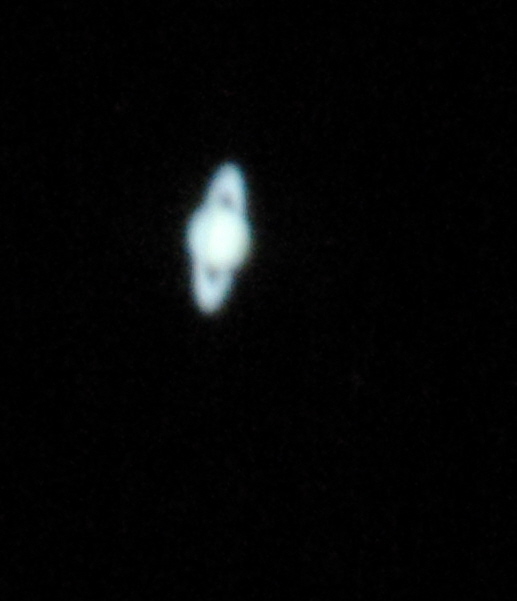
I believe that I have the exposure period figured out for Saturn, and the magnification. I just need to get the focus right. This is cropped, so the image was actually pretty tiny, 1/3 second exposure, ASA 1600:


I think I need to focus on something bright and easy, like the Moon, and then mark that location on the eyepiece tube.

Thursday, March 15, 2007

Astrophotography

I am still not quite there, but I'm getting closer. These were prime focus photographs (using the 8" f/7 as the lens, so to speak). As should be obvious from the first photograph, I have not yet mastered getting my mount aimed exactly at true north. I may also have to take these pictures in raw mode so that I can fiddle with the noise settings to get a blacker sky. I've cut down the pictures a bit so that they don't take so long to download--and it is not like they are exactly worth a long download at this point!

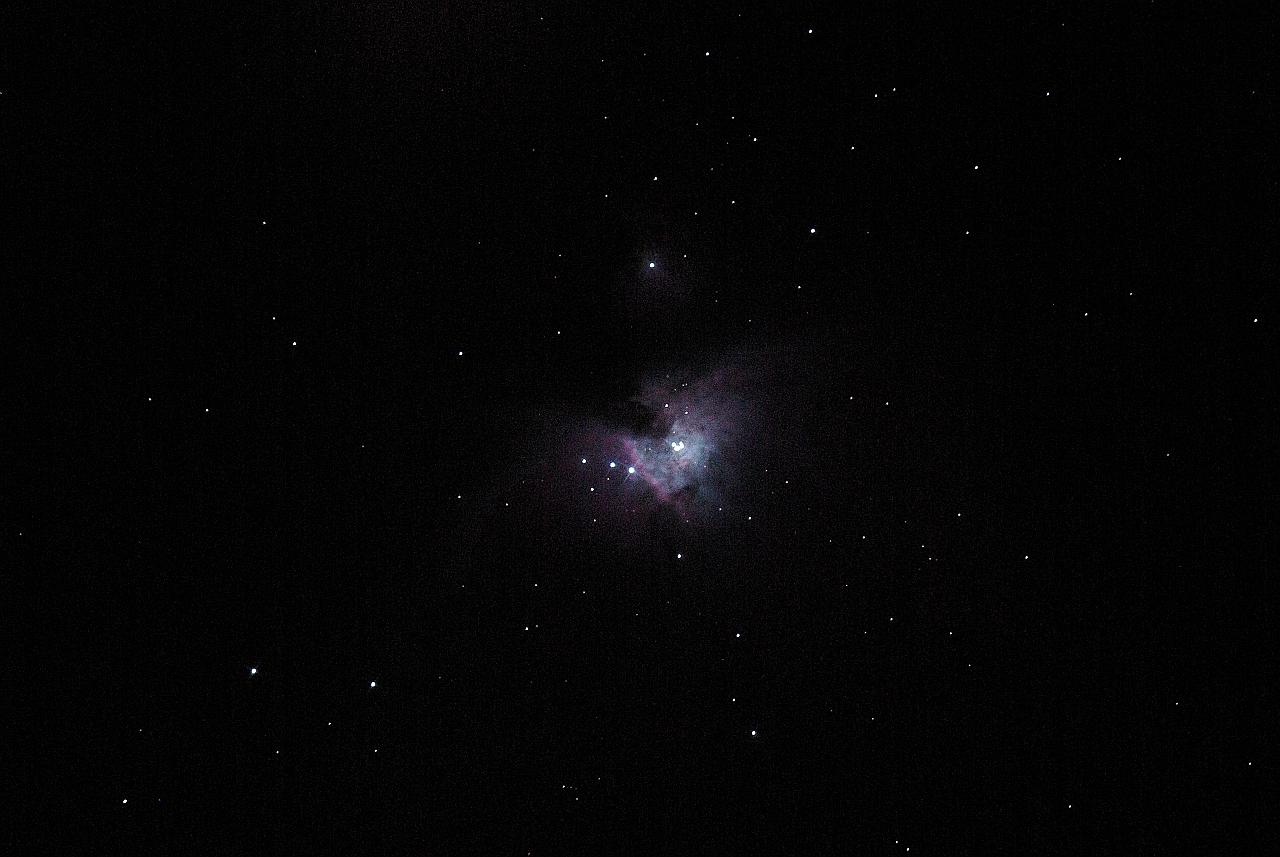
This is the Orion Nebula (M42), 40 second exposure, ASA 1600:


Click to enlarge


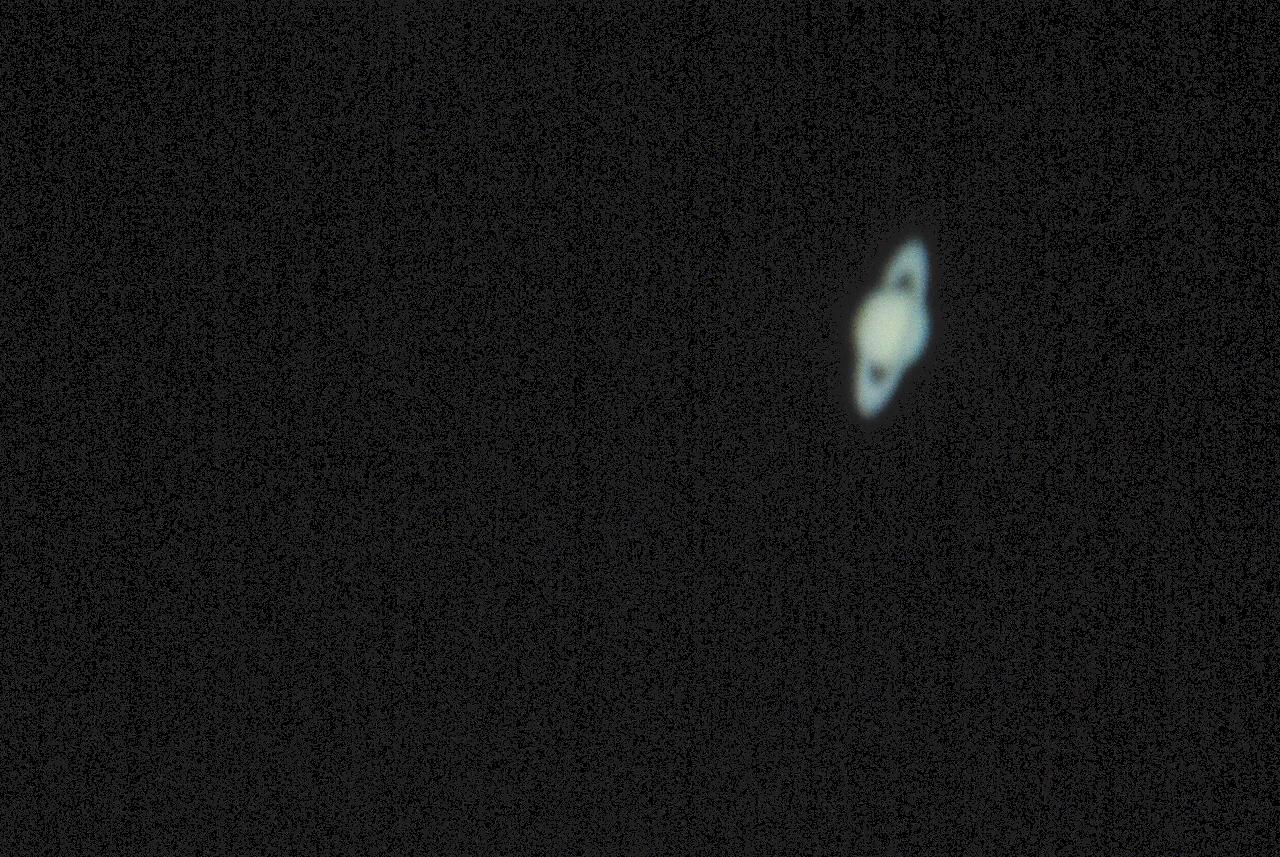
This is Saturn, a bit overexposed at 4 seconds, ASA 1600--but the result is that while the planet and rings are lost in the glare, you can see several of Saturn's larger satellites:


Click to enlarge

Friday, January 26, 2007

More Moon Shots

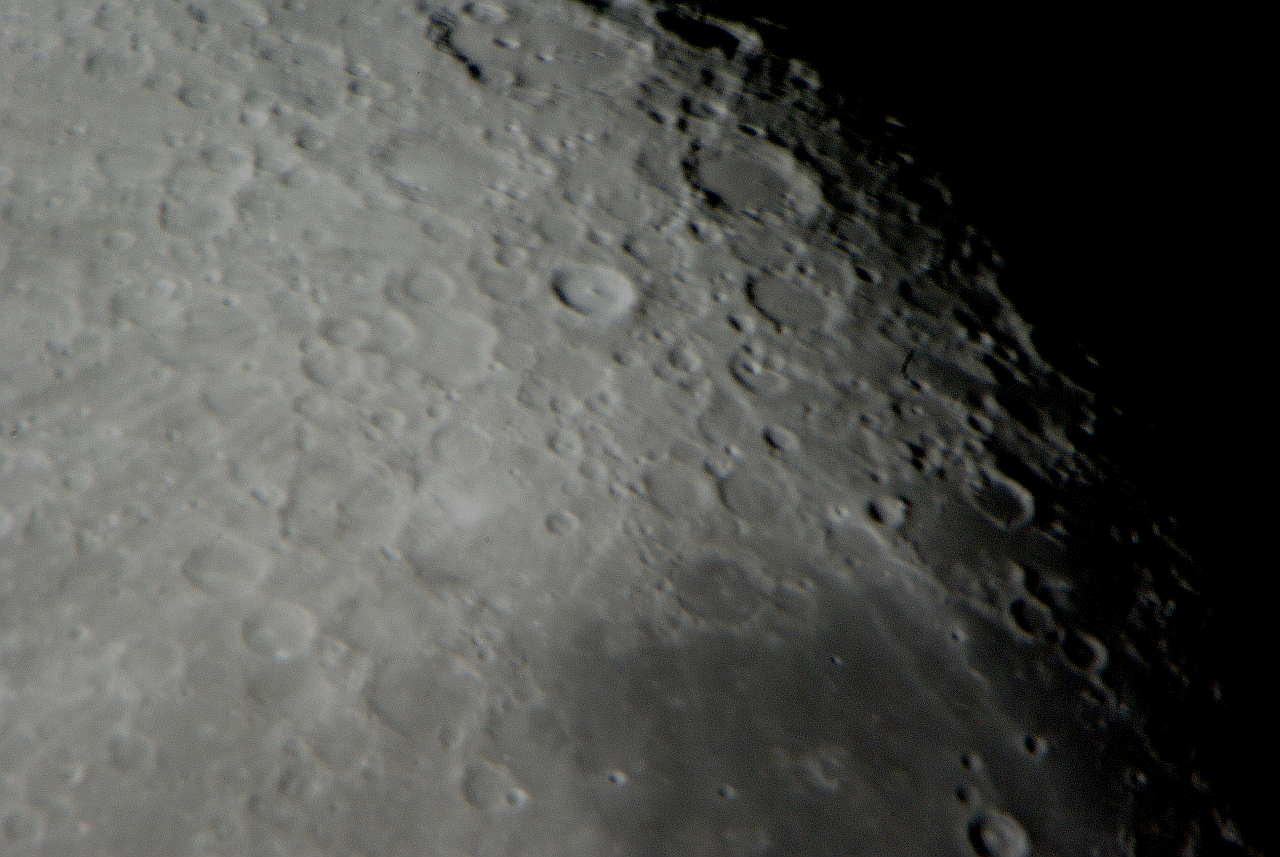
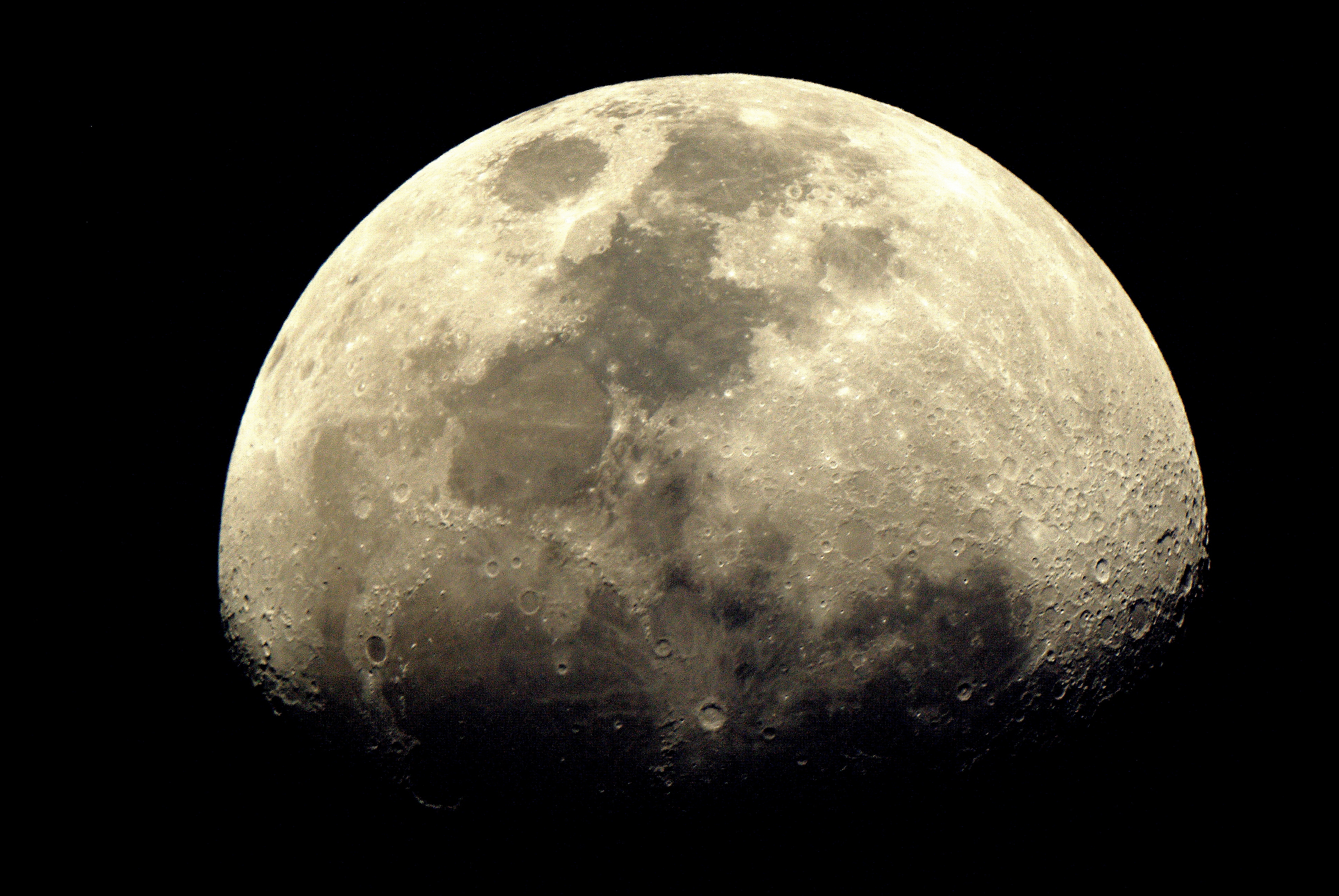
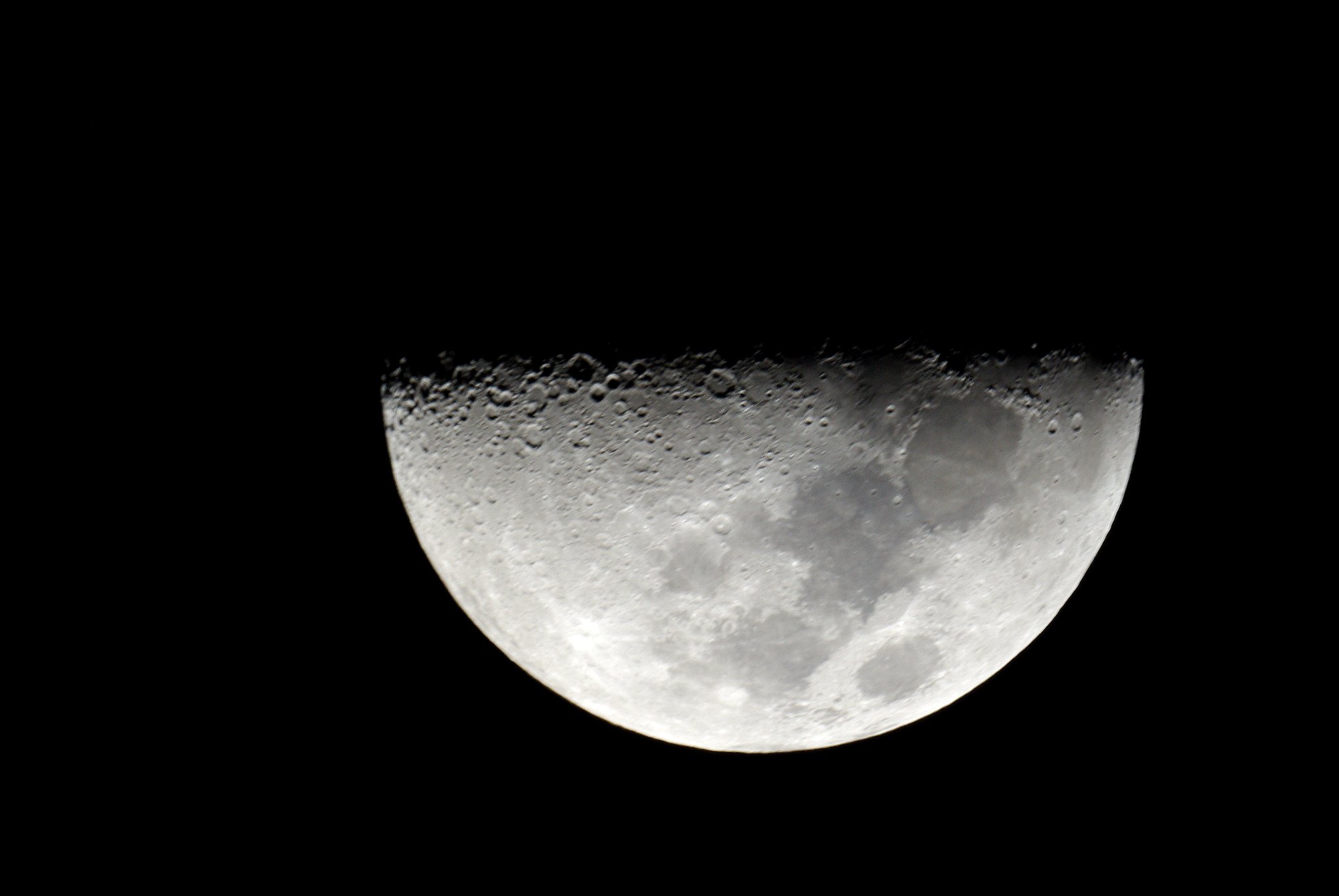
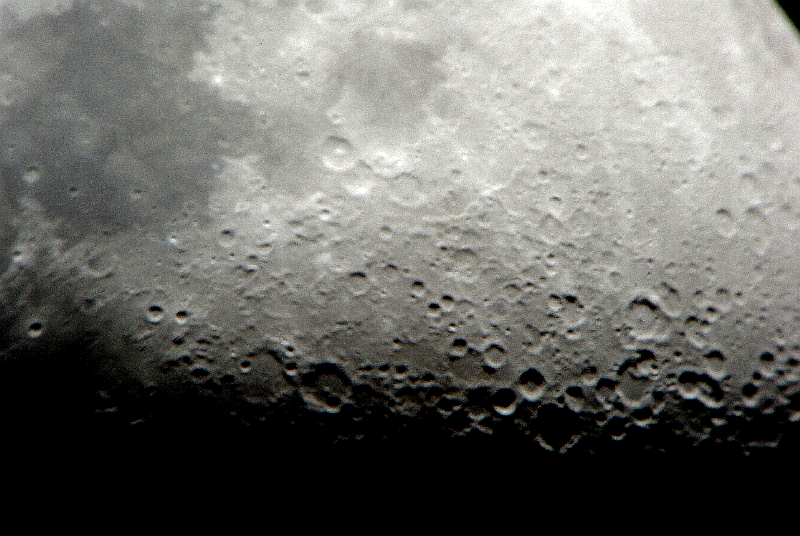
This is a picture that I took at prime focus last night with the 8" f/7 reflector, so you get the quarter Moon.

Thursday, January 25, 2007

M-O-O-N: That Spells Moon

If you read Stephen King's The Stand, you know what I'm talking about! The rest of you just need to read it!

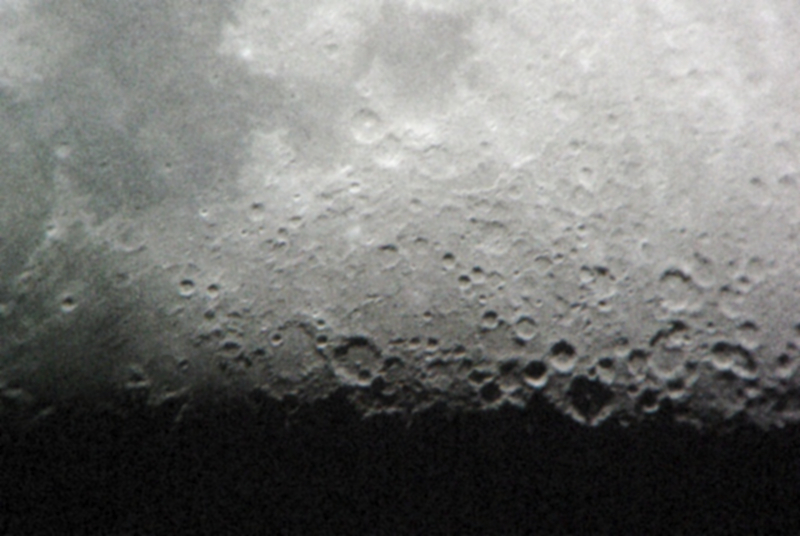
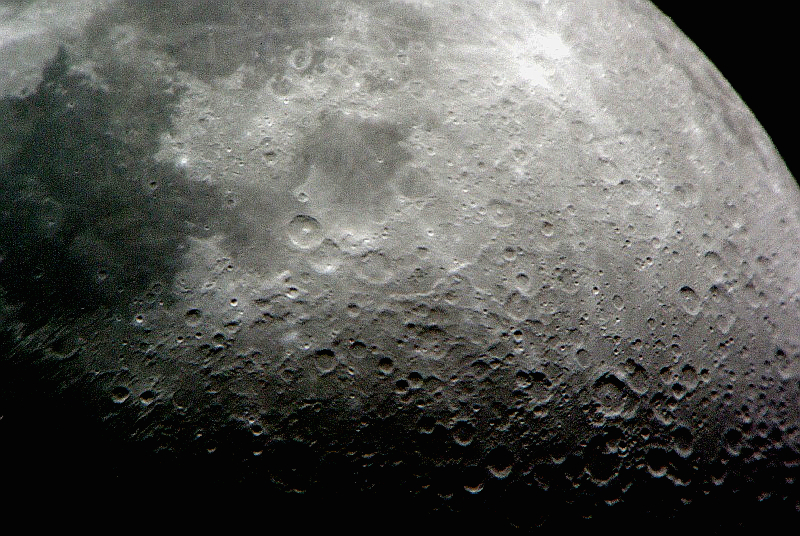
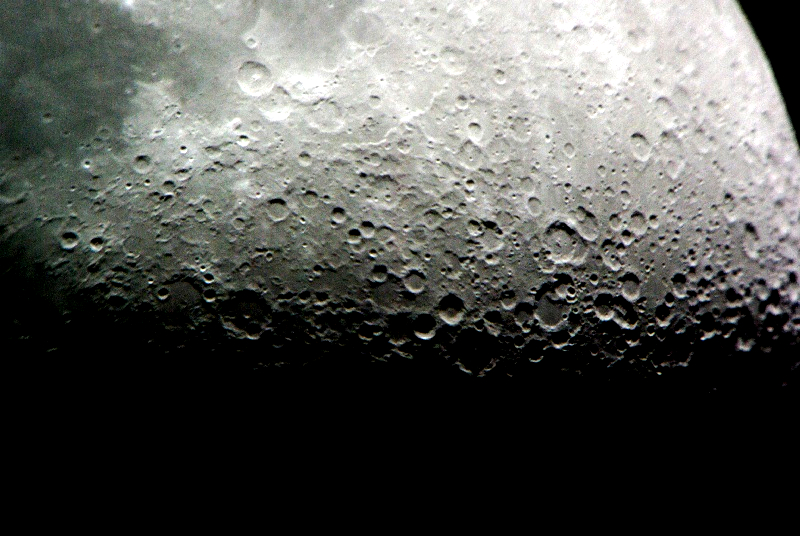
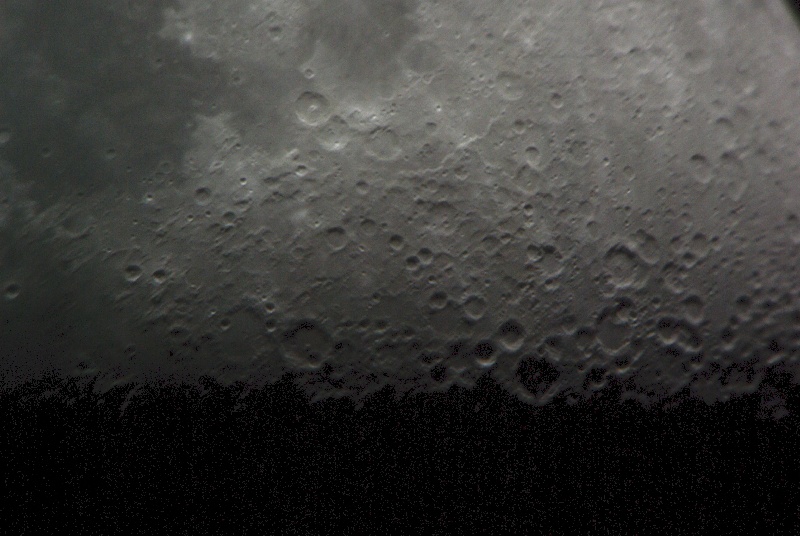
I took these with my Pentax K10D, and an 18mm Orthoscopic eyepiece projection setup, used the HP Photosmart Premiere program to do some very basic adjustments for sharpness, sometimes for brightness and contrast, and then cut them down to a size that wouldn't take forever to download. I still haven't quite reached the sharpness that I want, but better than last night, when the quivering atmosphere made focus for more hundredths of a second darn near impossible. Click on each link to see the picture.


1/45th second, ASA 1600


1/60th, ASA 1600


1/90th, ASA 1600


1/90th, ASA 400


1/45th, ASA 400


1/20th, ASA 400


1/10th, ASA 400


1/10th, ASA 100


1/6th, ASA 100


1/3 sec., ASA 100

Sunday, January 21, 2007

Moon Shots

I shoveled the snow off the back driveway this evening to take advantage of a relatively clear night, and rolled out Big Bertha. Not being a motorized (or even motorizable) mount, taking astrophotographs with it is a bit optimistic, but I thought, maybe I can take some decent pictures of the Moon--it's bright, and Big Bertha has lots of aperture.

1. I couldn't do prime focus photography (where you use the telescope as the lens). The focal point of the mirror is too close to the end of the eyepiece focuser, and I can't get the focal point inside the bare camera body. This may be an argument for a lower profile focuser.

2. If I put a 3X Barlow lens in the focuser, it moves the focal point far enough out to get in focus--but just barely, and at the least inward travel of the focuser, it is too stiff to get an even slightly acceptable focus.

3. With eyepiece projection (telescope plus eyepiece combined to form a lens), I was able to get in focus--but the roughness of the focuser still means that the images I captured weren't very sharp.

Click to enlarge


Click to enlarge


Some of the grain you see is the combination of setting the "speed" to ISO 1600, and getting a little too aggressive with the sharpening filter in my computer.

I have not been completely happy with the focuser that came on Big Bertha because of an inability to get a sharp focus. If I had sufficient inward travel to do prime focus astrophotography, I would buy one of the helical fine focus inserts for it instead. But perhaps getting a lower profile focuser (which would almost certainly a smoother and finer focus as well) would be worth considering.