Saturday, June 20, 2009

Grand Canyon North Rim

Grand Canyon North Rim

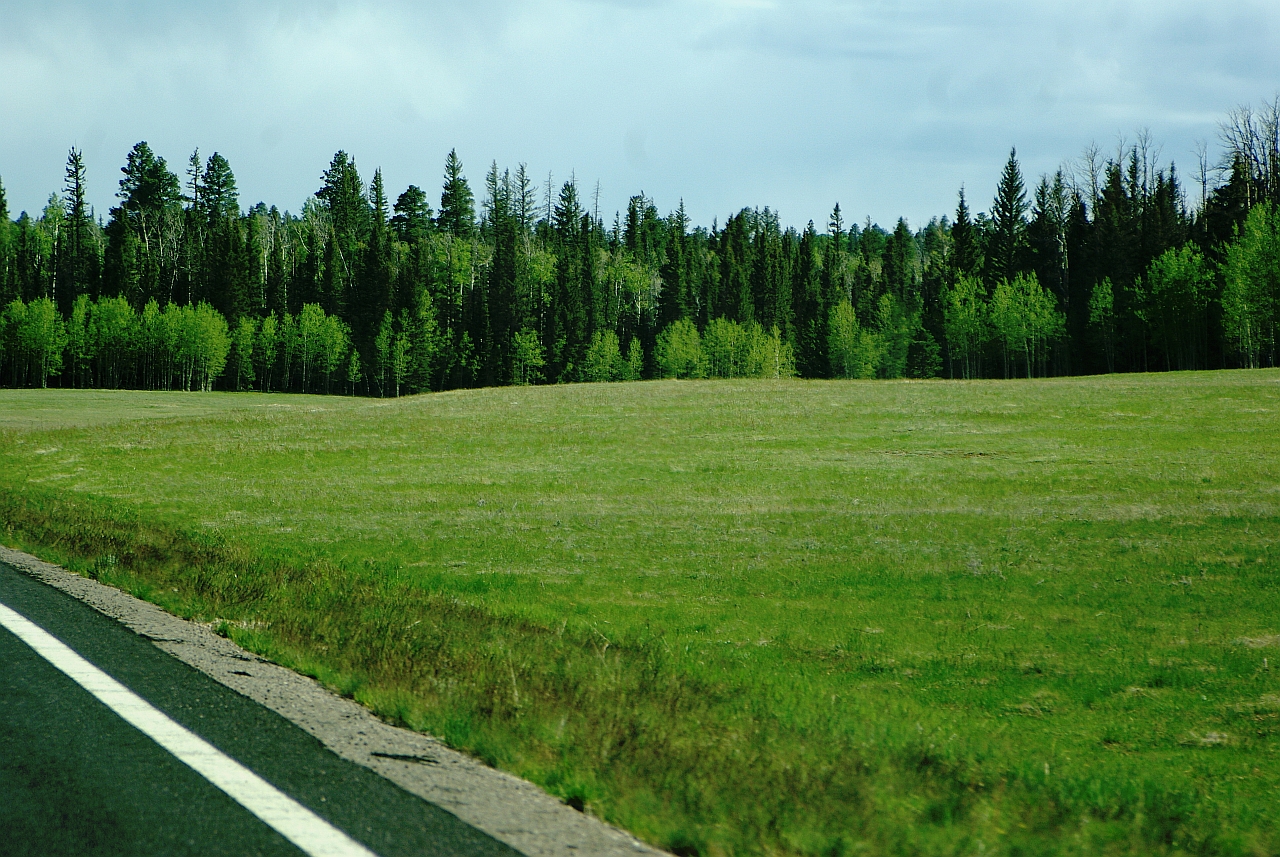
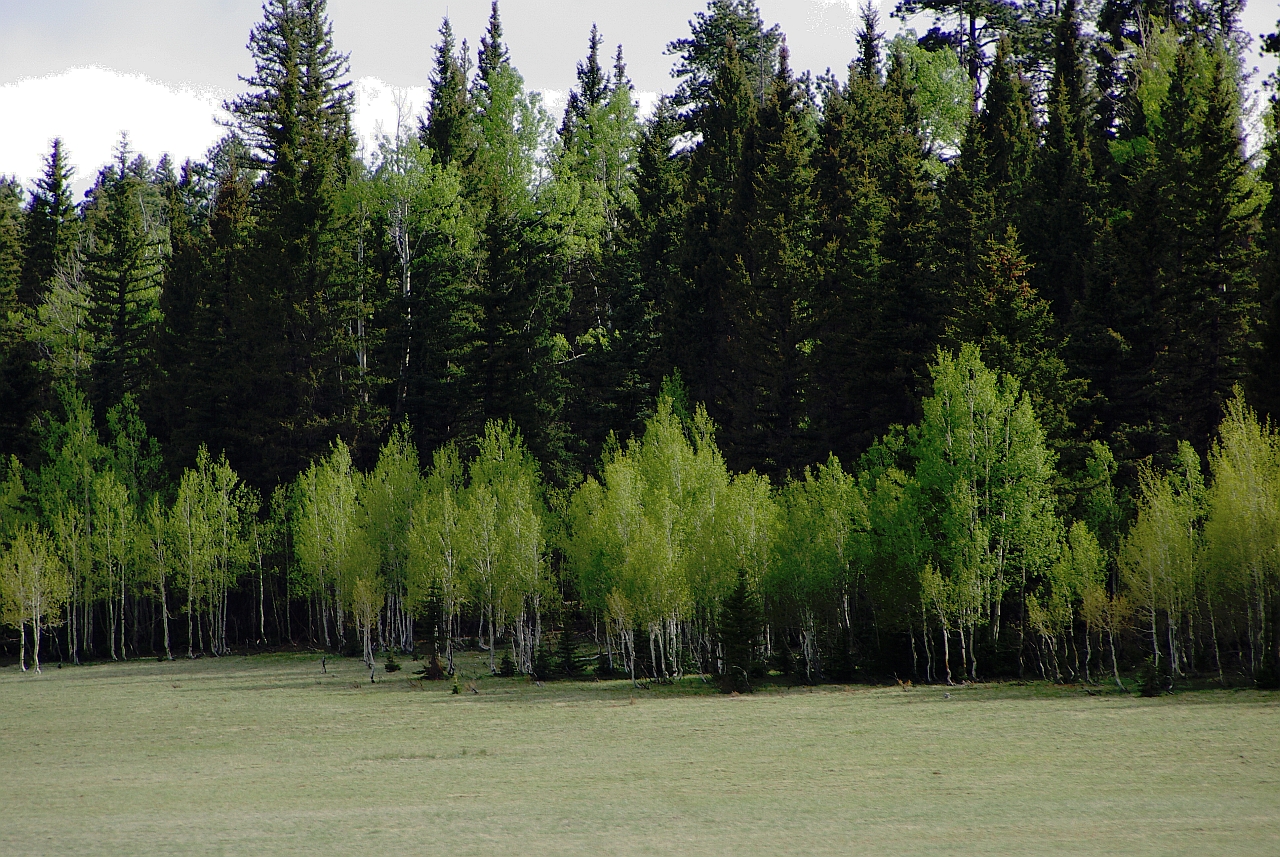
When you enter the park from the north side, there is absolutely no question that you are in a forest.

Click to enlarge


Click to enlarge


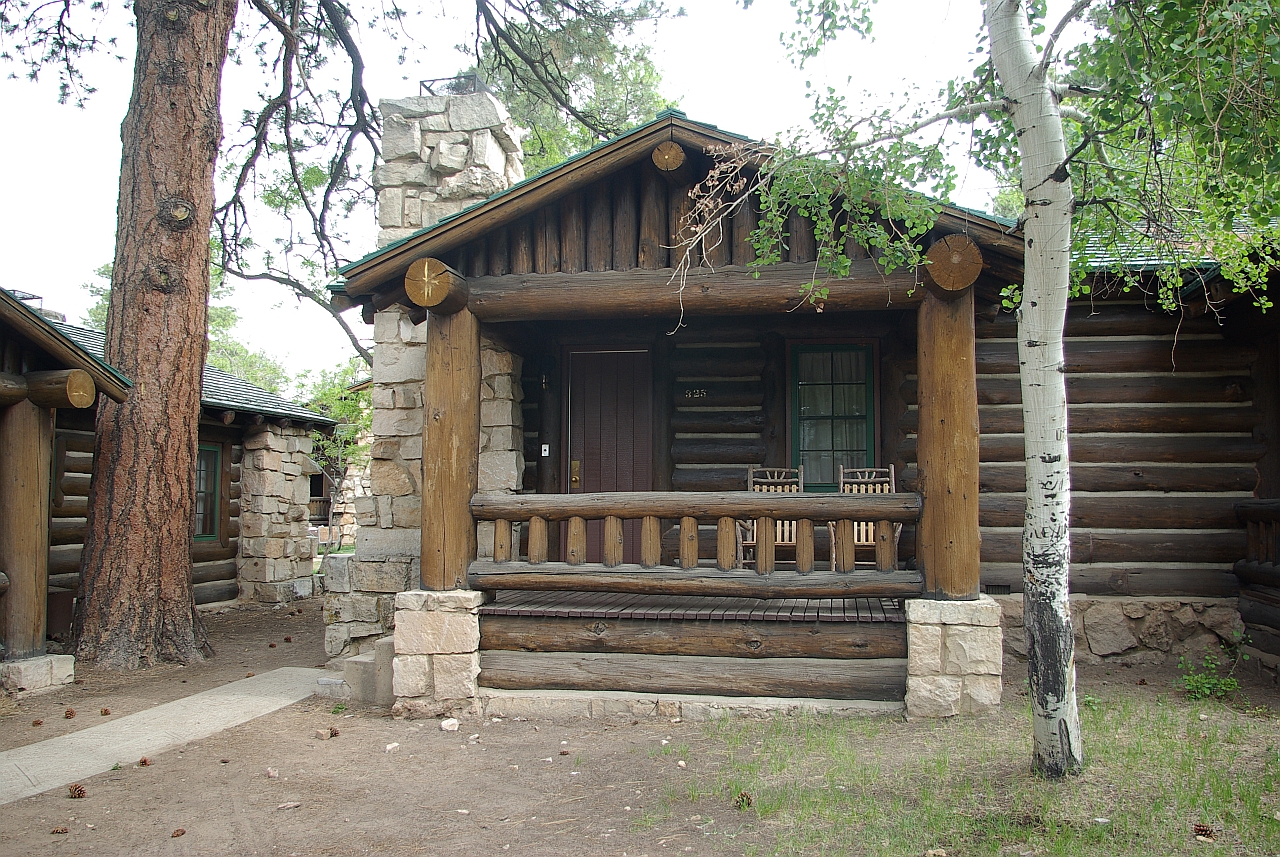
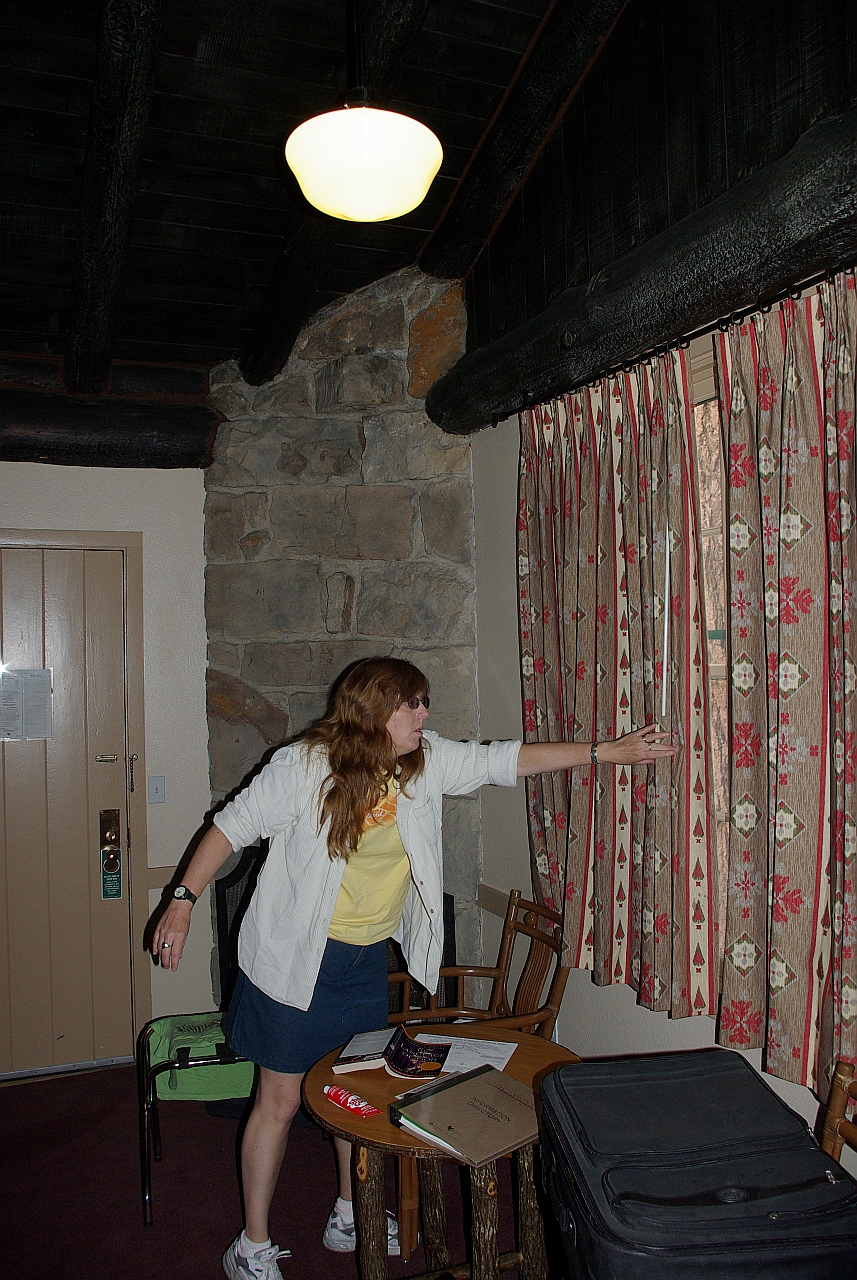
We stayed at the Grand Canyon Lodge, built in the late 1920s, then rebuilt in the 1930s after a fire. The guest rooms are actually a series of cabins, described as "rustic." What they are is a curious blend of modern plumbing and electrical fixtures with 1930s buildings--really quite comfortable, and quiet, but without TVs or Internet service. (There is wireless Internet service at the general store a couple of miles away, but if you really want Internet service, as I did, this isn't very convenient.)

Click to enlarge


Click to enlarge


Click to enlarge
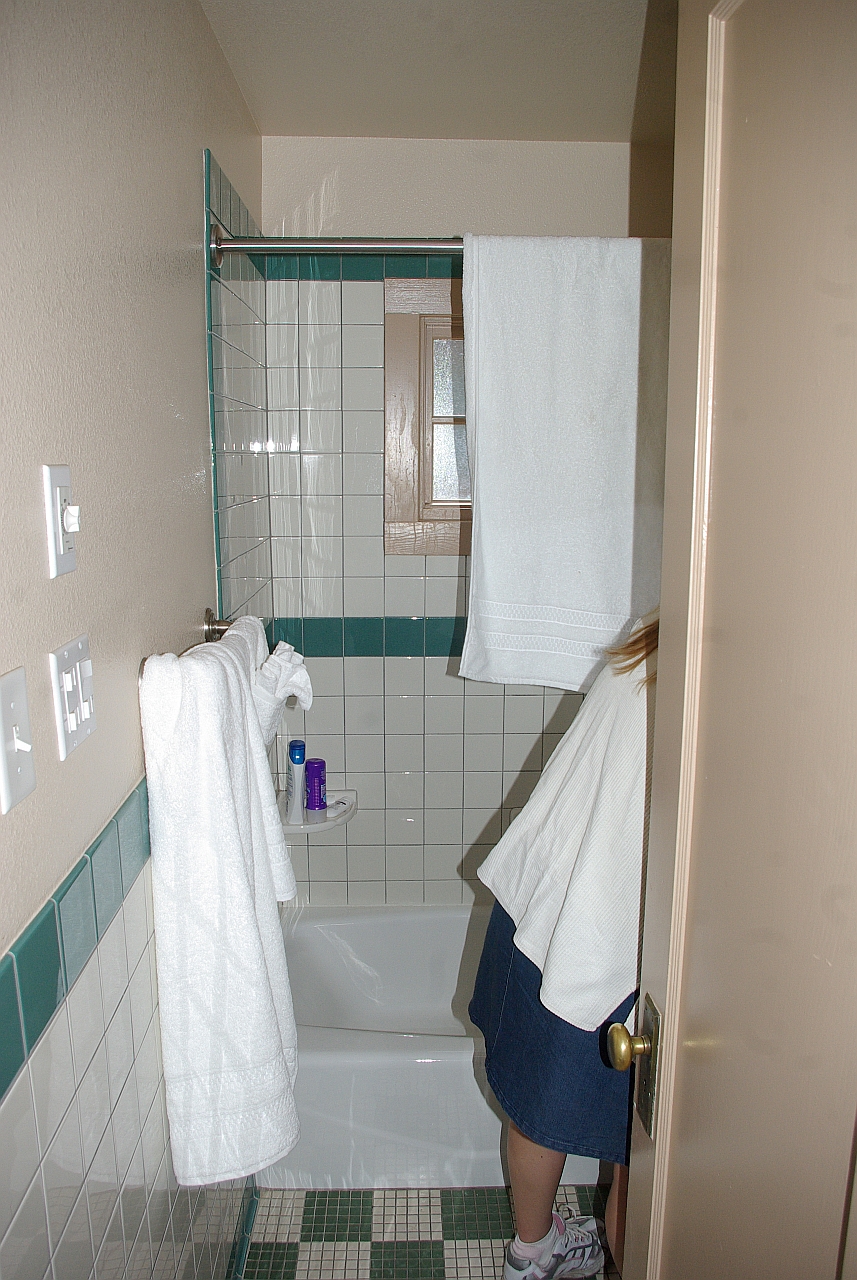


Click to enlarge


It isn't obvious from the picture, but some of the window panes are the wavy glass that was still being used into the 1920s before newer techniques for making proper plate glass came into use.
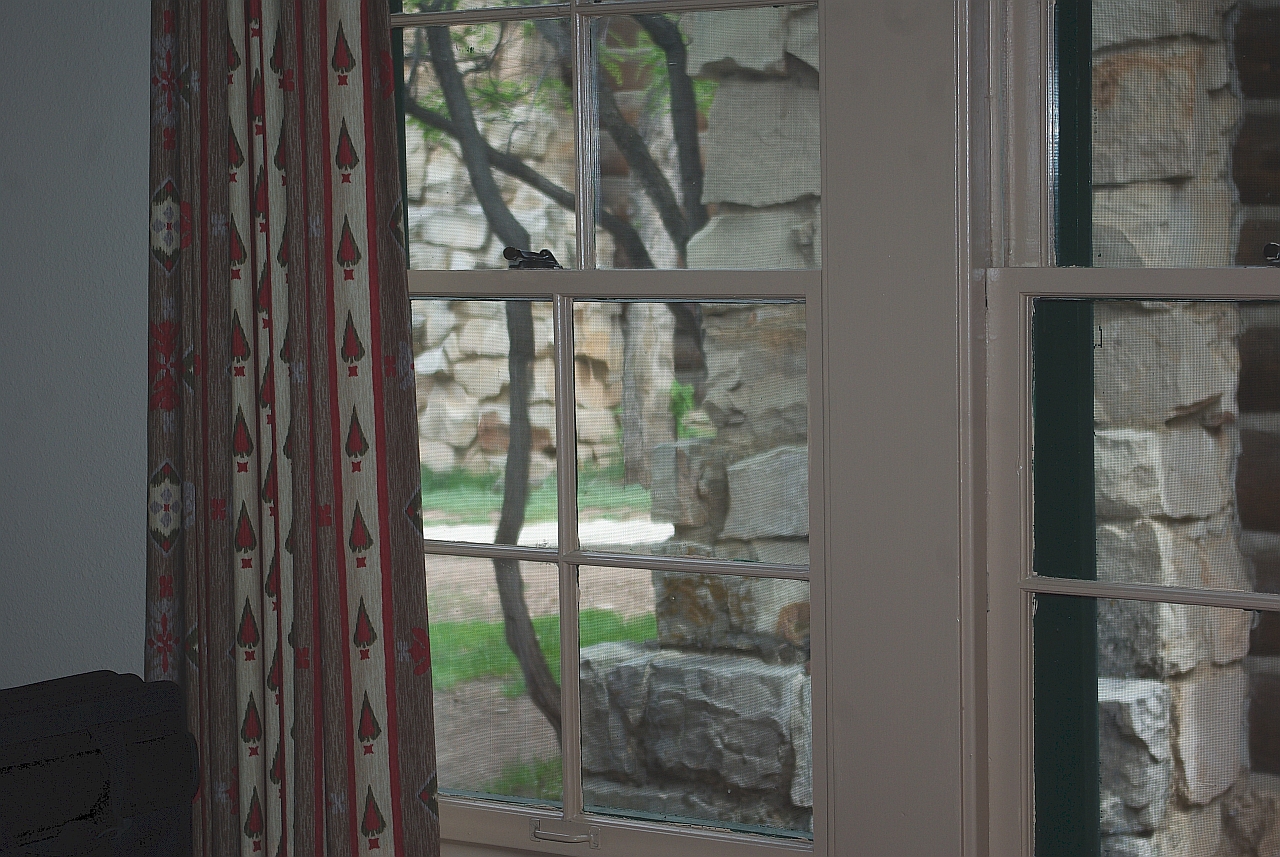

Click to enlarge


You pay a little bit of a premium for the rim view cabins--and I would have gladly done so, but they are booked well in advance, and I could not get one. But guess what? There are so many trees along the rim that:

1. Many of the rim view cabins are somewhat screened from the view anyway.

2. Cabins like ours are so close to the rim (about 200-300 feet) that it doesn't make that much of a difference.
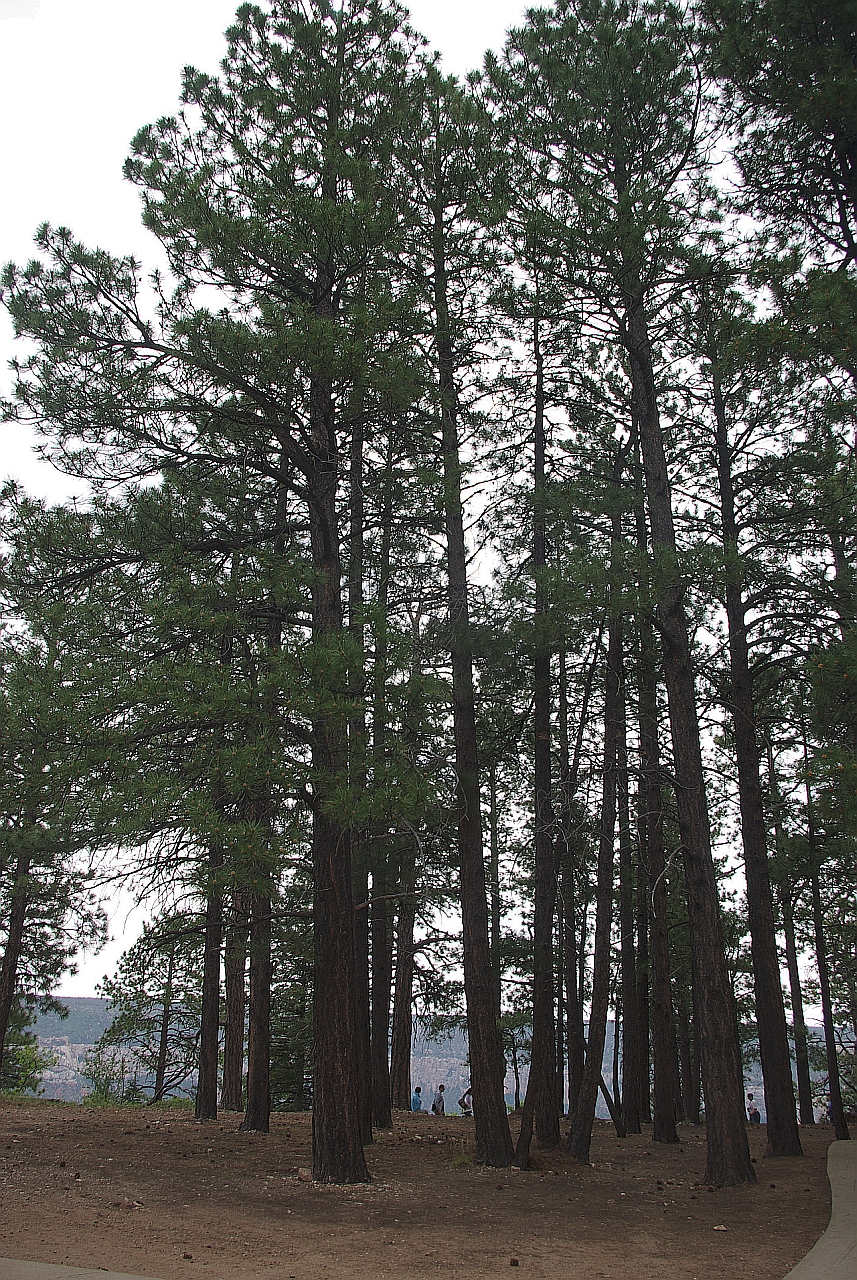

Click to enlarge


Here's one of the rim view cabins that is really, really on the rim!
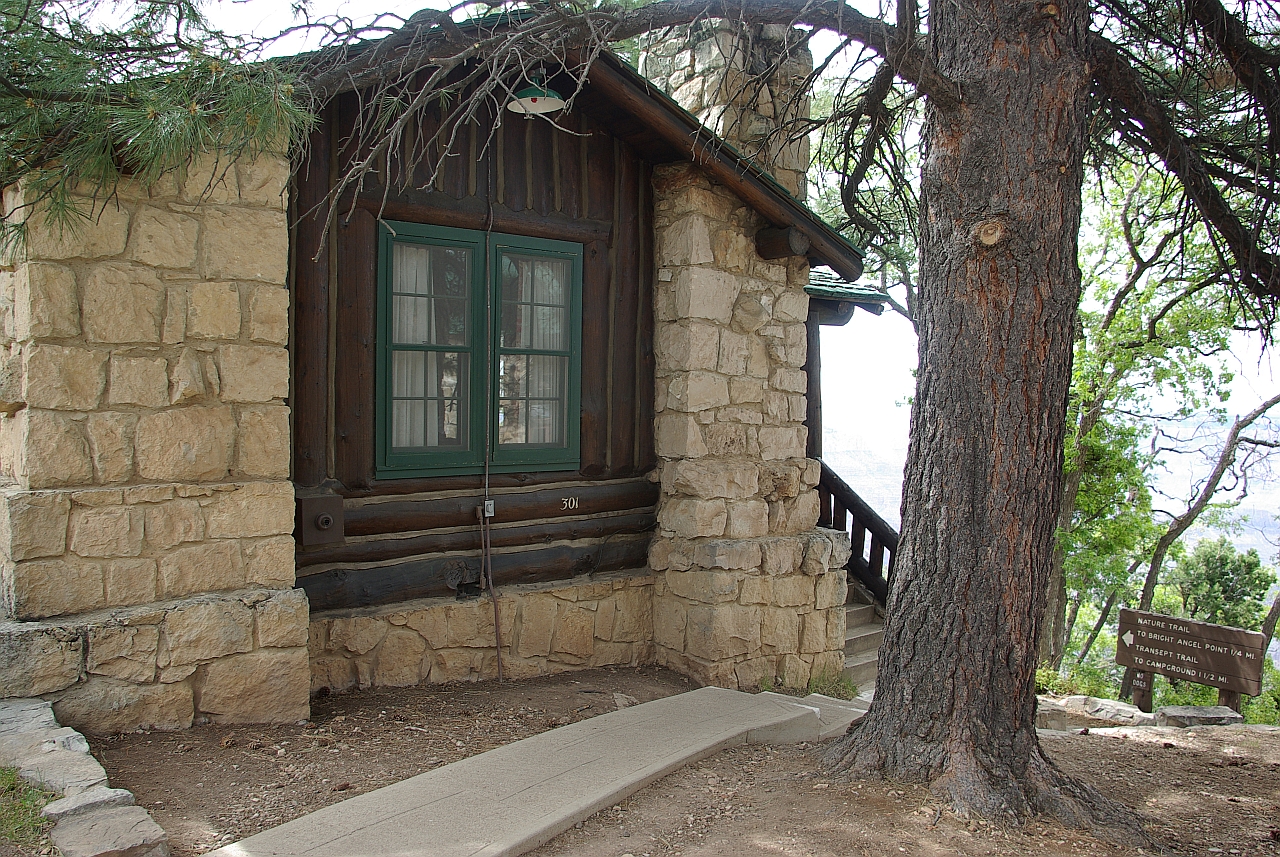

Click to enlarge


The outside of the lodge:
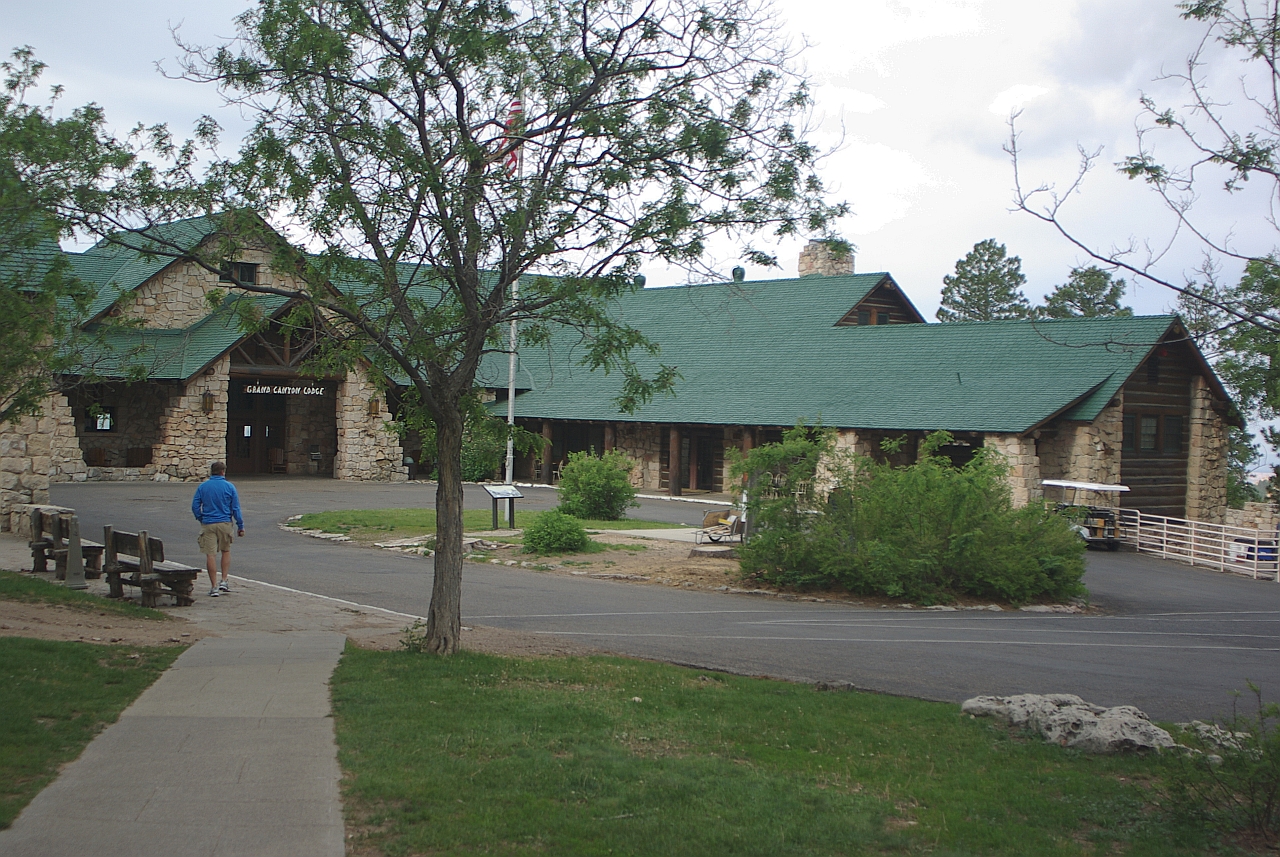

Click to enlarge


Yes, the sign is done in the same font as the buildings in Jurassic Park. I suspect that this is some common style of the period when a lot of these national park concessions were being built, and the set designer for Jurassic Park used it for that reason.

This picture of the inside of the restaurant really doesn't capture its grandeur--the combination of bright illumination from those amazing picture windows, and a fairly dark interior. The food was expensive (along with everything else there), but astonishingly good.
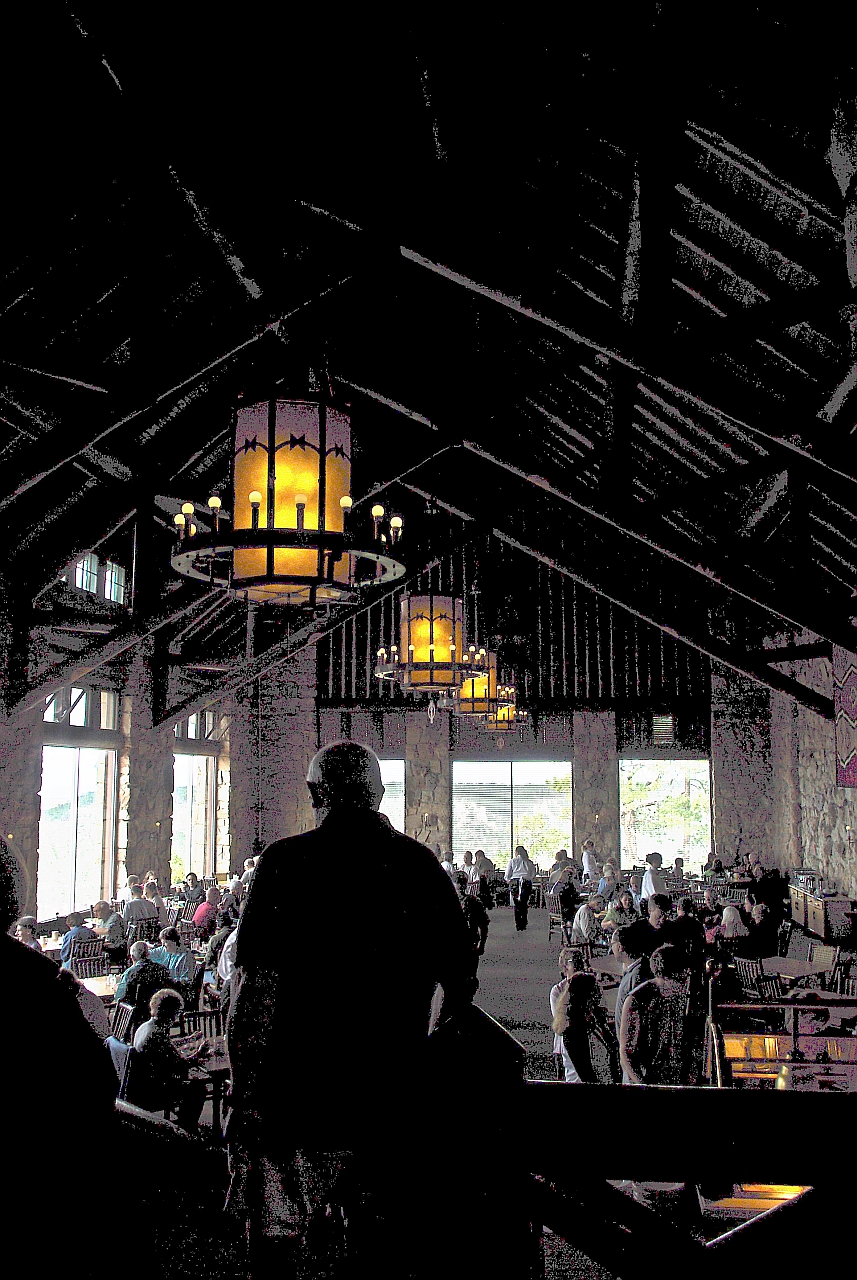

Click to enlarge


And of course, here's a picture from our table, taken the last morning, after smoke from a forest fire had started to obscure the view.

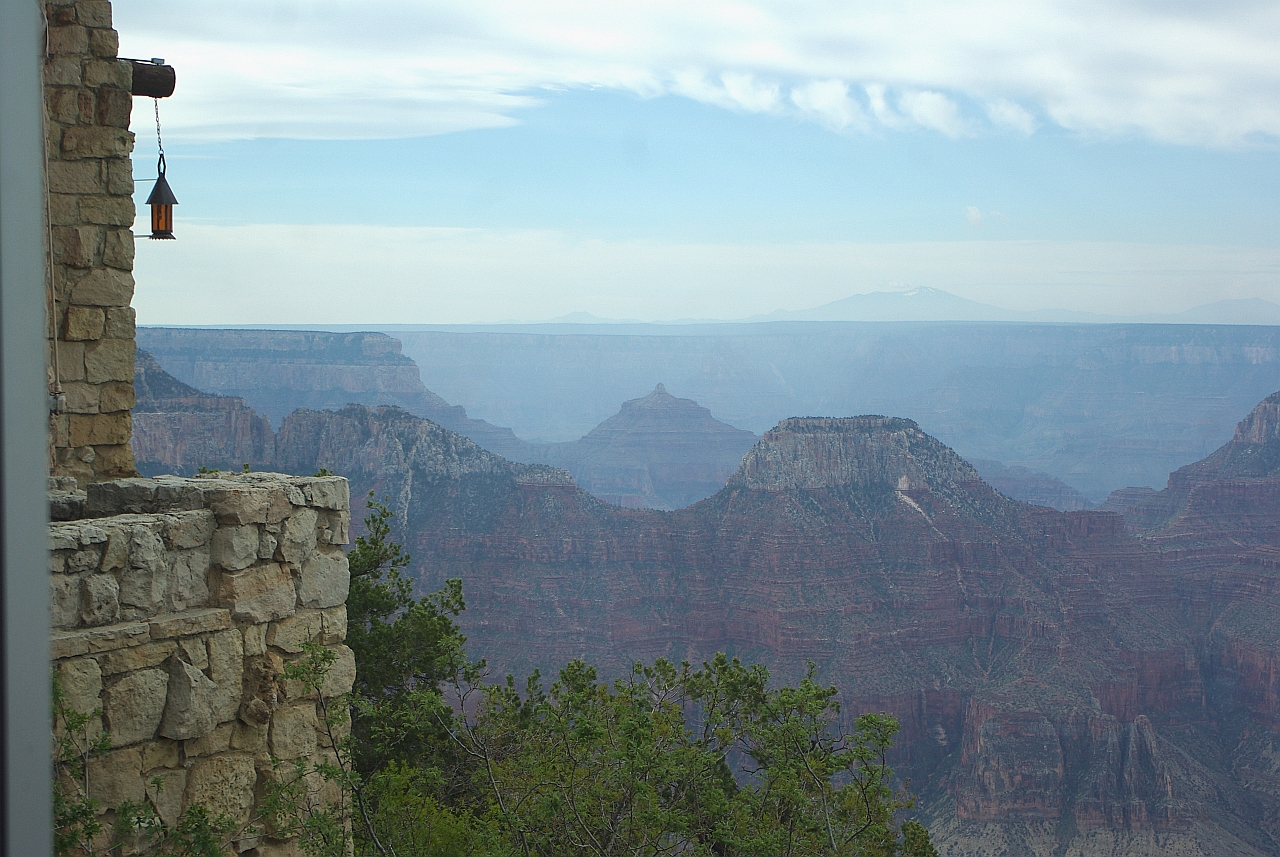
Click to enlarge


If you arrive in the afternoon, make reservations immediately, or you will be getting your dinner from the deli, which was so-so on food but expensive.

More pictures later--and there are some astonishing pictures to show.

We Had A Lovely Summer

We Had A Lovely Summer

Both days of it. Now we're back to clouds and rain.

By the way, it's always worthwhile to read Watts Up With That? a blog that spends a lot of time looking at the incredible dishonesty or religious fanaticism (take your pick) of the global warming crowd. Among the more recent astonishing items:

1. Honolulu Airport had day after day of record temperatures in June. Or rather, their temperature gauge was defective--and when replaced, the temperature dropped at least three degrees. But even after acknowledging that these "record temperatures" were an artifact of a defective sensor--NOAA won't correct the data--which means that they will become more evidence for global warming.

2. Breathless excitement about a dramatic increase in weather-related U.S. electric utility disturbances--but the dramatic increase between 2007 and 2008 was because of improved utility reporting--not an actual change.

3. Oh yes: the increasingly violent weather because of "climate change"? You mean like the tornado chart?

More Stuff Added To The Web Page

More Stuff Added To The Web Page

Added images of State v. Wilburn (Tenn. 1872), Fife v. State (1876), and Wilson v. State (Ark. 1878) and Holland v. State (Ark. 1878) to the right to keep and bear arms decisions page.

I Had A Brilliant Idea Last Night...

I Had A Brilliant Idea Last Night...

It was a self-aligning tap wrench, using a series of rods and springs to hold the tap wrench perpendicular to the workpiece as you turned it. Alas, when I searched online, I found that someone had the same brilliant idea a few years back--and phrased it just about identically to how I would have done so:
A tap and die wrench for threading flat and round workpieces and, formed of hardened steel or a softer material with hardened steel inserts at those points sustaining torque and tensile forces during operation, provides a body member adapted for receiving and retaining taps and a base adapted for receiving and holding round or hex dies, and the body member and base are mounted upon parallel alignment rods and held apart by a spring bias effected through springs mounted on each of the rods.

DC Dragged Into the United States, Kicking & Screaming

DC Dragged Into the United States, Kicking & Screaming

The June 20, 2009 Washington Post reports that DC is slowly, fighting the whole way, joining the United States, in allowing its serfs to own handguns:
The D.C. government released emergency regulations yesterday that greatly expand the models of handguns that District residents can own, a shift designed to stave off another lawsuit over its compliance with the Second Amendment.

The new regulations, which come as the District continues to grapple with last year's Supreme Court decision that threw out the city's gun ban, will allow residents to legally obtain at least 1,000 additional types and models of handguns.

City leaders sought to play down the effects of the new regulations, but gun rights advocates said they were another boost to their efforts to undo the District's long-held restrictions on personal possession of weapons.

"We are gratified the District is recognizing their approach is unworkable and unconstitutional," said Alan Gura, who was the lead attorney in the District of Columbia v. Heller Supreme Court case. "There is now a whole new universe of guns that will now be available."

In addition to permitting guns in the District that are legal in California, the city will also allow residents to apply to register handguns that are permissible in Massachusetts and Maryland.

The new rules will give gun owners a broader array of choices when they go shopping for handguns to keep in their home. In some cases, the change could mean something as minor as what color of weapon they can purchase. In other instances, gun owners will have access to weapons with additional design features.

DC tried to use California's list of legal handguns to restrict ownership, because California now requires handguns to pass a completely unnecessary "safety" test, as a method of reducing the number of handguns sold there. Pretty clearly, DC's attempt to restrict handgun ownership using the California list was in violation of the Second Amendment, or they would not have backed down. And once the Supreme Court rules that the Second Amendment applies to the states, I suspect that California's restrictive list will also be subject to challenge.

UPDATE: Whoops! Shortly after I posted this, I got an email from Alan Gura indicating that he has already filed such a suit against California's roster law.

Thursday, June 18, 2009

Part Of Why I Don't Think Much Of The State of Academia

Part of Why I Don't Think Much Of The State of Academia

This abstract from a recently published piece in the Berkeley Journal of Law, Gender, and Justice:
Yet, despite the conceptual centrality of sexual desire and sexual activity, family law says nothing explicit about sexual pleasure. And despite the salience of gender equality in contemporary family law, the field remains preoccupied with performances that produce heterosexual men's orgasms while ignoring or rejecting women's interest in orgasmic pleasure. As a result, family law today is marked by fundamental omissions and inconsistencies.

This paper attempts to begin to fill the gap and to explore the incongruities. It builds on Susan E. Stiritz's Cultural Cliteracy: Exposing the Contexts of Women's Not Coming (published as a companion piece) and examines the relevance of Stiritz's analysis for family law. According to Stiritz, "'[c]ultural cliteracy' denotes what an adequately educated person should know about the clitoris, which is that it is a culturally despised body part because it is an obdurate reminder of women's independence and power and supports women's liberation." Stiritz tracks the role of the clitoris and women's sexual pleasure through history, compares past and contemporary anatomical understandings of the clitoris, and then demonstrates through empirical studies, based on courses she has taught, how cultural cliteracy can empower women and bring new insights to the reading of women's texts. She calls for the integration of "adequate understandings of the clitoris" into a variety of different discourses, including law.
The paper isn't much less silly. "Culturally despised body part"? This isn't East Africa, or Afghanistan. The paper gets properly upset about some things:
Overall, popular culture remains notoriously androcentric, sexualizing even young girls in the interest of men, reinforcing traditional gender hierarchies, and creating dangers (including exposure of young persons to sexually transmitted disease) abhorred by family law.
And yet it is clear that the author has not a clue that is the collapse of traditional values, and its replacement with the values that the author certainly approves of, that has created this disaster.

Get Used To Abandonment On Ice Floes

Get Used To Abandonment On Ice Floes

There's a widespread belief that the Eskimo tradition was that when someone got really old, they would be abandoned on an ice floe to die--resources couldn't be spared on those who didn't have long left. This article says that while it was done, it was hardly universal among Eskimo cultures, and was generally reserved for extraordinary famine conditions.

We may be headed back there. I am utterly flabbergasted by this interview from the May 3, 2009 New York Times with President Obama:
THE PRESIDENT: So that’s where I think you just get into some very difficult moral issues. But that’s also a huge driver of cost, right?

I mean, the chronically ill and those toward the end of their lives are accounting for potentially 80 percent of the total health care bill out here.
Well, of course. And if you put this crowd out on an ice floe, metaphorically speaking, they won't be 80% of the total health care bill anymore. They might be 5% of the bill then, because morphine for pain is cheap, and disconnecting life support equipment is cheaper still. But there will be another group that will be 80% of the total health care bill. It won't be the same 80%, of course. Any guess that people dying (expensively) of AIDS won't be part of the crowd that gets put out on Obama's metaphorical ice floe?

Health care is expensive. And yes, I think most people will, if the costs are high enough, say that we have to draw some lines, somewhere. Would we spend a billion dollars to save one person's life? Would we spend a million? What bugs me is that Obama next admits that someone in the government is going to make those choices--and he doesn't want the people to be too deeply involved in making those decisions:
THE PRESIDENT: Well, I think that there is going to have to be a conversation that is guided by doctors, scientists, ethicists. And then there is going to have to be a very difficult democratic conversation that takes place. It is very difficult to imagine the country making those decisions just through the normal political channels. And that’s part of why you have to have some independent group that can give you guidance. It’s not determinative, but I think has to be able to give you some guidance. And that’s part of what I suspect you’ll see emerging out of the various health care conversations that are taking place on the Hill right now.
I'm so glad that we have an adequate supply of philosopher-kings to handle these hard decisions!