Wednesday, October 5, 2005

House Project: You Could Almost Live In It

Okay, I have a working digital camera again. I don't know if it is because Kodak tries harder to deal with darkness, but I found myself taking pictures where I would not have even tried with the HP camera. Fiddling with the exposure in my computer produced pictures--not great, but at least a few pictures that are adequate to show you. It was just about dark when we reached the house.

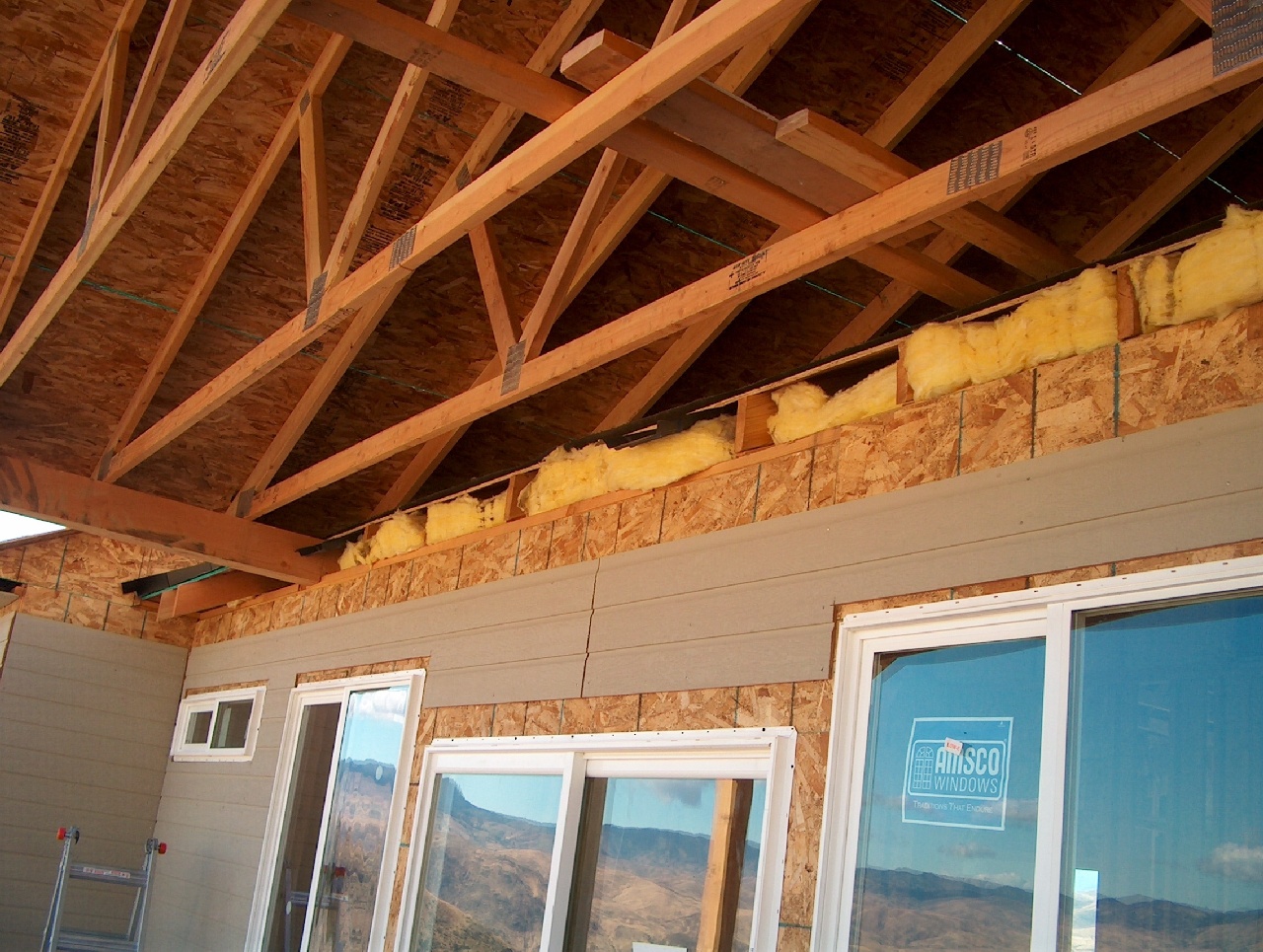
The back porch has the tar paper in place; that's where the water came in during the heavy rains last weekend.


Click to enlarge


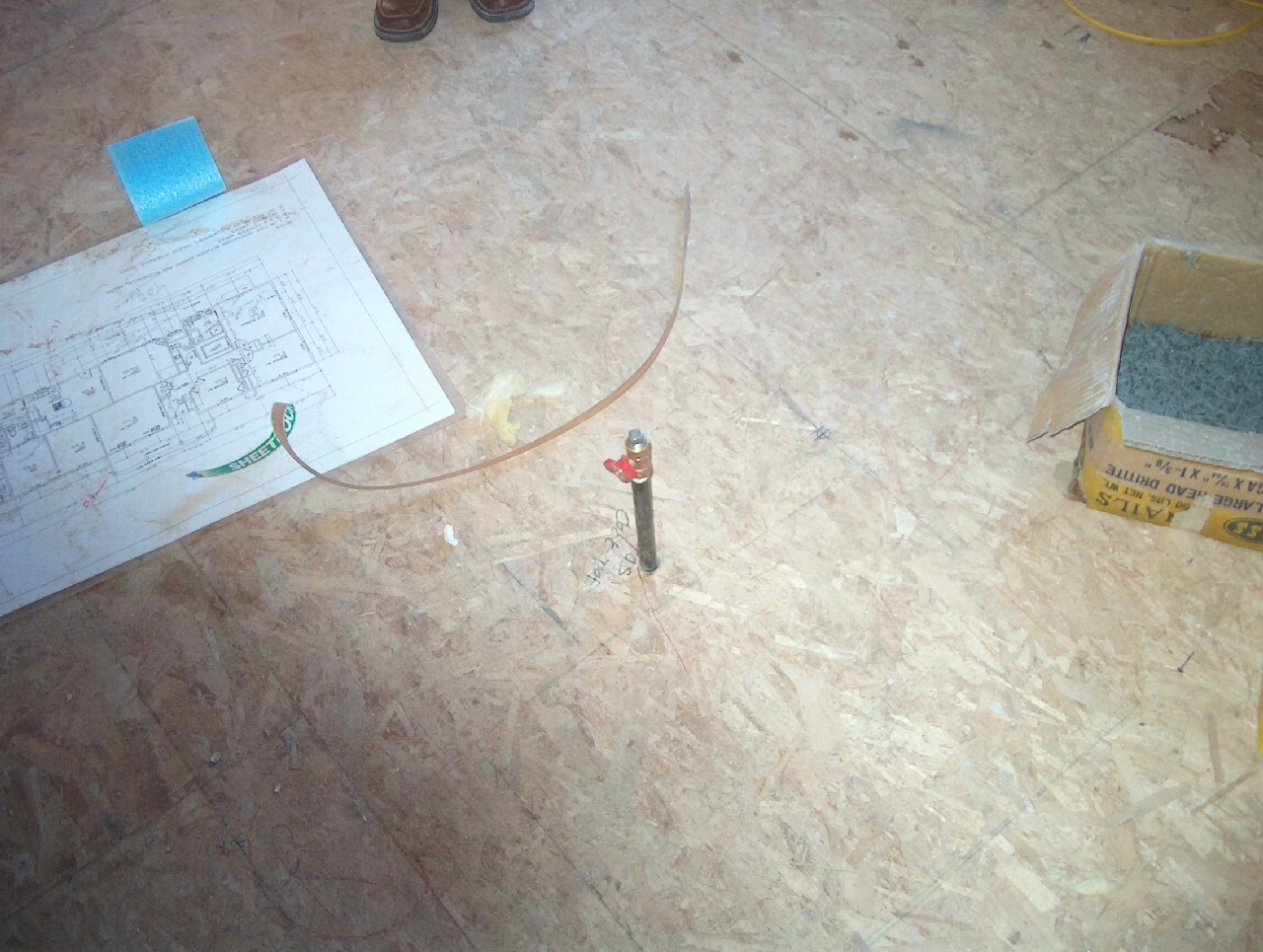
Much of the interior had this hard material on top of the subflooring--I guess to properly support the tile.


Click to enlarge


Here was a big pile of it, still waiting to be put down.


Click to enlarge


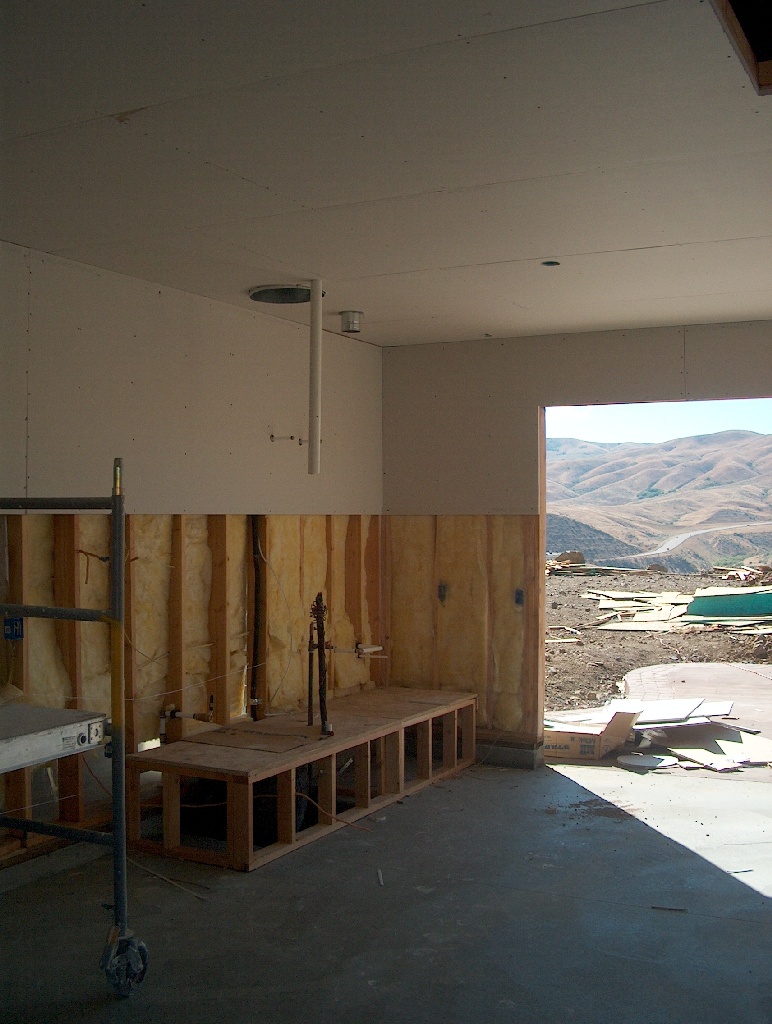
All of the sheetrock has been taped and textured--now just waiting for paint.


Click to enlarge


Here you can see the septic tank, about 120 feet east of the house. I understand that this and the leech field were supposed to be covered over as soon as the inspector approved it; I don't know what is holding this up.


Click to enlarge


There's a long trench running down the hill to the leech field; unfortunately, it was too dark by the time we got there to get a good picture. But a leech field is effectively four big plastic lines with little holes in them to let the liquid material that flows out of the septic tank slowly filter into the ground. This is just a few feet from the road where our property line ends.

Previous house entry.

Monday, October 3, 2005

The House Project: You Wil Have To Take My Word For It

As I mentioned below, my digital camera is out of service at the moment, so I will have to describe the current state of things.

We went up there yesterday. The septic tank is in the ground; the leach field is installed; all that remains is for the inspector to approve it before they cover everything over.

It rained heavily (for Idaho) over the weekend. While most of the roof has the tar paper in place, the back patio did not. (The roofing subcontractor insisted to my builder, "It's not going to rain this weekend.") The water came in and made a small pool in the dining room. The builder says that this won't be a problem--houses are now built year-round here because the demand is so strong, so they have experience dealing with rain on the subflooring, and know how to handle it.

Sunday, September 25, 2005

The House Project: I Can See The Light At The End Of The Tunnel!

Or is that a sewer pipe?

I went up there this afternoon to see how it was progressing. The septic tank guy was there on Saturday, and here you can see the excavation for the tank, about 150 feet down the hill from the house.


Click here to enlarge


Here's the drain pipe leading down the hill from the house.


Click here to enlarge


Here's where the drain pipe leaves the house.


Click here to enlarge


The fitting coming up to sidewalk level is there because lots of people up there own RVs, and it is convenient to have a fitting that lets them drain directly from the RV tank into the septic. We don't own an RV, and I can't imagine that we ever will, but it only added $25 to add this fitting, and perhaps a future owner will find it helpful. It also looks like it might make it simpler for a plumber to snake the line.

I'm not sure what this little piece of concrete is all about.


Click here to enlarge


It is either part of the septic tank system (based on its location), or it is a Cubist reinterpretation of R2D2. [UPDATE: I'm told that this is the distribution unit that directs output equally to the different leach field lines.]

Here's the backup generator, still waiting to be hooked up and located (probably out at the edge of hill, to reduce noise). It is rated at 7 kW (when running on LP gas), with automatic switchover in the event that we lose grid power, and it starts itself automatically every week to make sure everything is in good working order.


Click here to enlarge


The furnace seems to be completely installed.


Click here to enlarge


Again, the view out the front is about the worst view we have. (It will get better once the scrap is cleaned out and the grass goes in.)


Click here to enlarge


Unfortunately, the house now has temporary construction doors--and the locks are now actually operational, so I can't get into the house--reduced to peeking in the windows, like some sort of Construction Peeping Tom!


Click here to enlarge


This interesting effect was because the reflective surface of the glass acts as a mirror--and these were the parts that I wasn't able to shade.


Click here to enlarge


The construction crew seems to be clearing out some of the space on the west side of the garage, so that we can have a walkway over there.


Click here to enlarge


The roof shingles are on top, waiting to be hammered into place.


Click here to enlarge


Last house project entry.

Thursday, September 22, 2005

House Project: Whoops! Over Budget!

We are running about $40,000 over the initial budget. Using all tile instead of carpet added about $10,000. The appliance budget was about $4500 too low (because of the jetted tub). The concrete budget was $3000 too low (labor for the stampings). The garage door budget came in $1000 too low (we added a second garage door at the back). The original budget didn't include the backup generator ($1800). We hadn't originally planned a sprinkler system--which makes sense for fire suppression, so there's $2000. The extra $1400 I spent on more insulation I think was a good investment, but it is amazing how all these little things add up.

Time to make contributions through the PayPal button! And perhaps all the people who have given up on the Gulf Coast and moved to Boise (which is the second safest city for weather in the U.S.) will drive up housing prices enough here to increase the equity in our current house in Boise.

UPDATE: Here's the biggest cause of the overrun: just as they were starting to put up the framing, my wife and I suddenly realized that similar houses he had built felt cramped because they had eight foot ceilings, so we switched to nine foot ceilings, and 2x6 walls, instead of 2x4 walls (for improved insulation). This doesn't sound like much, but an extra foot of ceiling means taller studs, more sheet rock--and on a 2300 square foot house, it adds up quickly.

Wednesday, September 21, 2005

Speaking Of Alternative Oil Sources

Instapundit mentions that oil shale--a trillion barrel Plus source located in the United States--is looking quite promising with oil prices so high. (The Canadian oil sands, which I gather are a geologically similar format, are already being commercially exploited.) A couple of years back, I blogged about Changing World Technologies, a company that believed that it could turn sewage, garbage, turkey guts--in short, almost any organic material--into oil at the equivalent of $8 to $12 per barrel.

According to their web site, they are currently producing oil from turkey guts in Missouri--and the energy to run the plant is coming from the oil that they produce. Their description is a little weasel-worded, but makes it sound as though they get 100 BTUs of energy for every 15-20 BTUs consumed.

Now, a lot of magazines were hyping Changing World Technologies as the future two years ago, when oil was half the price it is now. I've asked a couple of times for an update--are they producing oil from turkey guts and sewage at a price that is competitive with current world oil prices? I've received no answer. If Changing World Technologies made enough sense for people like Warren Buffett to invest in it several years ago, when oil was cheap, I would think it would make even more sense today. So, what's the story?

UPDATE: I received a lot of feedback from readers. One pointed me to a story in Fortune that said that it is turning out to be a less of a bargain for energy production than first thought:
The key question is whether the end products are pure enough and cheap enough to compete with other biofuels and petroleum. Until recently it seemed that turkey fuel would score big on both counts. CWT saw opportunity in the mad cow scare of December 2003. Expecting U.S. authorities to ban the feeding of animal offal to livestock—a practice linked to mad cow disease—CWT and ConAgra formed a joint venture that built a $30 million plant in Carthage, Mo. The venture assumed that nearby turkey processors would provide lots of free turkey waste. Last year the Carthage plant began selling its output to a Midwestern manufacturer, which buys it for roughly $40 a barrel (25% less than conventional fuel) and uses it to run its plant. The Carthage factory now produces 400 barrels a day.

That's a drop in the ocean of U.S. oil consumption, currently running around 20 million barrels a day. But making more turkey fuel isn't as hard as nailing down its costs. It turns out that feeding animals to animals remains standard practice in the U.S., despite a modest tightening in the regulations last year. So instead of being free, turkey leftovers cost $30 to $40 a ton, a hefty expense considering that one ton of turkey yields just two barrels of oil.

And turkey fuel has so far been excluded from biofuel tax breaks. In October, Congress passed a bill that gave biodiesel, which is also derived from biological material, such as soybean oil and animal fat, but has a different chemical composition, a tax incentive that translates into a $1-a-gallon break on production costs. "The good news is that the government finally gave an incentive for producing fuel from waste," says CWT chairman and CEO Brian Appel. "The bad news is that it narrowly defined the kind of fuel receiving the incentive."

As a result of those two setbacks, CWT's production costs have doubled, to nearly $80 a barrel, a crippling blow given that conventional diesel sells for about $50 a barrel. CWT is staying afloat, thanks to a $10 million grant from the U.S. Department of Energy. But the company's next operation is likely to be in Europe, where food processors will pay to have CWT dispose of animal offal and where most governments offer tax incentives to biofuel producers. Appel is negotiating to license CWT's technology to Irish Food Processors, one of Europe's largest, which plans to build a biofuel facility by the end of 2006.
Still, this might make sense as an alternative to filling garbage dumps with waste, but we still aren't quite at the point where it is cost-effective for producing oil.

Another reader pointed me to this article from some sort of environmental organization--who you would expect to be quite supportive of a method of disposing of waste. The author purports to have a Ph.D. in Chemistry from Yale--but some of his statements make me wonder about his degree, because it betrays a real ignorance of chemistry:
Now along comes one more scheme for playing on the gullibility of a public that is so dumb it actually believes that a complex technological society, such as ours, can rip and strip the earth of all its resources, use them transiently, then somehow destroy them all, and still continue to leave a thriving planet for future generations. As though the earth is some kind of a magic lamp we can rub and the genie will continue to bestow upon us any gift we request. This concept is idiotic, and any company that seeks to effectuate the "getting rid of" part of this scheme is selling a bill of goods leading to planetary suicide. But this may not be sufficiently specific to your article to satisfy you.

I will back up to the beginning and pick apart the very heading of the article that began this all in Discover. It began with the heading "Anything into Oil" and proceeded in the article to flesh this out so: "The process is designed to handle almost any waste product imaginable, including turkey offal, tires, plastic bottles, harbor-dredged muck, old computers, municipal garbage, cornstalks, paper-pulp effluent, infectious medical waste, oil-refinery residues, even biological weapons such as anthrax spores. " Now in your article, you, or the claimants, hoping no doubt to have a prayer of passing the giggle test, have backed off a bit by only saying this much: "The company says its process works on tires, various hazardous wastes, and plastic as well as heavy metals. " Most emphatically none of this can pass the giggle test but let me ask you, do you understand what is being said here? You are saying that this company has a process which can turn steel into oil (just to select one of the more obvious idiocies). Do you know that steel is almost a pure element, namely iron, which no chemical process can convert to carbon? Are you familiar with the alchemist's search for transmutation in which they tried to turn base metals into gold? At least they didn't turn base metals into carbon and hydrogen, which is pretty much what oil is. This conversion just happens to contravene the laws of physics as presently understood. Is that a good enough indictment of the frauds being perpetrated by these PR mavens?
Except that Changing World Technologies has never claimed to convert steel into oil. They've made the claim that organic waste (turkey guts, sewage, wood, paper, plastic)--all of which are made of largely of carbon, hydrogen, oxygen, with a little bit of phosphorous, sulfur, and nitrogen--can be converted into oil (which is just about entirely carbon and hydrogen). CWT has always been clear that the various trace minerals that come out of garbage are essentially scrap, and play no part in the production of oil. It is possible--even likely--that the energy required to do this transformation from garbage to oil won't work. But there's no claim of transmutation in CWT's materials. Either "Dr." Palmer isn't reading carefully, or his rage that someone is trying to solve the garbage and oil problem is taking precedence over his education.

Now let's look a little further, to the subheading "Technological savvy could turn 600 million tons of turkey guts and other waste into 4 billion barrels of light Texas crude each year ". Apply a bit of that skepticism that journalism once relied on. How many pounds is 600 million tons. Multiply 600,000,000 by 2000 to get 1200 billion pounds. Now lets look at the oil. Depending on your definition of barrel, one of them weighs 300 to 400 pounds. So multiply 4 billion by 300 and you get 1200 billion pounds. What a strange coincidence! These phoneys say they can turn every pound of mixed water, dirt, rocks, paper, steel, acetone, tars, polyethylene, concrete (and oh, yes, turkey scraps too) into one pound of - are you ready for this - not just oil, not just a grease derivative, but light Texas crude. The loaves and fishes story has now been left in the dust. Jesus must be biting his nails with regret that he didn't think of this.
Uh, no. They have never claimed that they were goin to turn "dirt, rocks,... steel,... concrete" into oil. But paper (made largely of cellulose--carbon, hydrogen, and oxygen), acetone (again, carbon, hydrogen, and oxygen), tars (hydrocarbons), polyethylene (again, hydrocarbons), and turkey scraps (carbon, hydrogen, and oxygen, mostly): all of these things are convertible to oil. It might be too expensive to do so, but it isn't impossible. This Dr. Palmer is either a fanatic, or didn't learn enough chemistry to be expressing opinions as an expert.

Oh! I was wondering why this guy knows so little about a subject in which he supposedly has a Ph.D.:
As a member of the Sonoma County Local Waste Management Task Force and a former chairman of the Sonoma County Hazardous Materials Management Commission, he has been extensively involved in local garbage politics as well.
Sonoma County: where multimillionaires race Ferraris, when they aren't praising Noam Chomsky's critiques of the evils of capitalism.

Sunday, September 18, 2005

House Project: Electrical Roughed In; Much of the Sheetrock; Insulation

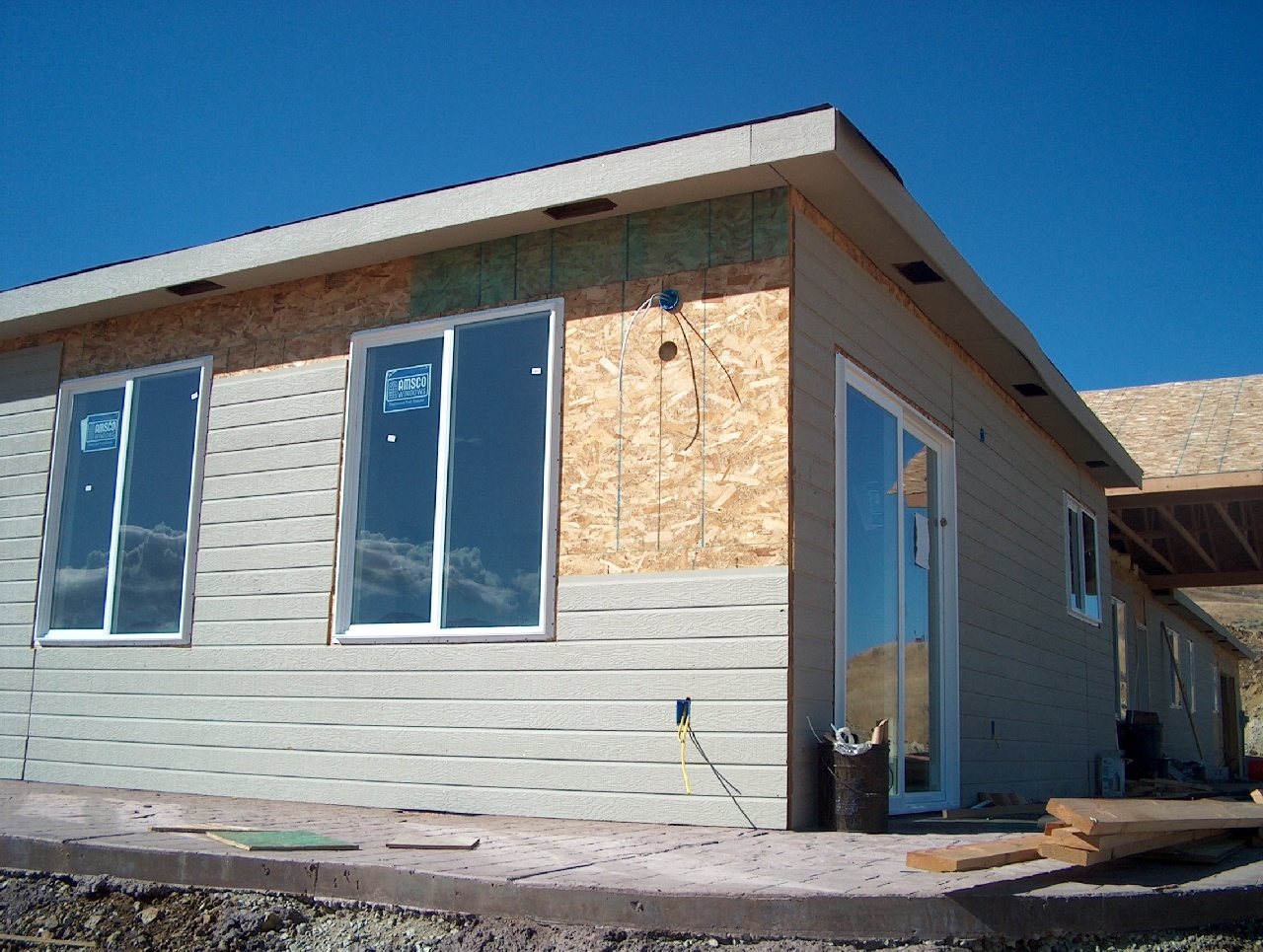
There's a lot more done on it--and with all the windows in, and construction doors in place, there's a pretty significant shield from the wind once you are inside.

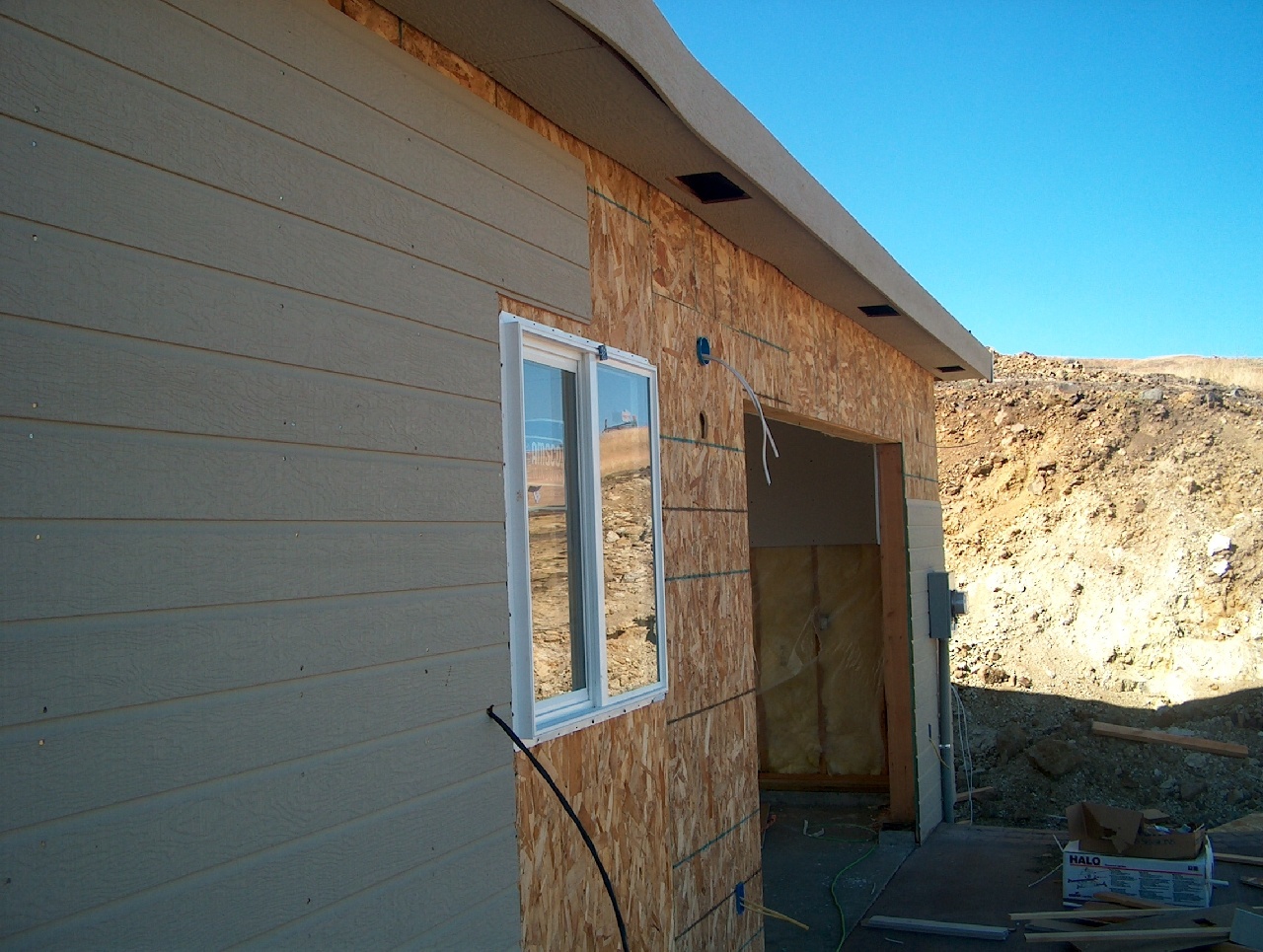
Here you can see that the exterior security lighting wiring is in place. You can also see that someone cut a hole for the wiring and fixture--and then realized: whoops! Fortunately, the siding, once in place, will hide this hole.


Click to enlarge


Ditto, by the rear door of the garage.


Click to enlarge


We have security light fixtures on all sides--and depending on switches, we can turn them completely off (for astronomy), turn them completely on (in case something goes bump in the night--it's good to have your target fully illuminated), or leave them in motion detector mode, where they detect something moving, and turn on. Paranoid? No, no, we grew up in Los Angeles. We are....careful. Yeah, that's the word we're going to use!

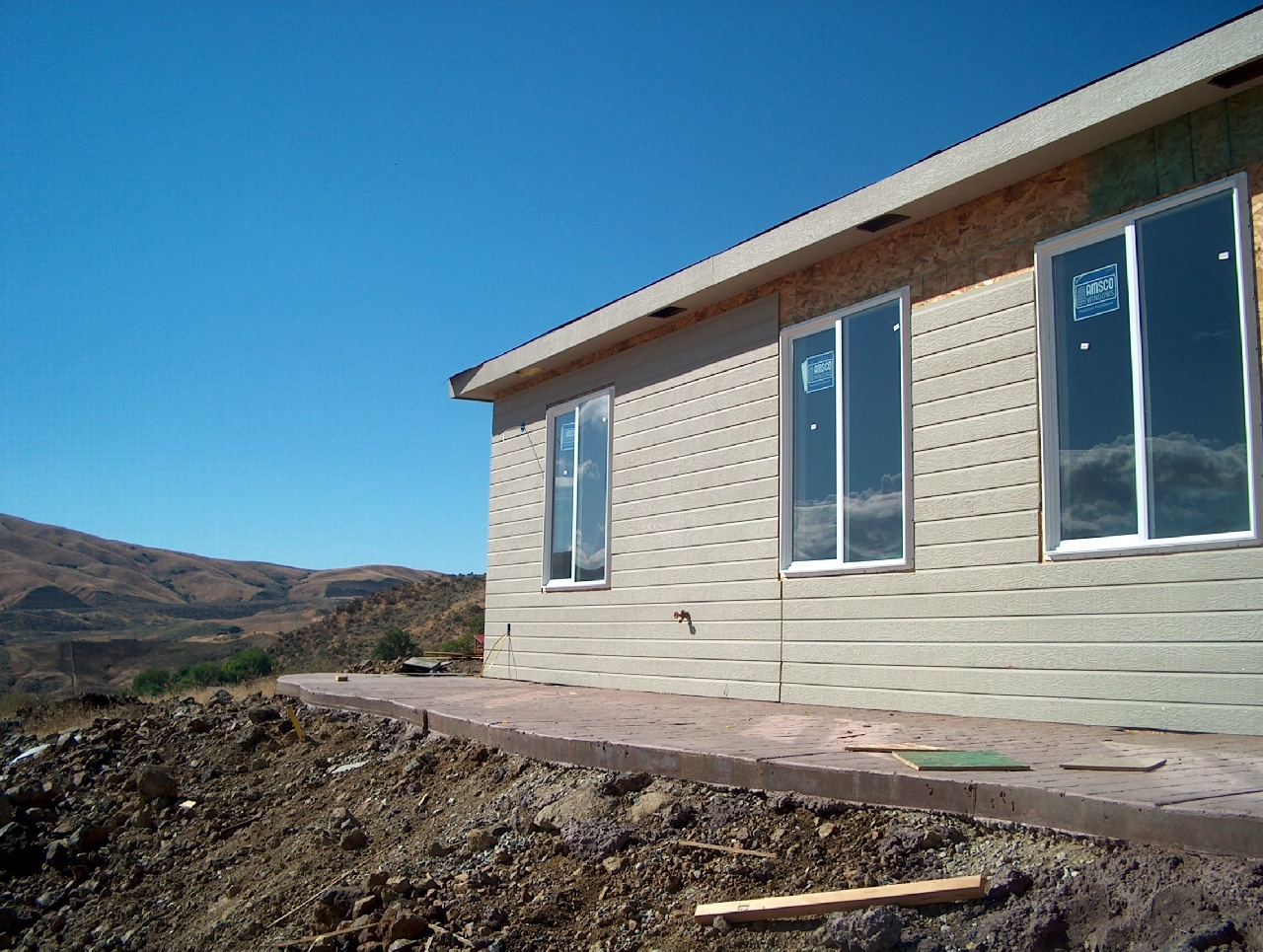
Here you can see hose bibs and external outlet wiring. Our current house has insufficient hose bibs, and in very poor places.


Click to enlarge


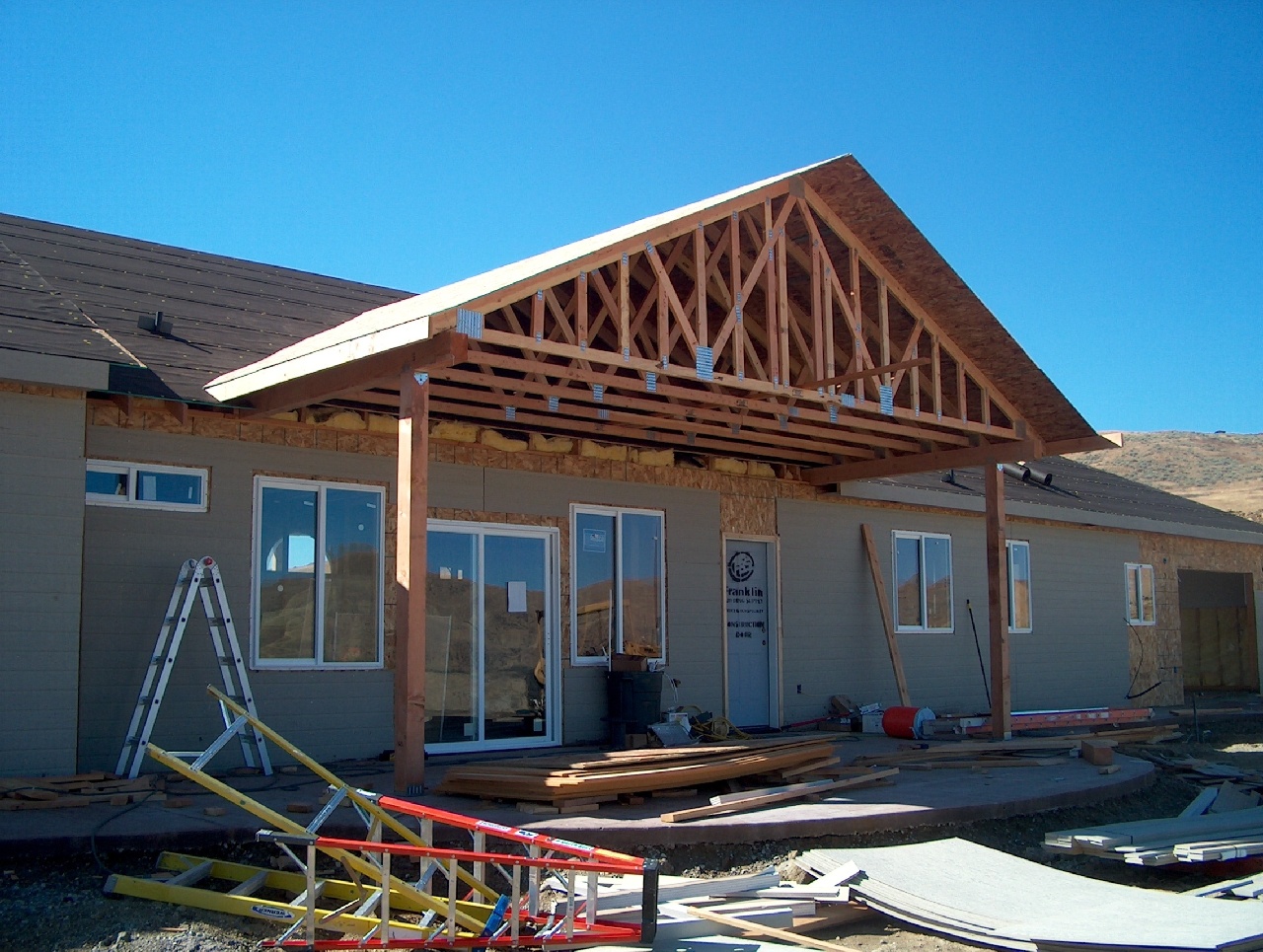
The back porch is well under way--providing shelter from the rain.


Click to enlarge


Click to enlarge


Here you can see some of the platform and piping for furnace and hot water heater in the garage. To my surprise, the view out the front garage door came out a lot more artistic than I expected, with Idaho State Highway 55 curving in the background, slightly diffused by distance.


Click to enlarge


And here we have the portal into the fifth dimension.


Click to enlarge


Actually, this is the access panel into the garage rafters. I had requested a pull down staircase to get into the rafters for storage--it looks like Scott may have planned with this in mind.

Sticking up out of the kitchen floor is the gas pipe for the island range.


Click to enlarge


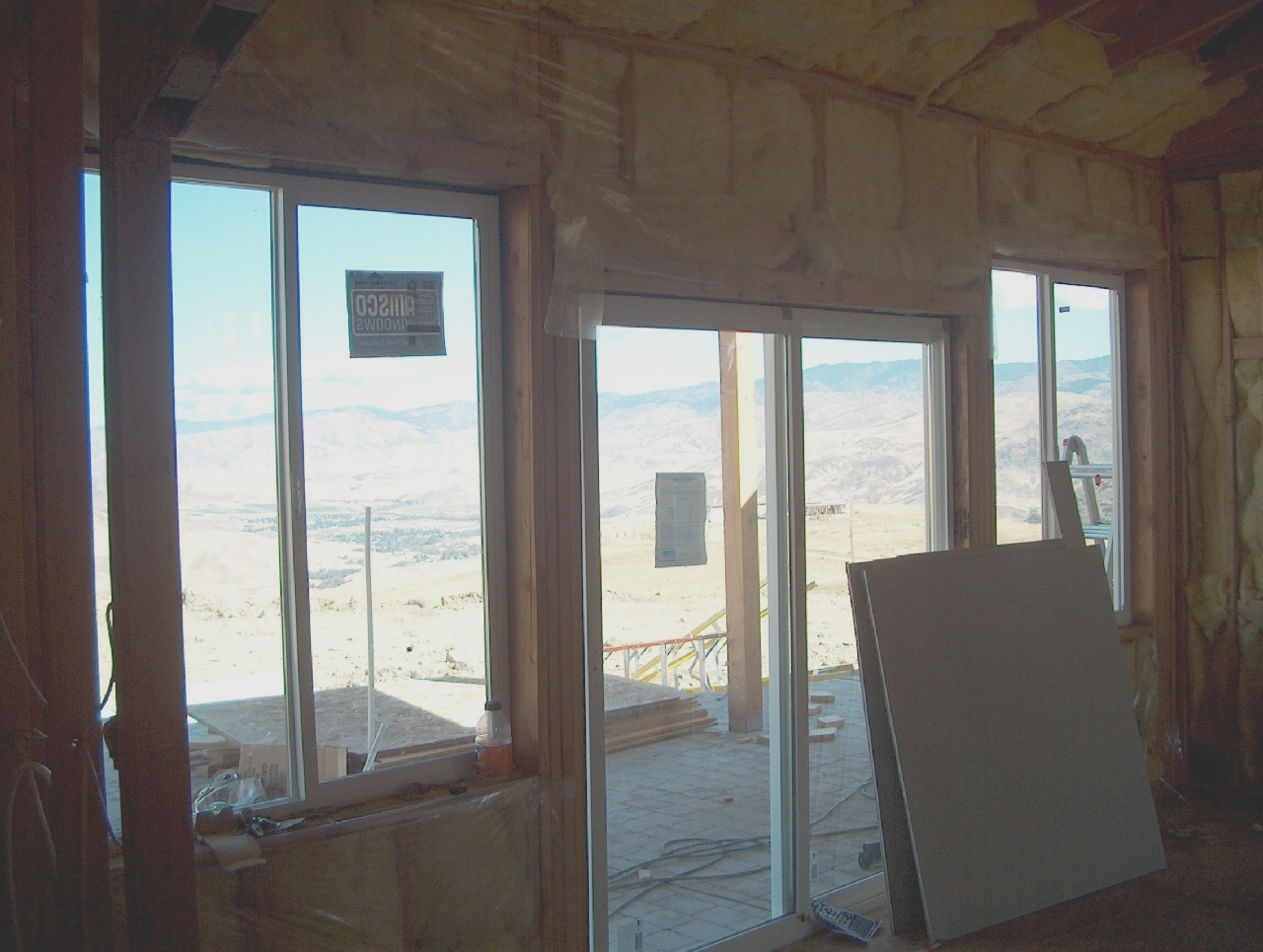
This picture from the family room came out badly exposed, because of too little inside, and too much light outside. I've fiddled with contrast and brightness to equalize things a bit, but I doubt that the result will be that wonderful. (You have to be there!)


Click to enlarge


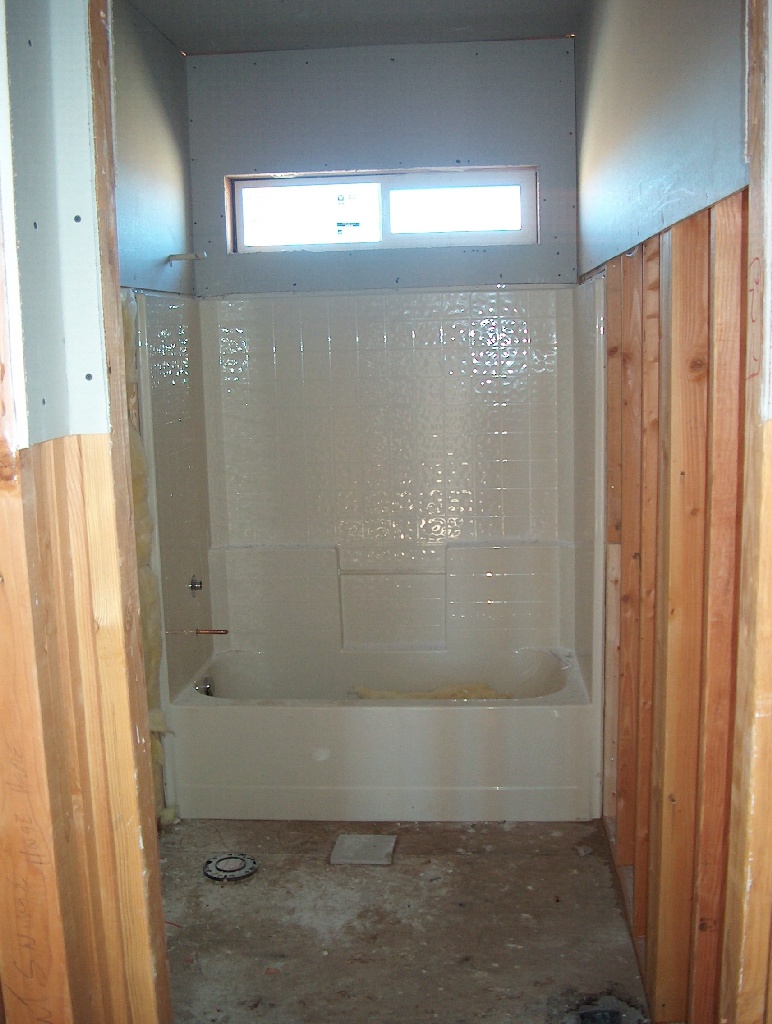
Second bathroom. The tub/shower combo is in place; everything else is waiting for final sheetrock before they install the sink and the toilet.


Click to enlarge


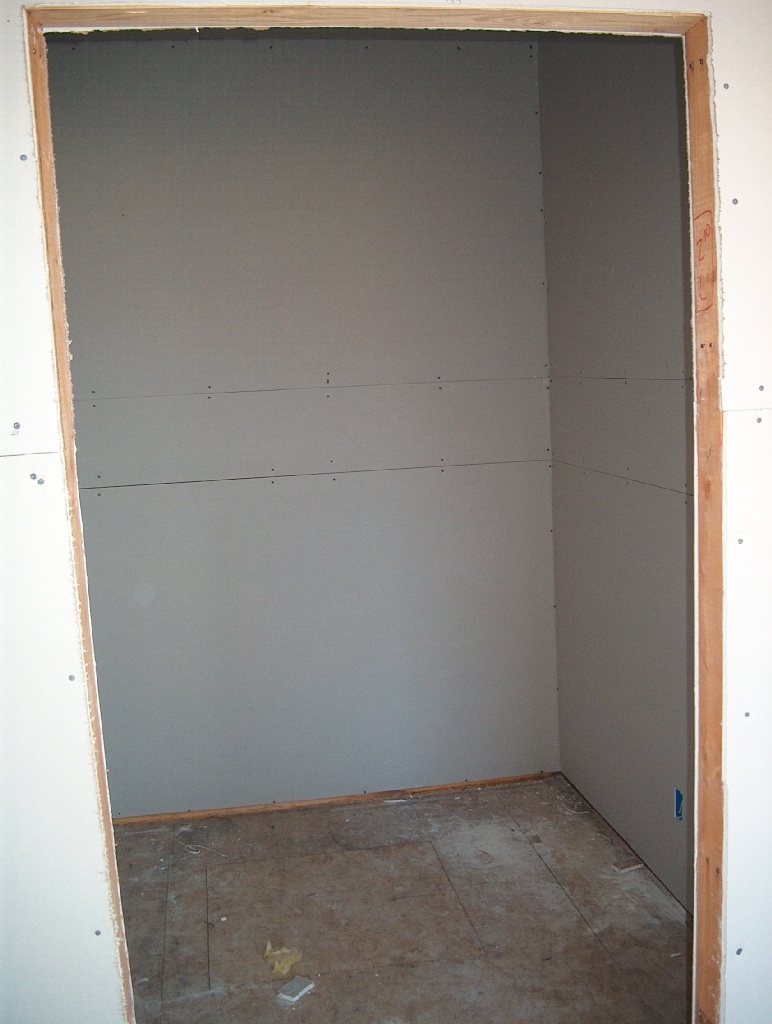
This was an astonishgly non-descript picture of the master bedroom closet. It needs something to give some idea of scale--in some parts of California, you could rent it for $500 a month.


Click to enlarge


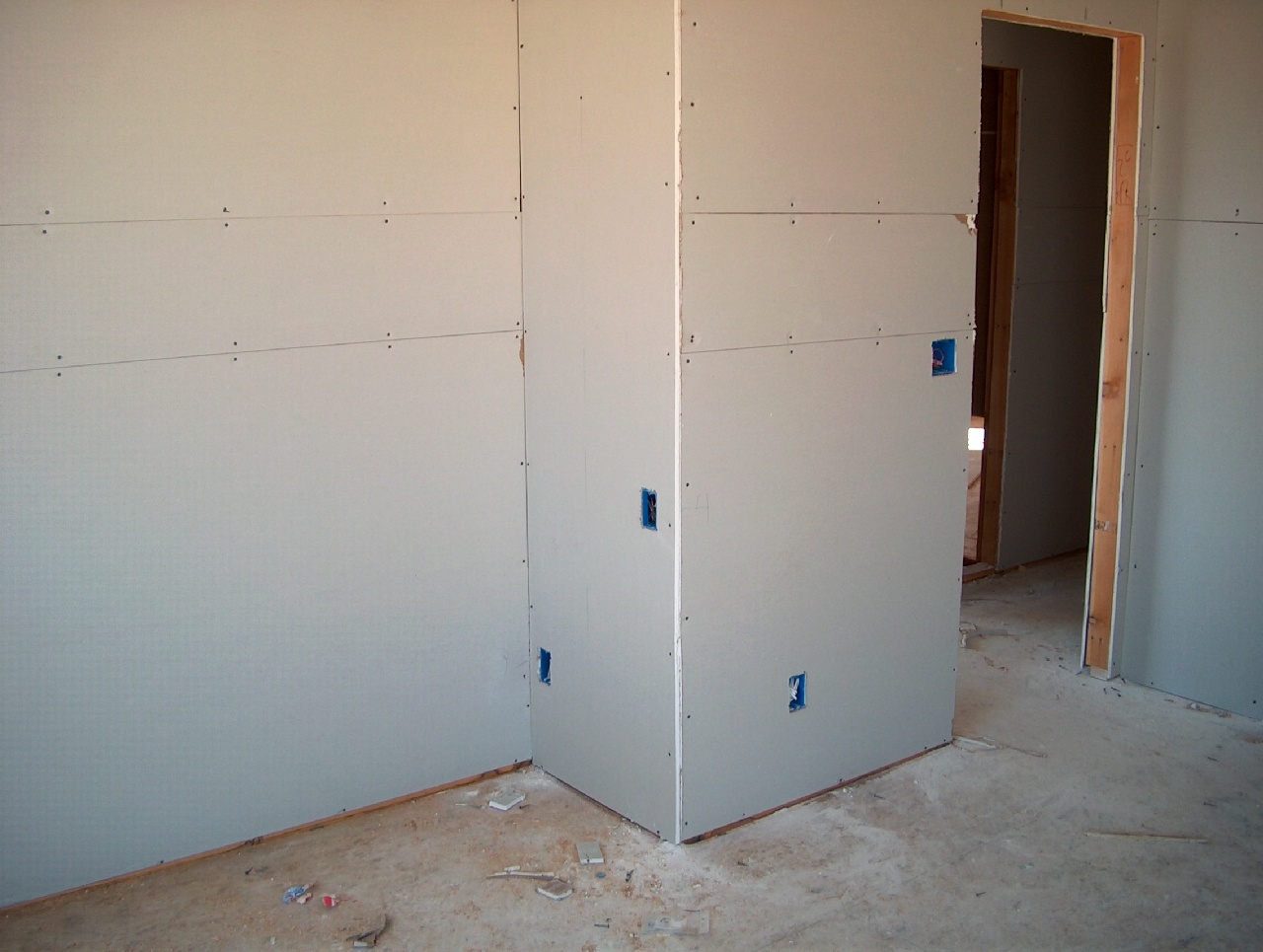
This isn't much of a picture of the master bedroom, but it gives you an idea what a room looks like after the electrical outlet and switch boxes are installed, and the sheet rock is up.


Click to enlarge


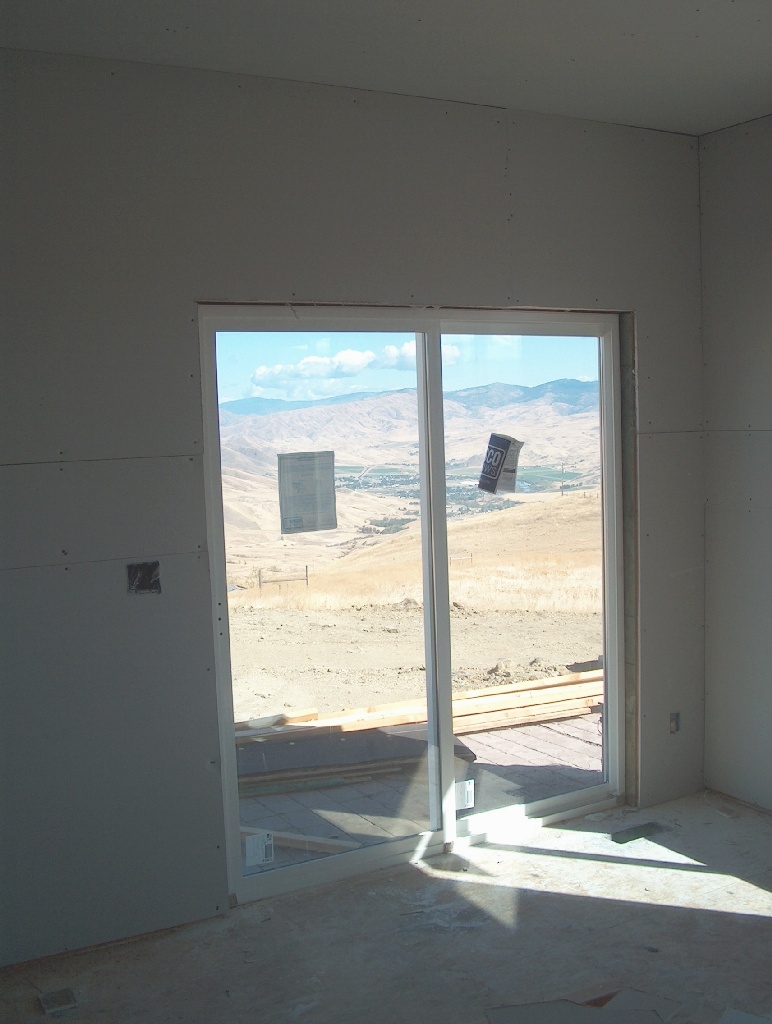
A better picture of the master bedroom, looking through the slider down into Horseshoe Bend.


Click to enlarge


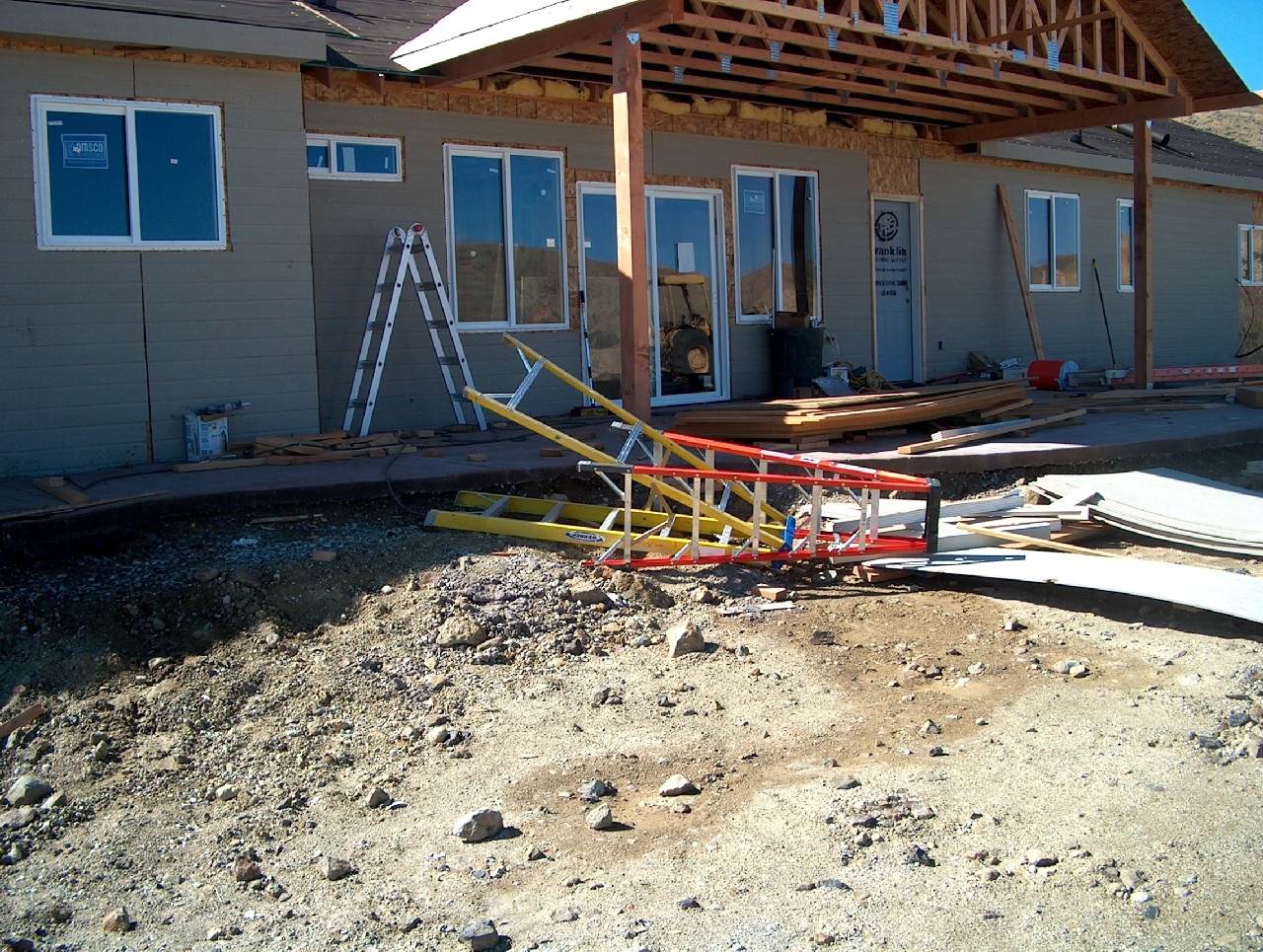
We came by these two ladders tangled together, as though they had just fallen asleep. My wife's comment: "So that's where stepstools come from!"


Click to enlarge


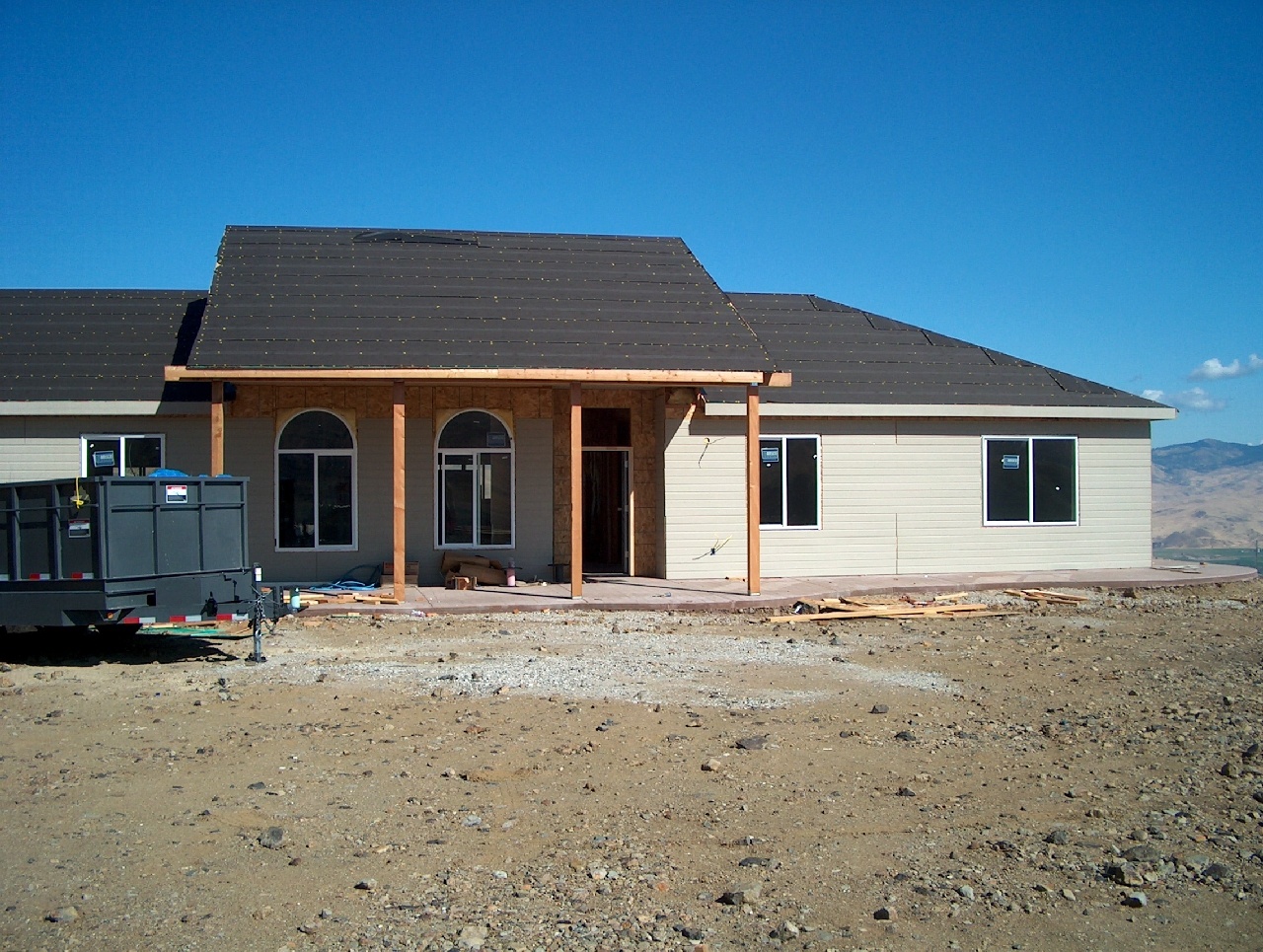
The front of the house gets better looking by the day.


Click to enlarge


Last house entry.

Sunday, September 11, 2005

House Project: Electrical, Green Submarine, & Master Bathroom

I went up Saturday morning to confirm the positions and numbers of outlets, switches, telephone, television, and Ethernet cabling. (Yeah, there are a couple of items where I can't use wireless, so I am making sure that there are CAT-5 cables from my office to my son's bedroom.)

I had mentioned previously that the LP gas tank, which looks like a green submarine, was now in the ground. Here's a picture.

Click here to enlarge

If a device travels underground, is it a submarine or a subterrane? If you bail out of a subterrane, do you worry about land sharks?

Here's the trench from the tank to the house, where the LP gas line feeds the kitchen, the water heater, and the outdoor barbecue spigot. I'm not quite sure where the backup generator will get its connection yet.

Click here to enlarge

Here's the master bathroom--in case you ever wondered what a bathroom looks like before it is fully dressed.

Click here to enlarge

If it looks a bit crowded--yeah, we may be overreacting to our current master bathroom, which is just wasting space. You spend all of about 30 minutes a day in there, at best. It doesn't have to be spacious.

Here you can see the east end of the house, where the exterior outlets are going to go, and the east hose bib. Our current house has two hose bibs, both set in very useless locations, so I was a bit specific about number and location.

Click here to enlarge

The weather has definitely changed here. I put on a jacket for a walk last night. It was positively brisk up at the new house Saturday morning--a welcome change after this long hot summer.

Last house project entry.